PERPETUAL TRAVELER:
The Making of a Life Abroad
A Memoir in Stories and Photographs
Alex Martinez
Book One
────────
Publication & Credits
Perpetual Traveler: The Making of a Life Abroad
© 2026 Alex Martinez. All rights reserved.
First edition, 2026. Book One.
Photographs and video stills from the personal archive of Alex Martinez.
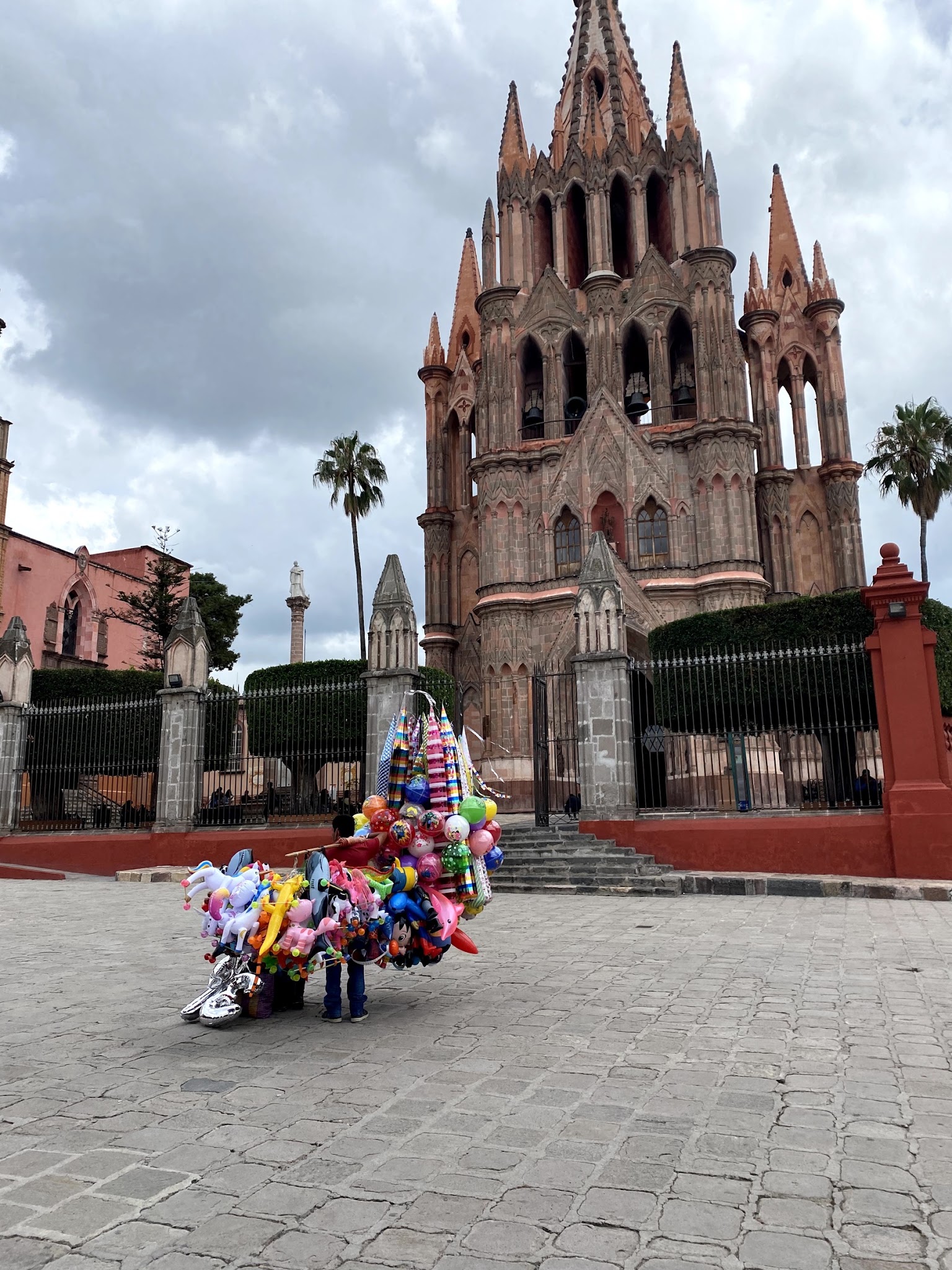
Cover photograph: San Miguel de Allende, Mexico. IMG_6974.
This book is a personal memoir. Events and conversations are described as I remember them. The experiences shared here are not medical advice or a guide to current travel rules.
About the Author
My name is Alex Martinez. I am from Puerto Rico, and I never planned to build a life abroad. In 2016, brain tumor surgery saved my life. What followed changed it for the better. A short trip eventually grew into a way of living I had never imagined. This book tells the beginning of that journey.
────────
Contents
────────
Before You Begin
I did not leave home with a plan to become a perpetual traveler.
I wanted to try being somewhere else for a month. I had work I could do on a computer, a place I could go, and no idea how much that small decision would change my life.
But this story begins before that first flight. In 2016, brain tumor surgery saved my life. Recovery made me look at the way I had been living and ask whether it was the life I wanted. I did not suddenly have an answer. I just knew I wanted something to change.
The chapters that follow are about finding out what that change could look like. There are beautiful places, but there are also workdays, food deliveries, missed flights, and plans that made much less sense once I tried them. Sometimes the thing I remember most is a sandwich or a view outside an apartment.
This is not a travel guide. I am not trying to show you everything worth seeing in each country, or tell you that my way of living should be yours. I am telling you what happened to me, what I enjoyed, what I got wrong, and how those experiences slowly added up to a life abroad.
The photographs are pieces of that life. They are not here to prove that every day was perfect. They help me remember what it felt like to be there.
Before there were all those places, though, there was a hospital room in Miami. That is where this story starts.
C H A P T E R 1

The Diagnosis
Miami, 2016
For months, I thought I was having migraines.
The pain kept coming back, but a brain tumor was not something I seriously thought could be happening to me. Then everything changed very fast. What I thought were constant headaches turned out to be a very large tumor in my brain, one that had probably been there for years.
Hearing the words “brain tumor” felt like getting punched in the face.
There are moments when everything else in your life suddenly becomes unimportant. Work does not matter. Plans do not matter. The little things you were worried about the day before feel ridiculous. There is only one question left: Am I going to survive this?
I was living in Miami at the time, and I ended up at the University of Miami Hospital. I knew medicine had come a long way. I also knew this was my brain, and nobody could tell me with absolute certainty what my life was going to look like afterward.
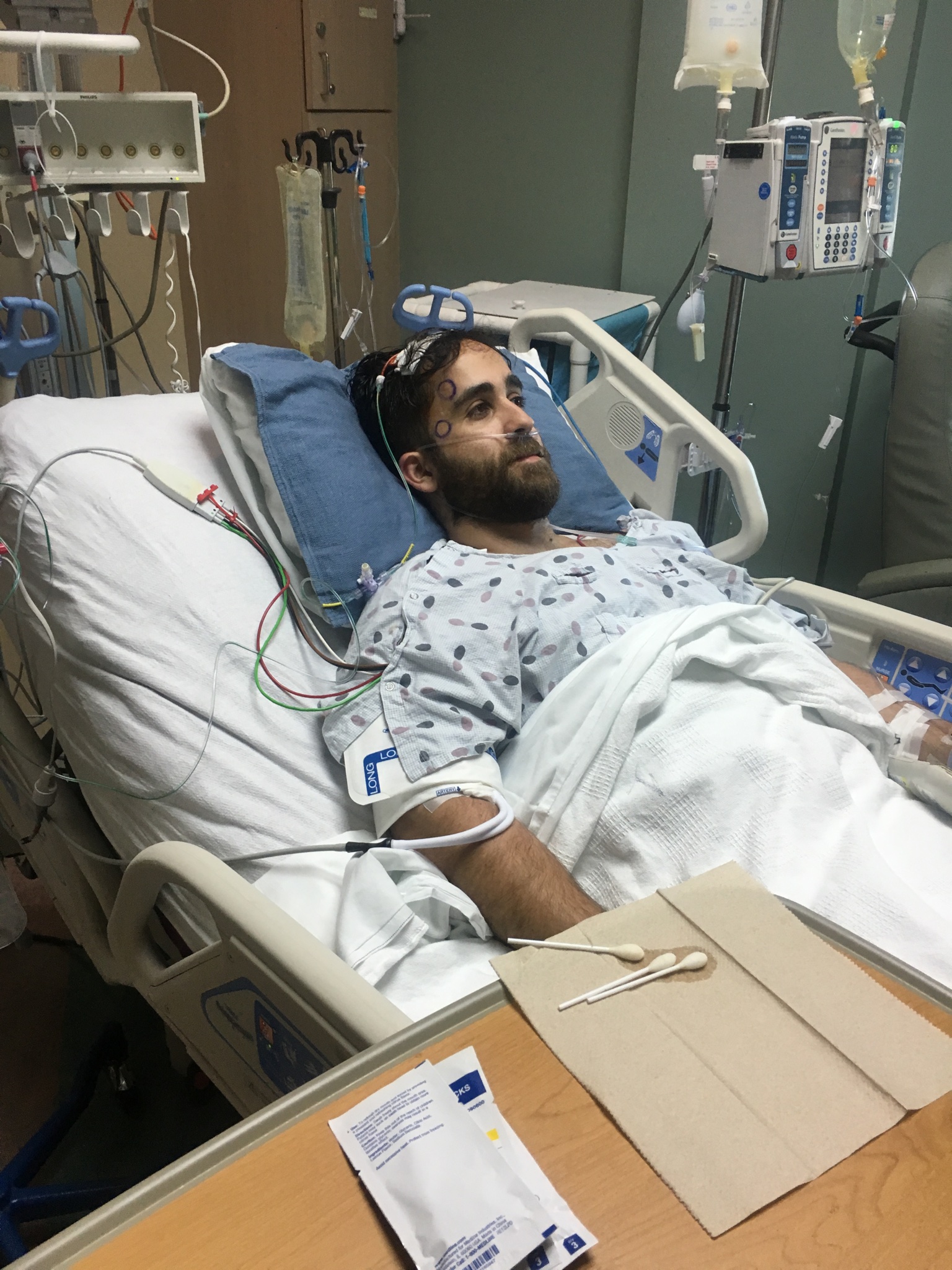
University of Miami Hospital, 2016
“I thought I was going to die.”
I believe my father took this picture shortly before one of my surgeries. It is one of the few photos from that period where I am not smiling.
By this point, doctors had already drilled into my head and placed a tube to drain fluid. You can see it coming from my head in the photo. I remember lying there and looking upward, thinking about death.
It was not some beautiful movie moment. I was not suddenly full of wisdom. I was scared, heavily medicated, exhausted, and trying to understand that I might be at the end of my life.
I remember thinking something very simple: Okay. If this is it, this is it.
That picture still gets to me because I can see exactly what I was thinking. I was trying to accept something that I did not want to accept.
And somehow, during one of the most traumatic periods of my life, I also stopped to smile for a picture.
That is also me in the hospital.
I was not suddenly fine. I was not pretending the situation was not serious. I think I just wanted to smile. Maybe I wanted my family to see me smile. Maybe I wanted to see myself smile. The hospital drugs probably helped too.
Both pictures are real versions of that moment. In one, I was thinking about dying. In the other, I was smiling anyway.
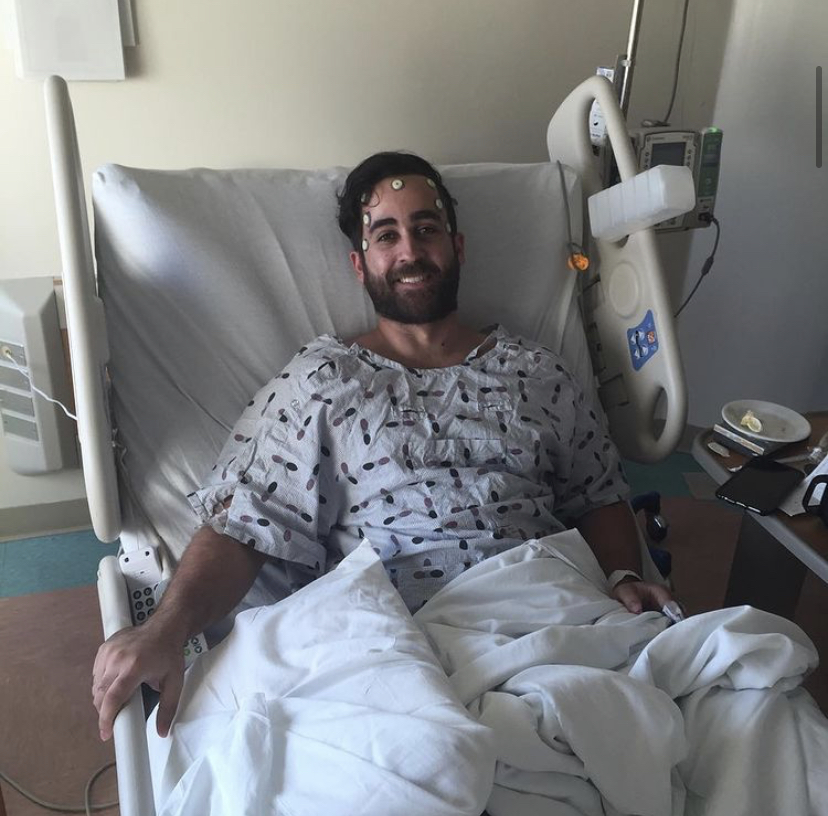
Still smiling, even then.
Then came the surgery.
The amazing part is that the doctors were able to remove the tumor. The thing that had been sitting inside my head, the thing that had suddenly made me think my life was over, could actually be taken out.
The MRI tells the story better than I can.
In the top set of scans, you can clearly see the mass. In the lower set, it is gone. There is also a thin tube visible afterward. It was put in to help manage the fluid in my brain, and that tube is still there today.
I walked into the hospital with a brain tumor. I walked out without one, but I did not simply go back to my old life.
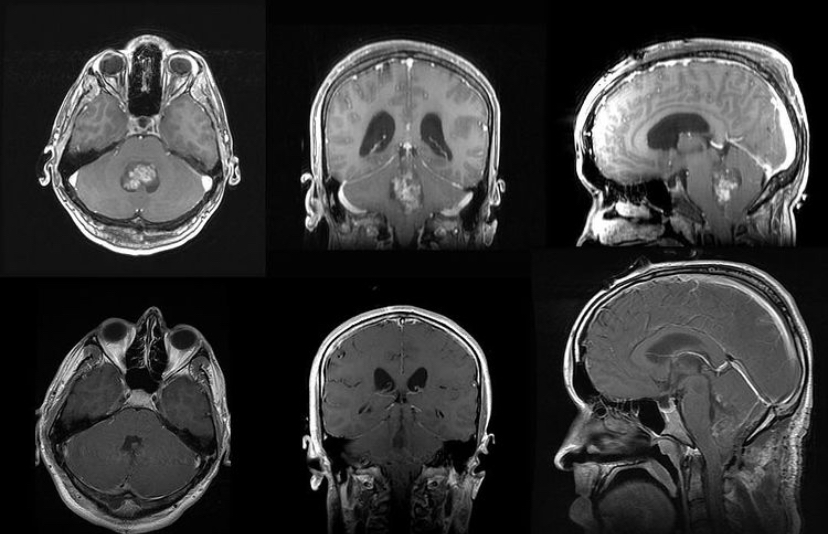
MRI scans before and after surgery.
“Surgery was not the end of the story. In a lot of ways, it was the beginning.”
I spent about a year in rehab. I had to work on walking again and rebuilding parts of my life that I had never imagined I could lose. Progress was slow. Some days were better than others. But somewhere during that year, something changed in me.
The closest way I can explain it is that I felt like I had died and come back.
“Not literally. I was still me. But it felt like I woke up in 2016.”
Before the diagnosis, I had been living my life without really asking whether I liked the life I was living. Afterward, that became impossible to ignore. Once you seriously believe your life might be over, it becomes much harder to go back to living in a way that makes you unhappy.
I got hit with an enormous wave of motivation.
I needed to change something.
I could not keep living in despair. I could not keep feeling like I was simply getting through the days. I had been given another chance, and even though I had no grand plan for what to do with it, I knew I could not stay exactly where I was.
At the time, where I was happened to be Miami.
I am Puerto Rican. I was born in Puerto Rico, and after the surgery and rehab, I knew I wanted to go home. So I made the decision to leave Miami and move back to the island.
I had no idea how important that decision would become.
I would spend roughly three years in Puerto Rico. Those years would become my first real experience of building a life alone, figuring out who I was when nobody else was deciding what my days should look like, and slowly creating the kind of work and independence that would eventually make traveling the world possible.
At this point, I was not a world traveler. I was not dreaming about living in dozens of countries. I had no plan to leave for 30 days and somehow still be abroad six years later.
I was just trying to build a life that felt better than the one I almost lost.
Puerto Rico was where that really began.
C H A P T E R 2
────────
Shifting My Life in the Right Direction
Puerto Rico, 2017 to 2020
Puerto Rico was not a grand reinvention. At least, it did not feel like one at the time.
I moved back home because I knew I needed a different life, even if I could not explain what that meant yet. I did not sit down with a notebook and write a plan to become a new person. I just knew I had to stay active, keep working, keep learning, and keep moving in the right direction.
Old San Juan turned out to be the perfect place for that.
I lived on the second floor of a building on Calle del Cristo, with a balcony overlooking one of the busiest streets in the old city. I loved that apartment. I loved the street. I loved stepping onto the balcony and feeling like I was part of everything without actually having to go anywhere.
Living alone felt strange at first. Then I learned to love it. Old San Juan made being alone feel different. I could spend all day working at my computer, then walk outside and immediately be surrounded by music, restaurants, people, history, and noise. I was alone, but I never felt cut off from the world.
Those years were also when I really learned my work. I spent an absurd amount of time on my computer, learning e-commerce through trial and error, solving problems, getting better, and slowly building a career that could exist completely online. I did not know it yet, but that detail would eventually change everything.
Looking back, I was rebuilding my life without realizing I was rebuilding it.
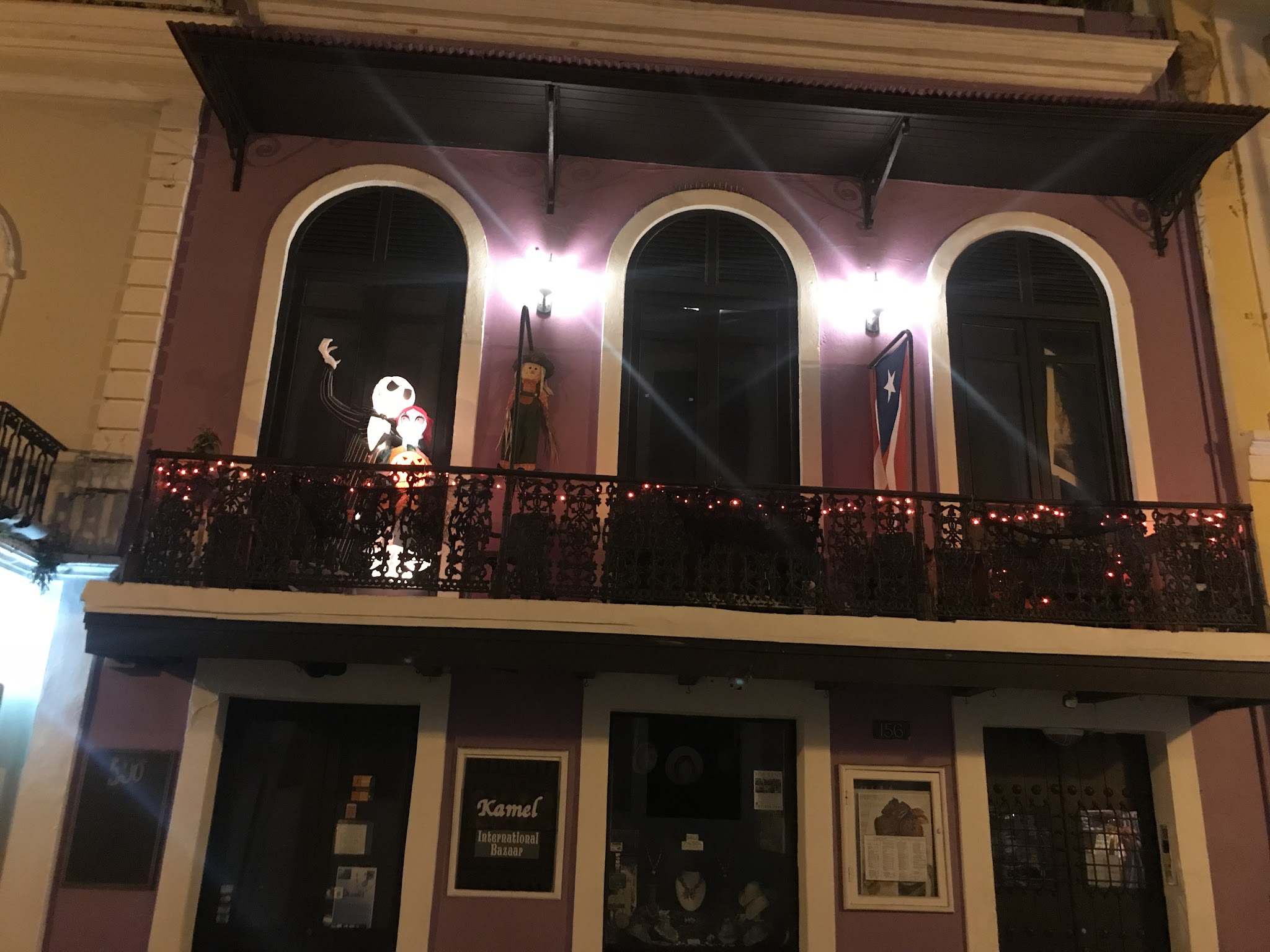
My home on Calle del Cristo, Old San Juan.
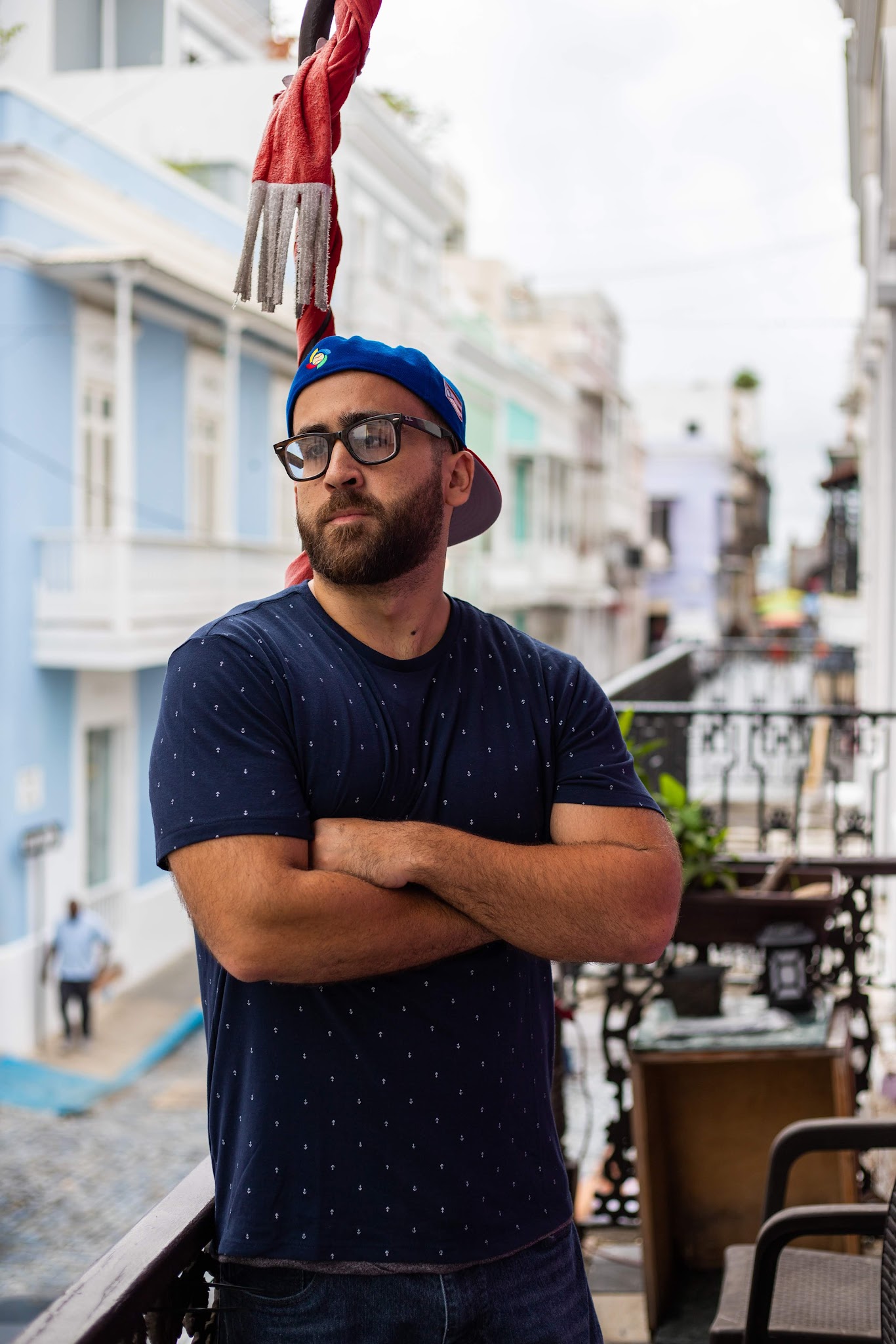
On my balcony in Old San Juan.
“I did not know I was rebuilding my life. I was just trying to keep moving.”
Then, in 2019, something happened outside my balcony that made normal life disappear almost overnight.
One day Calle del Cristo looked like Calle del Cristo. The next day, I stepped outside and saw a crowd filling the street below me. People were chanting. Puerto Rican flags were everywhere. I had no idea what was going on.
My first reaction was basically: well, this is interesting.
I took a picture from the balcony because I happened to have a front-row seat. At that point, I did not understand that I was watching the beginning of one of the biggest protest movements Puerto Rico had seen in modern history.
The demonstrations were directed at Governor Ricardo Rosselló after leaked messages and a much larger wave of anger over his administration. At first, the crowds came and went. Then they came back larger. A couple of days later, larger again.
Before long, this was no longer a protest happening somewhere in San Juan. It was happening directly outside my home.
Every time I looked down from the balcony, there seemed to be more people.
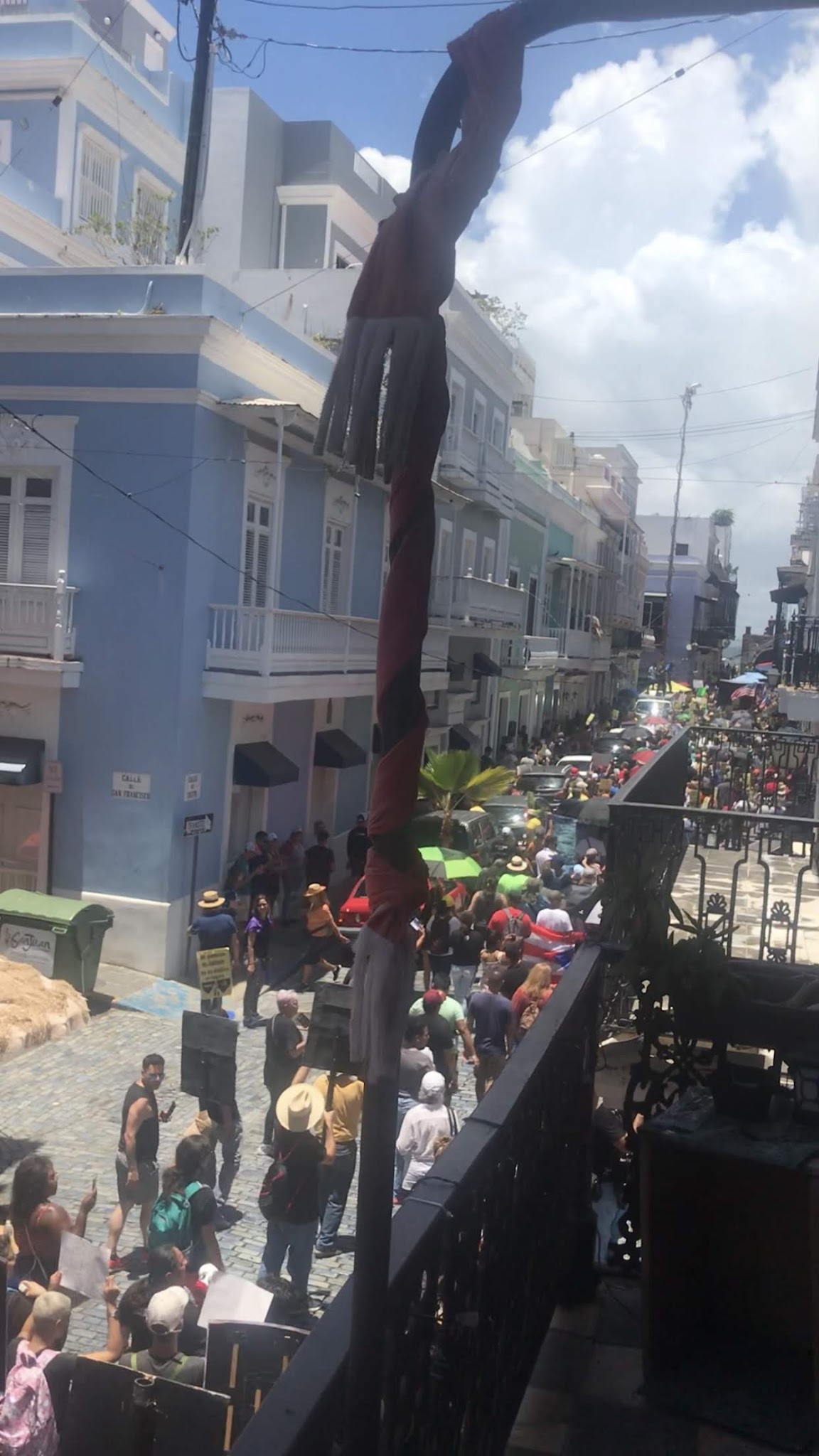
The first day the protests reached my street, 2019.
“One day my street was normal. The next, it was a sea of people.”
Eventually, Calle del Cristo looked less like a street and more like the floor of a sold-out concert.
There were people everywhere. Puerto Rican flags covered the crowd, including black versions of the flag that had become a symbol of protest. Artists and public figures joined the pressure. Bad Bunny, Ricky Martin, Daddy Yankee and others became part of the wider moment. For about twelve days, it felt like the entire island was focused on the same thing.
From my apartment, it felt unreal.
The protests would go on for hours. At night, police sometimes used tear gas to clear the streets. The gas could work its way into my bedroom, so there were nights when I slept in the living room instead.
The strangest part is that I actually slept better during the protests.
Old San Juan is usually loud. Really loud. Music, bars, people talking, cars, tourists, all of it. During the protests, once the crowd finally dispersed late at night, the city went completely quiet. By midnight, after a day with thousands of people outside, I could sometimes hear almost nothing.
For those days, it felt like I was living inside a revolution. I do not mean that Puerto Rico suddenly became a different country afterward. It did not. But in the moment, the scale and energy felt historic because it was historic. Eventually, Rosselló announced that he would resign.
I had watched the whole thing grow from a small crowd outside my balcony into a sea of people stretching down my street.
I had moved to Puerto Rico to quietly rebuild my own life. Somehow, I ended up with a front-row seat to a major moment in the island's history.
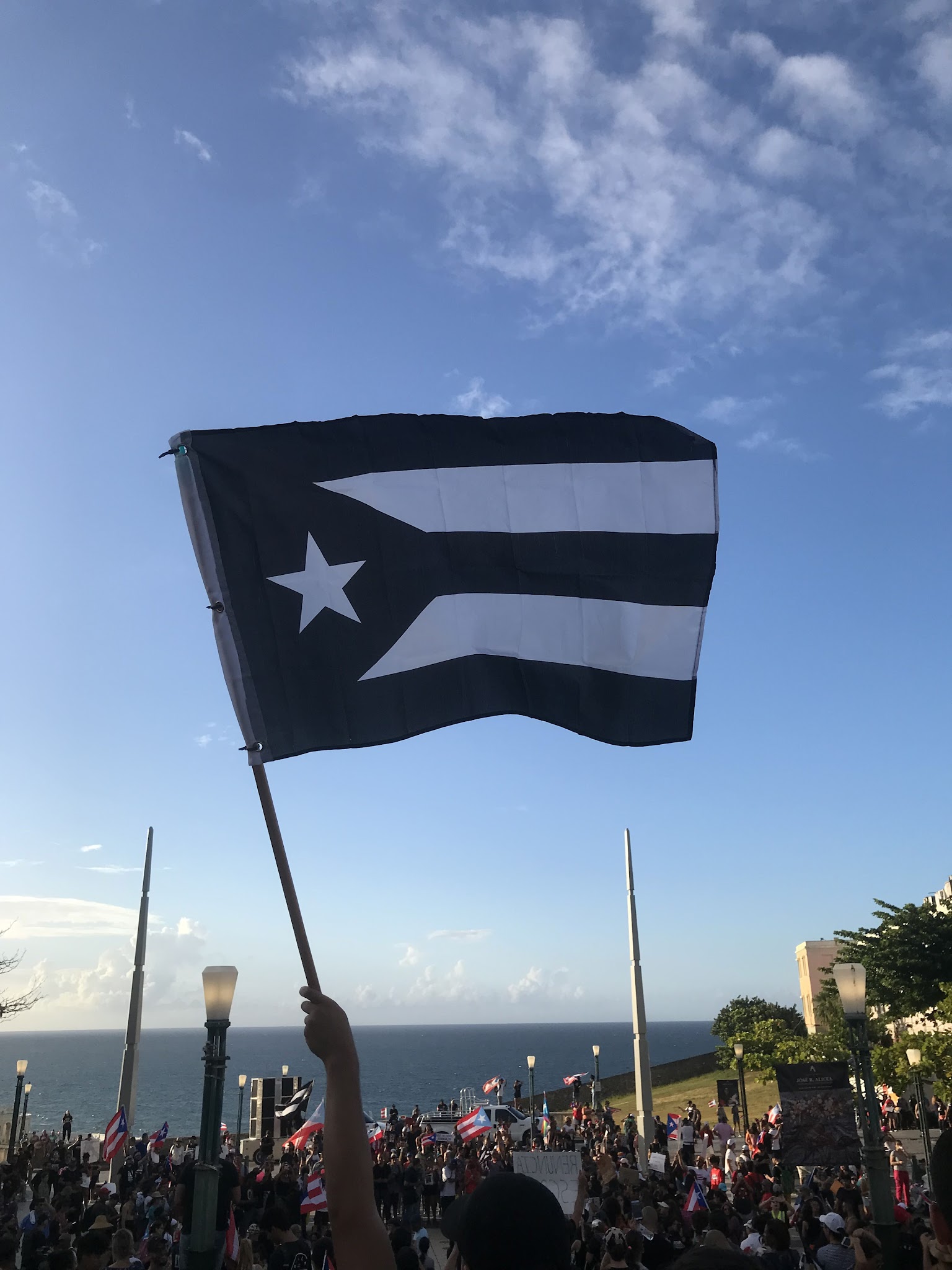
A black Puerto Rican flag during the 2019 protests.
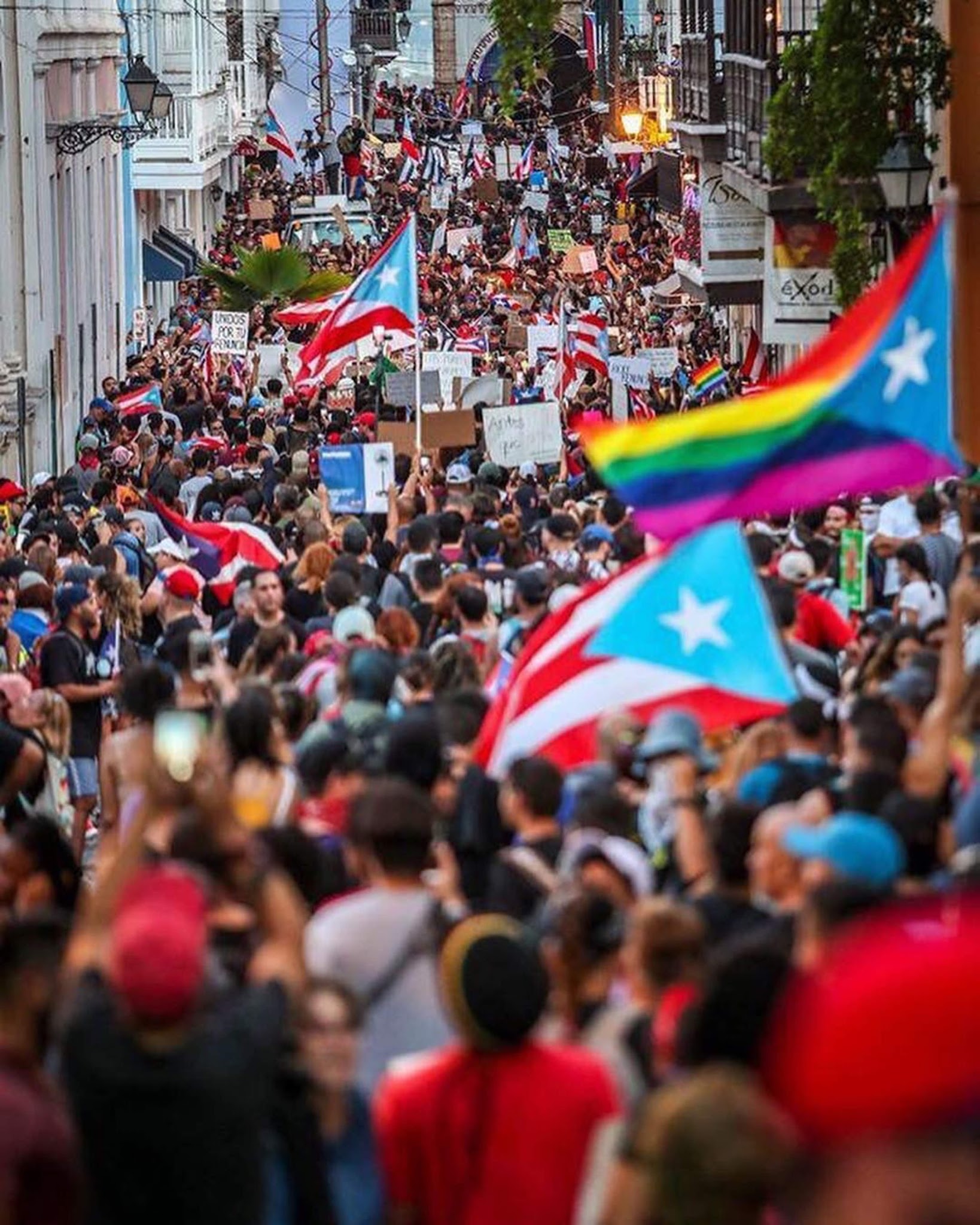
Calle del Cristo during the 2019 protests. My apartment was on this street. Photo taken by someone else.
“For nearly two weeks, history was happening outside my balcony.”
Then 2020 arrived, and Old San Juan changed again.
COVID emptied the streets.
A place that had always felt alive suddenly looked abandoned. I could walk through places like Paseo de la Princesa and barely see another person. I became a tourist in my own city, except there were no tourists.
At first, I did what I had already trained myself to do. I worked.
I lived alone. I worked alone. My business was on my computer. Day after day, I sat in the same apartment looking at the same walls, doing the same thing. I was productive, but after a while I felt like I was losing my mind.
That was when a very simple thought started bothering me.
If my entire job lived on my computer, why did I have to stay in one place?
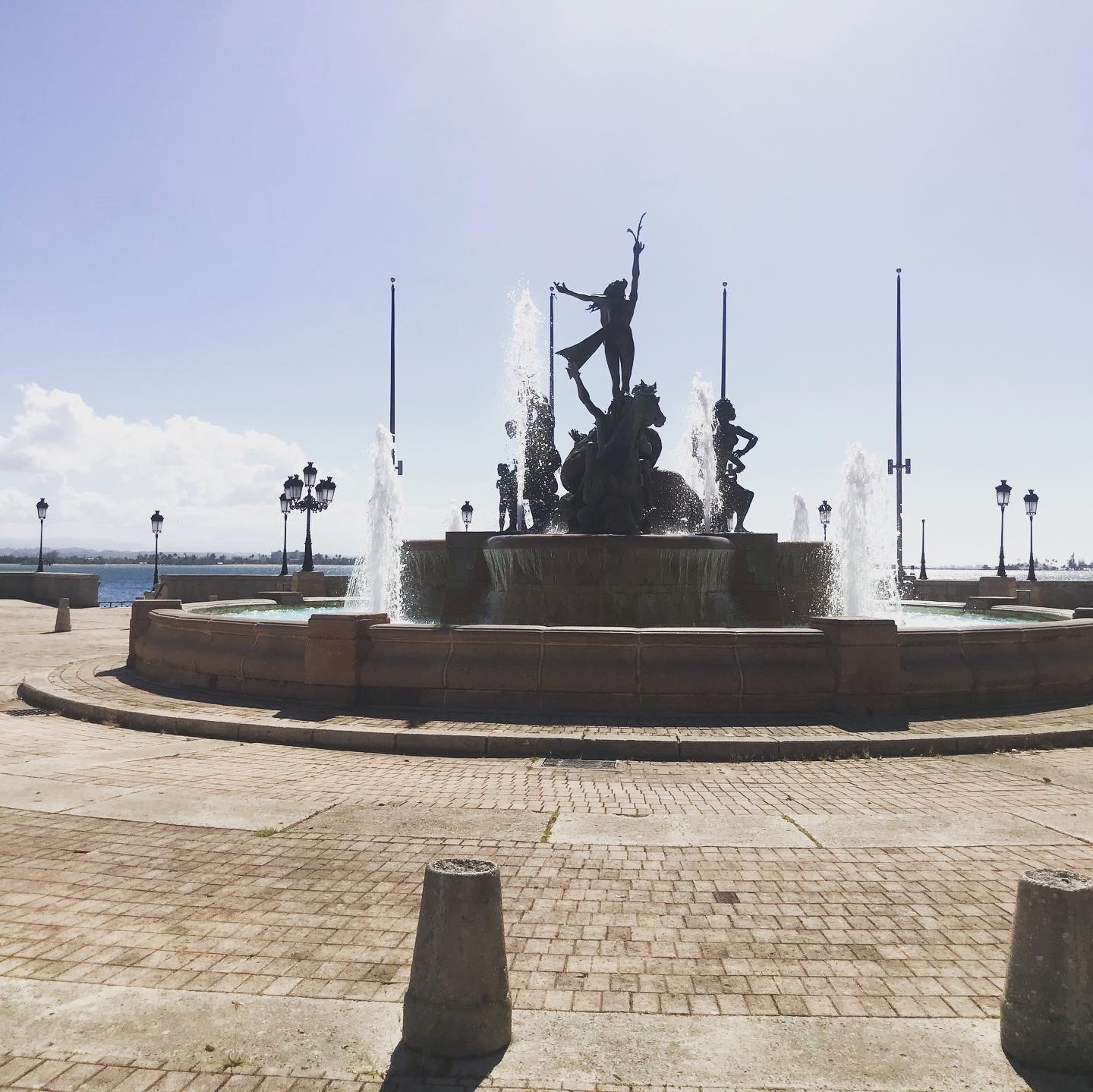
Paseo de la Princesa during COVID. Old San Juan had never looked this empty.
“If my work lived on my computer, why did I have to stay in one place?”
I had spent three years building a career in e-commerce consulting. I could answer clients, research problems, work inside online accounts, and do almost everything I needed from a laptop. I did not think of myself as a digital nomad. I was not trying to join some lifestyle movement. I just realized that my work did not care where my chair was.
My lease was also ending. When my landlord asked whether I wanted to renew, I saw an opening.
I thought, if I do not travel now, I might never do it.
Travel during COVID was bizarre. Most of the world was difficult or impossible to enter as a tourist, and after looking at my options, Albania became the practical choice. I booked a trip to Tirana for thirty days.
That was it. Thirty days.
Getting there felt surreal. Airports were nearly empty. I wore a mask everywhere. I traveled through London before continuing to Albania, and the whole experience felt like moving through a world that had been temporarily shut down.
I was not trying to leave Puerto Rico forever. I was not trying to travel the world. I was not even much of a traveler.
I just wanted to go somewhere else for thirty days.
Those three years in Puerto Rico had quietly given me everything I needed to make that decision. I had learned how to live alone. I had learned how to work independently. I had learned that I could control more of my life than I once believed.
When I boarded that flight, I thought I was leaving for a month.
I had no idea I was beginning six years of living around the world.
C H A P T E R 3
────────
The Decision
Tirana, Albania, October 3 to November 6, 2020
Tirana was the first place I chose because it felt genuinely different.
I was not much of a traveler. I had this vague idea that people my age were supposed to travel and see the world, so I decided I would try it once. Thirty days. Go somewhere far away, learn what it felt like, then go home.
That was the entire plan.
The strange part was how little I thought about the decision once I made it. Before brain surgery, I could imagine doing something different and then spend forever thinking about it. Afterward, that part of me was mostly gone.
If something felt different and I wanted to do it, I went.
Traveling during COVID made the whole thing even stranger. Airports were nearly empty. Masks were everywhere. Almost everything about the trip felt abnormal, but I did not care. I felt like I had to go.
When I finally reached Tirana and walked into my apartment, the culture shock hit me all at once. I was in Albania. I did not know anybody. Everything outside was unfamiliar.
So I did the most familiar thing I could think of.
I unpacked my Puerto Rican flag.
It was the same flag that had hung in my home in Old San Juan. For a while, I carried it from country to country and used it as the one piece of decoration that made a temporary apartment feel like mine.
The rest of my setup was simple: my Surface, a Bluetooth keyboard and mouse, a tablet arm, chargers, and an extension cord. I worked from the sofa because, at the time, I felt like I needed to use the whole Airbnb.
I had crossed the Atlantic, but my workday looked almost exactly the same.
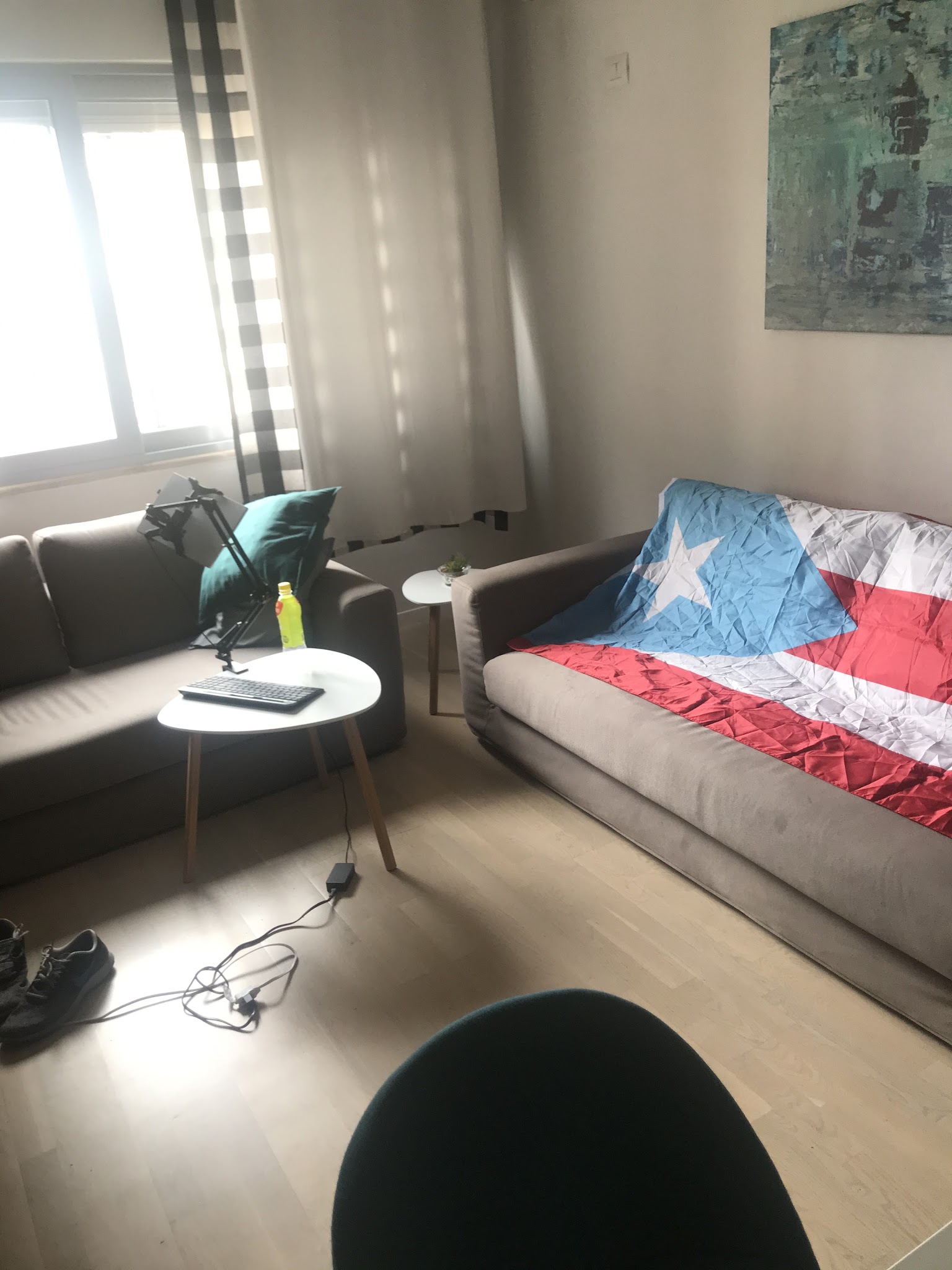
My first apartment in Tirana. The Puerto Rican flag came with me from Old San Juan.
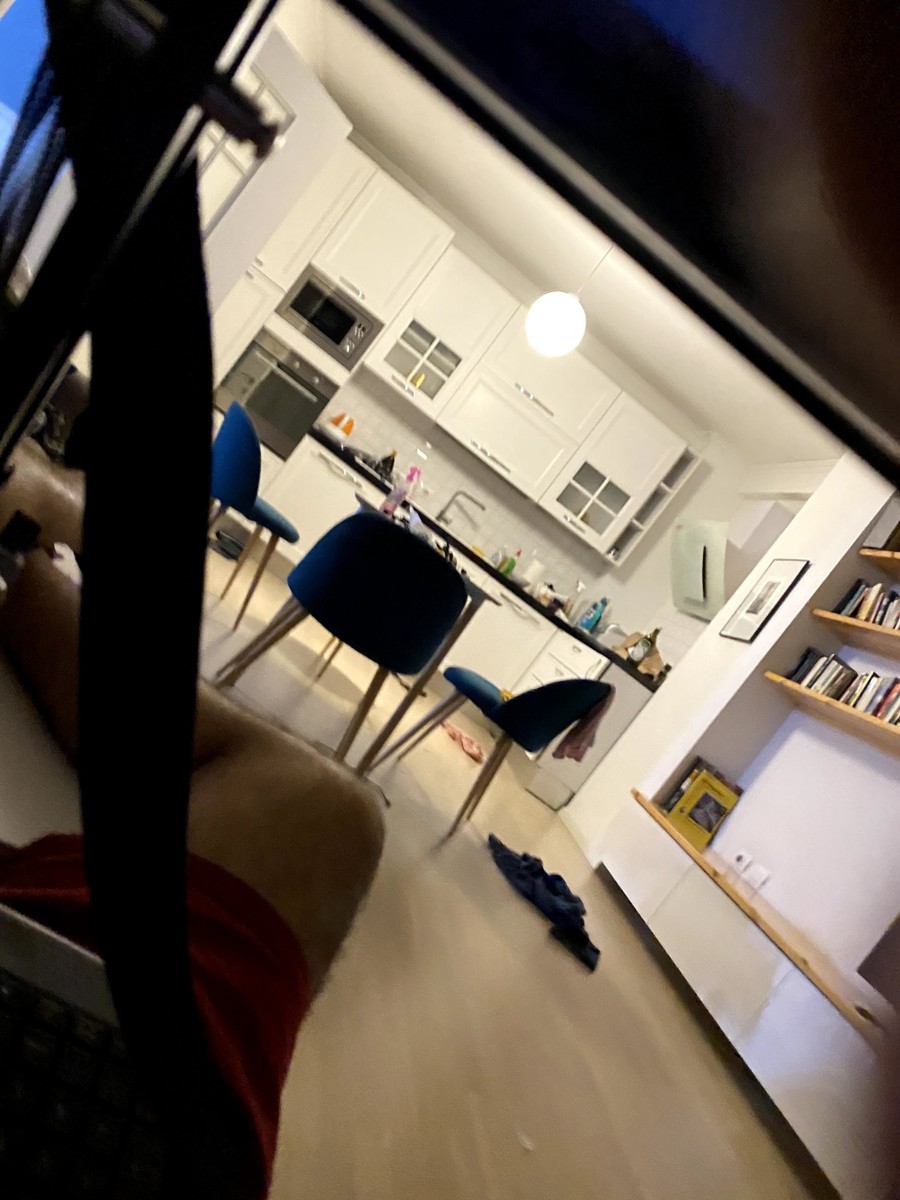
The kitchen, seen from my sofa.
“I stopped asking whether I should do something. If it felt different, I went.”
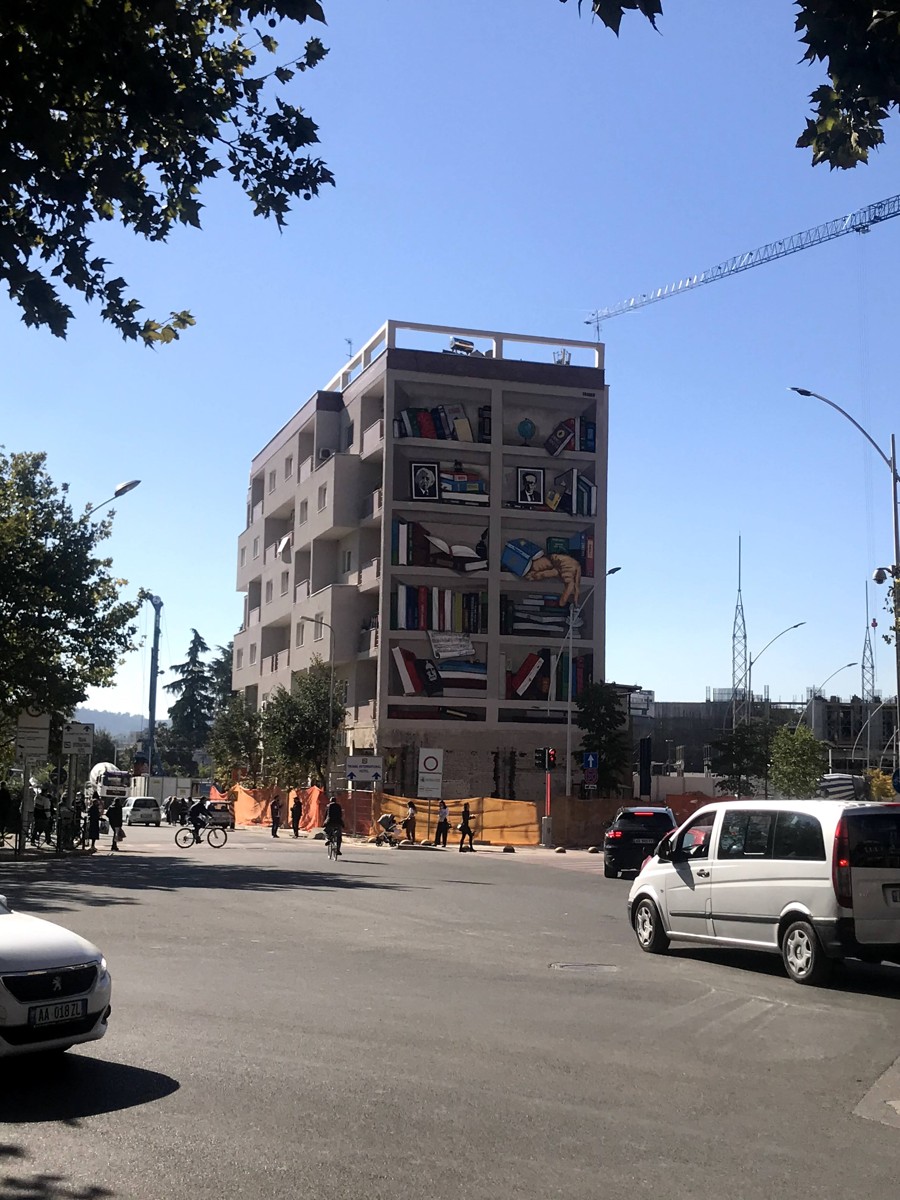
A book-covered building on a walk through Tirana.
For the first couple of weeks, I did not really know how to be a traveler.
I mostly lived.
I worked, went to the supermarket, bought groceries, came home, and repeated the process. Everything around me was unfamiliar, but my actual routine was strangely normal.
Then, about halfway through the trip, I had a thought: aren't people my age supposed to do touristy things when they travel?
So I started doing things because I thought that was what I was supposed to do.
I bought my first souvenir, a red Albania scarf. I was absurdly proud of it. I took a picture wearing it like I had just completed some important travel milestone.
Years later, I would stop caring about souvenirs almost completely. But at the time, I still thought I was going home after this trip, so bringing something back seemed important.
I also went to Pazari i Ri, a market in Tirana. It was one of the first times I had been somewhere like that. Later I would learn that markets like this exist all over the world. At the time, it felt completely new.
That was what Tirana kept doing to me. Things that were normal to somebody else were becoming firsts for me.
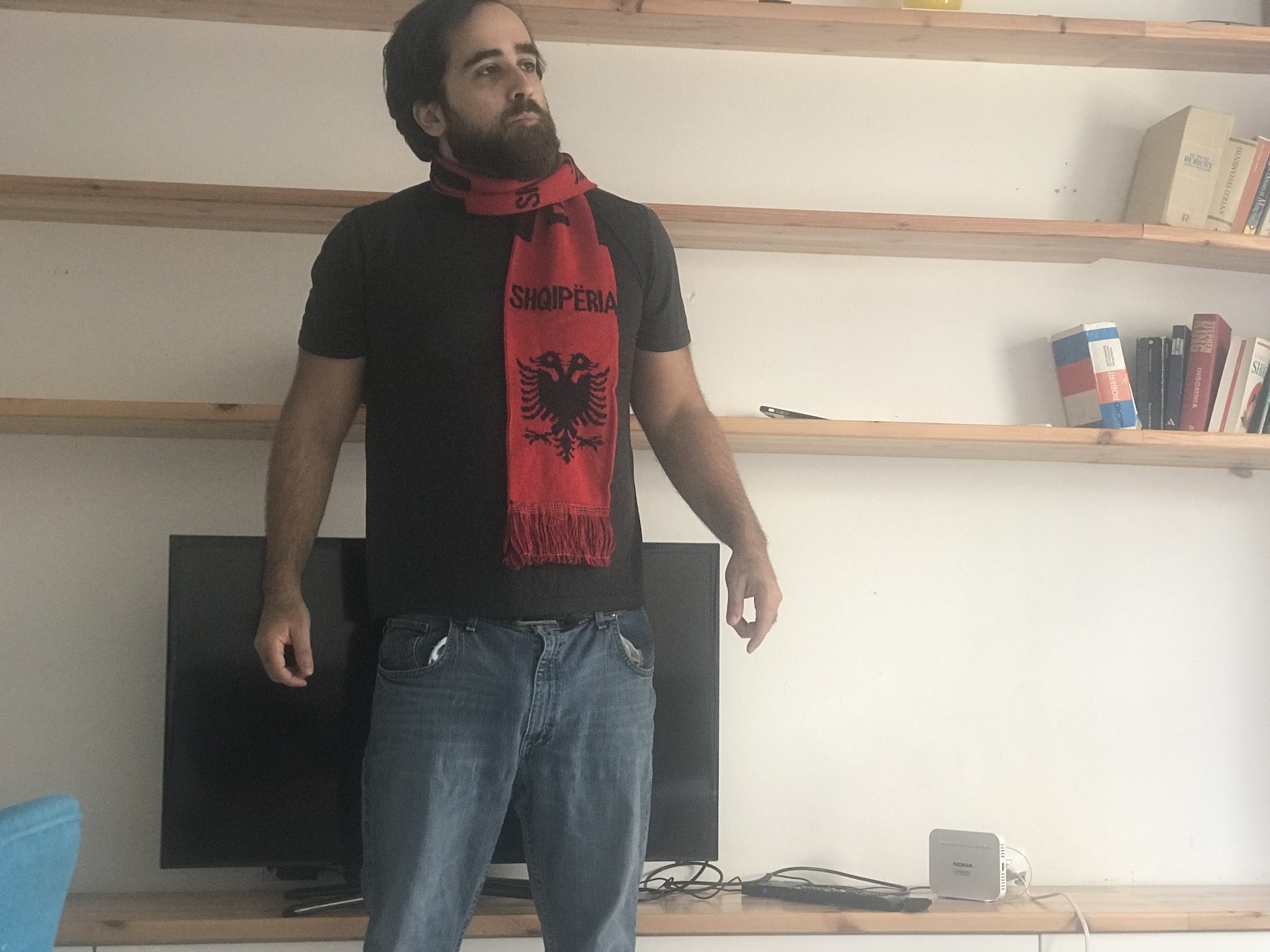
My first souvenir from another country.
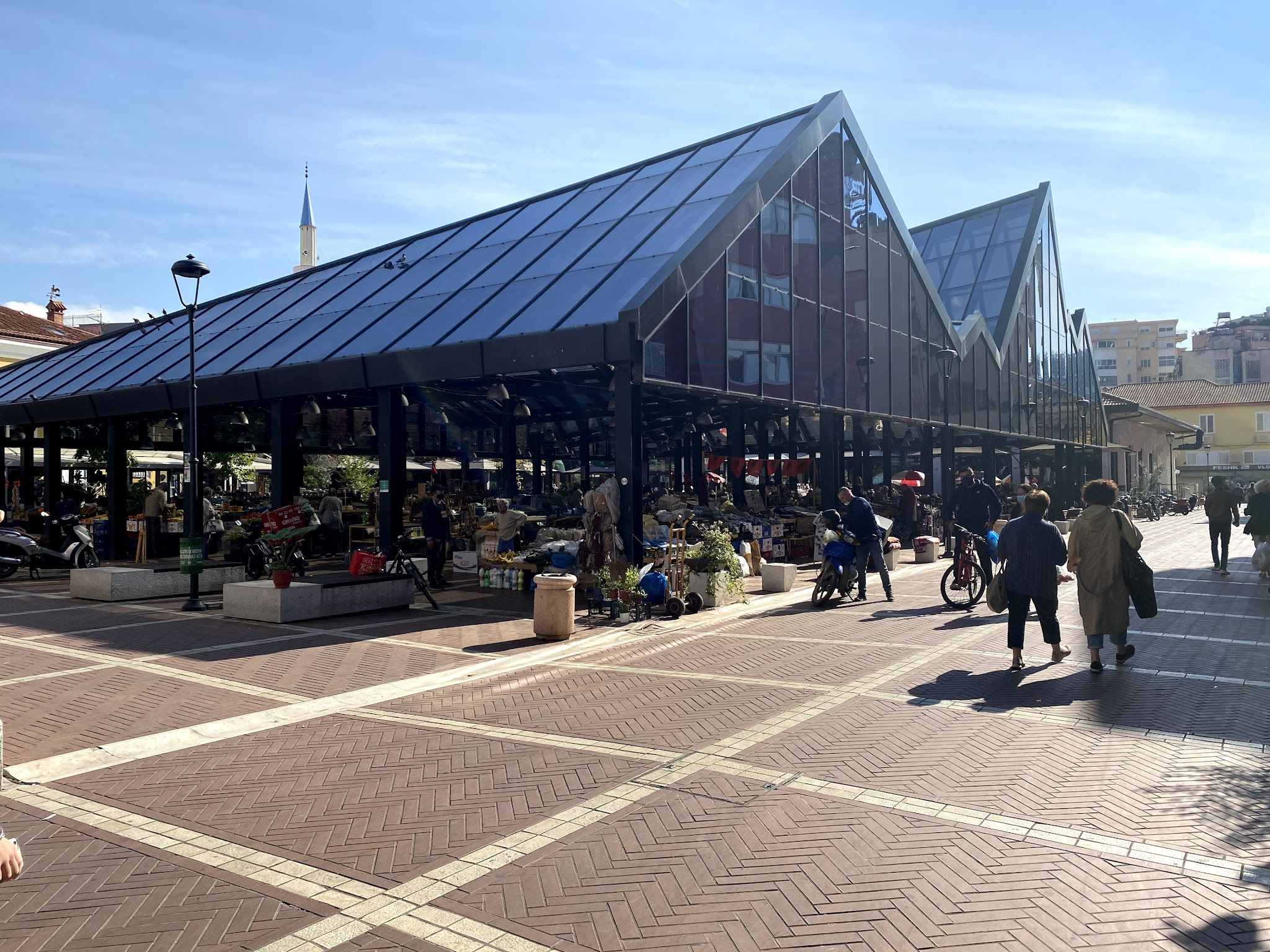
Pazari i Ri, one of my first attempts at doing something “touristy.”
“I was still learning what I thought travelers were supposed to do.”
The more I explored Tirana, the more comfortable it became.
The food was not some dramatic culture-shock experience. I was not eating anything bizarre. I could get burgers, normal meals, groceries, coffee, and everything else I was used to.
But I became obsessed with the bread.
I was used to buying sliced bread in a plastic bag from a supermarket. In Tirana, I kept finding fresh bakery bread instead. At first I thought this was inconvenient. Then I tasted it.
To this day, I still think Tirana has some of the best bread I have ever had. I would stay home on weekends, dip fresh bread in white truffle oil, watch movies, and be completely happy.
There were small things everywhere that made the city feel easy to live in. One place showed old movies outdoors at night with beanbags, blankets when it got cold, and a fire nearby. It was cheap, relaxed, and exactly my kind of night.
My birthday was October 16, so I rented a two-story penthouse for it. The outdoor space was surrounded by greenery and even had an outdoor shower. And, because I was still me, I spent part of the time working.
That was what surprised me most about Tirana. It did not feel like a tourist destination I needed to conquer. It felt homey.
I was more comfortable there than I had expected to be anywhere.
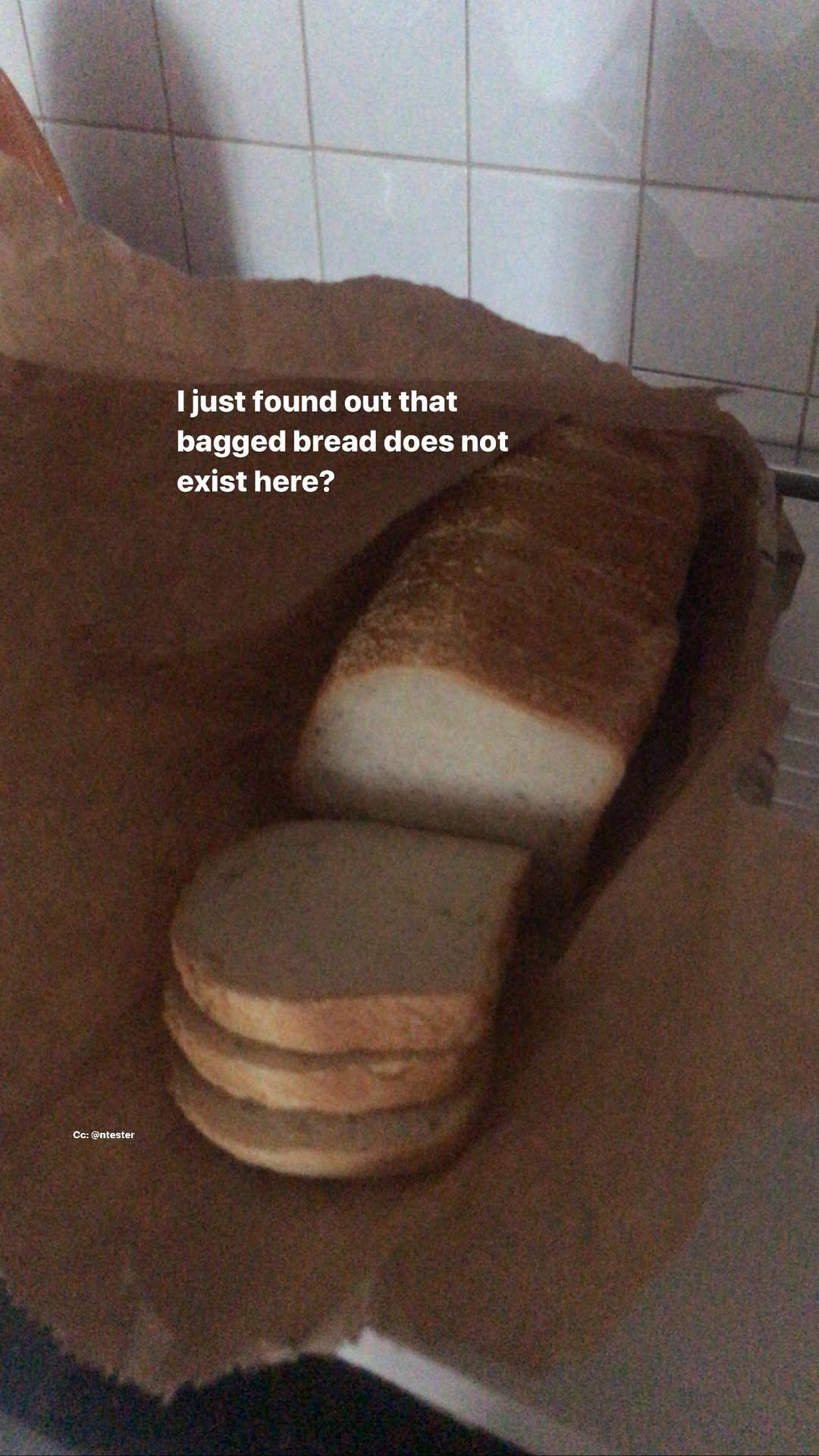
Learning that my normal idea of supermarket bread was not universal.
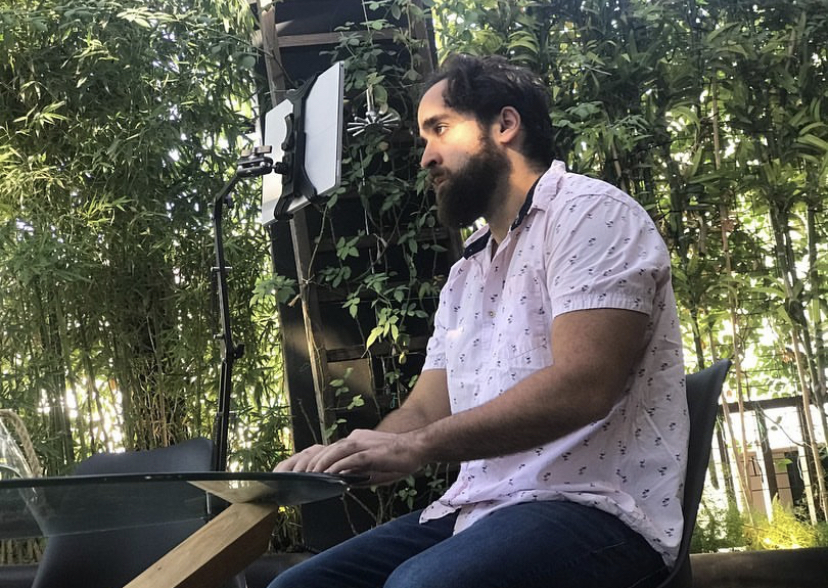
Working from the penthouse I rented for my birthday.
“Tirana did not feel like a place I was visiting. It felt like somewhere I could live.”
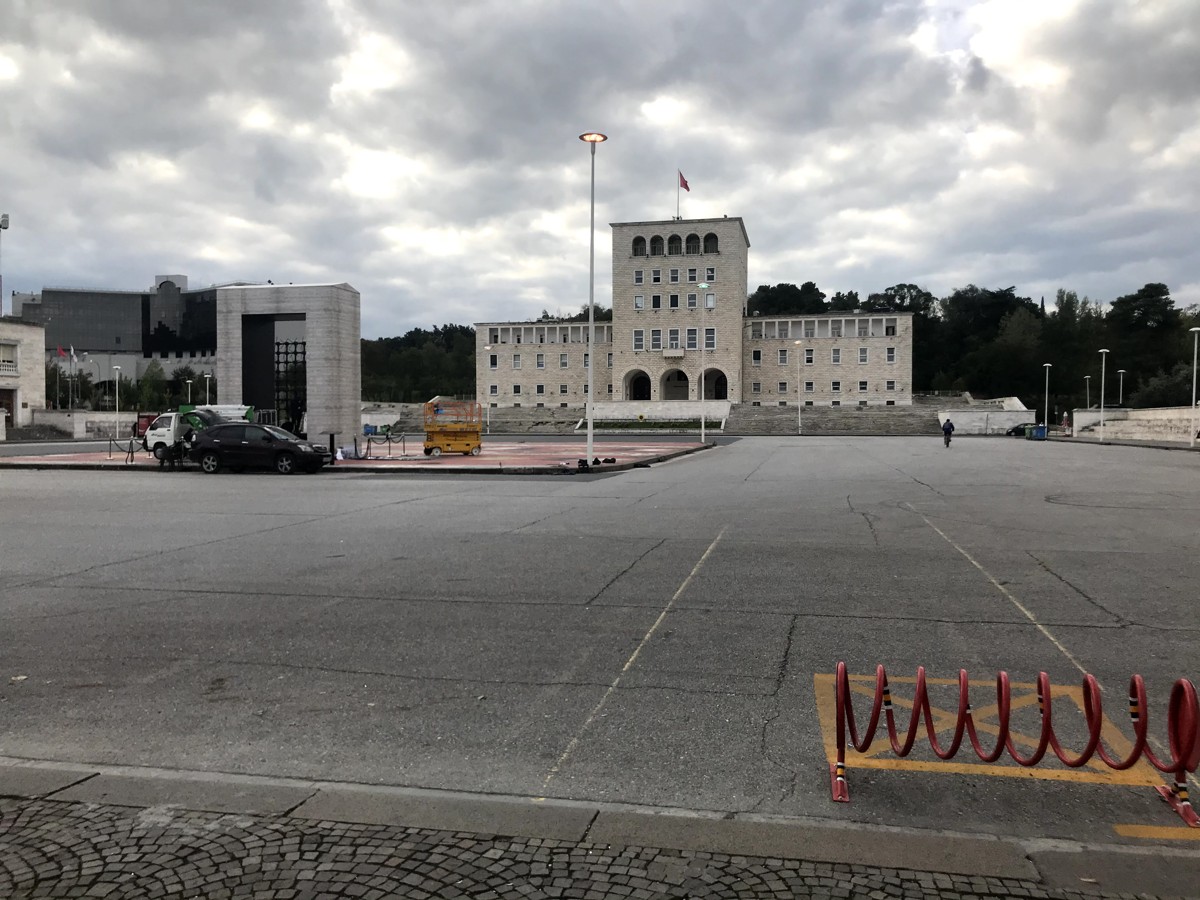
An everyday view of Tirana during my stay.
Toward the end of my stay, I decided I should go on a hike.
I found one online that was described as very easy. That sounded perfect. I knew my limits after brain surgery, and I had no interest in doing anything extreme.
The problem was that “very easy” apparently meant easy compared with the other hikes in the area.
I did not understand that until I was already there.
Everyone around me had hiking boots, backpacks, walking poles, and actual hiking clothes. I had jeans, a tank top, and tennis shoes.
Nobody stopped me.
I had pictured something closer to a relaxed walk through a field. Instead, we started moving through mountain terrain and narrow passes. I was sweating like crazy. I nearly slipped more than once. There were moments when I genuinely thought, this was a terrible idea.
The guide clearly agreed.
He kept checking on me because I was visibly having a much harder time than everybody else. I would never do that hike again. I was not prepared for it, and I had badly misunderstood what I was getting myself into.
But that mistake led directly to the experience that changed the entire trip.
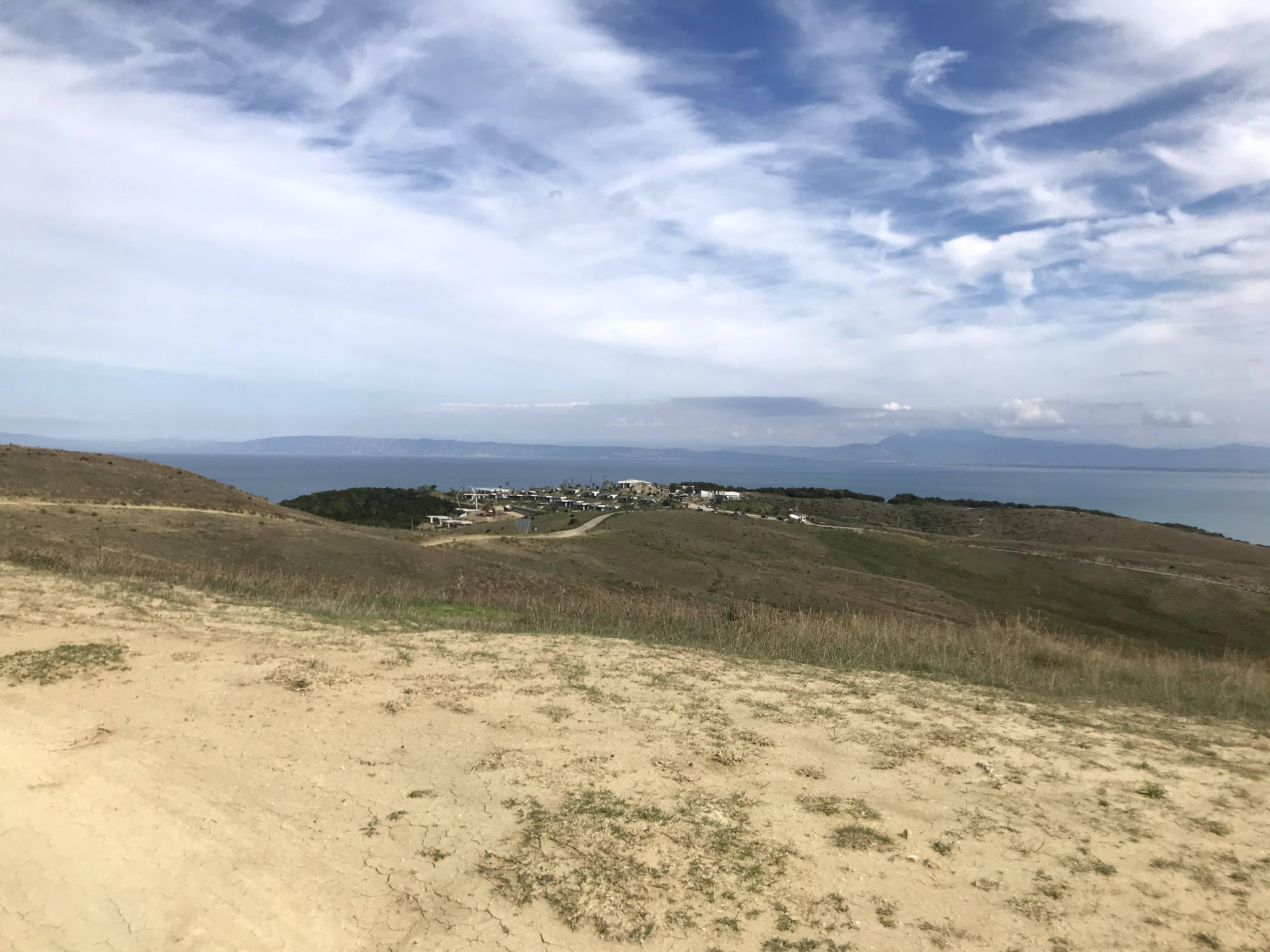
What I thought an “easy hike” was going to look like.
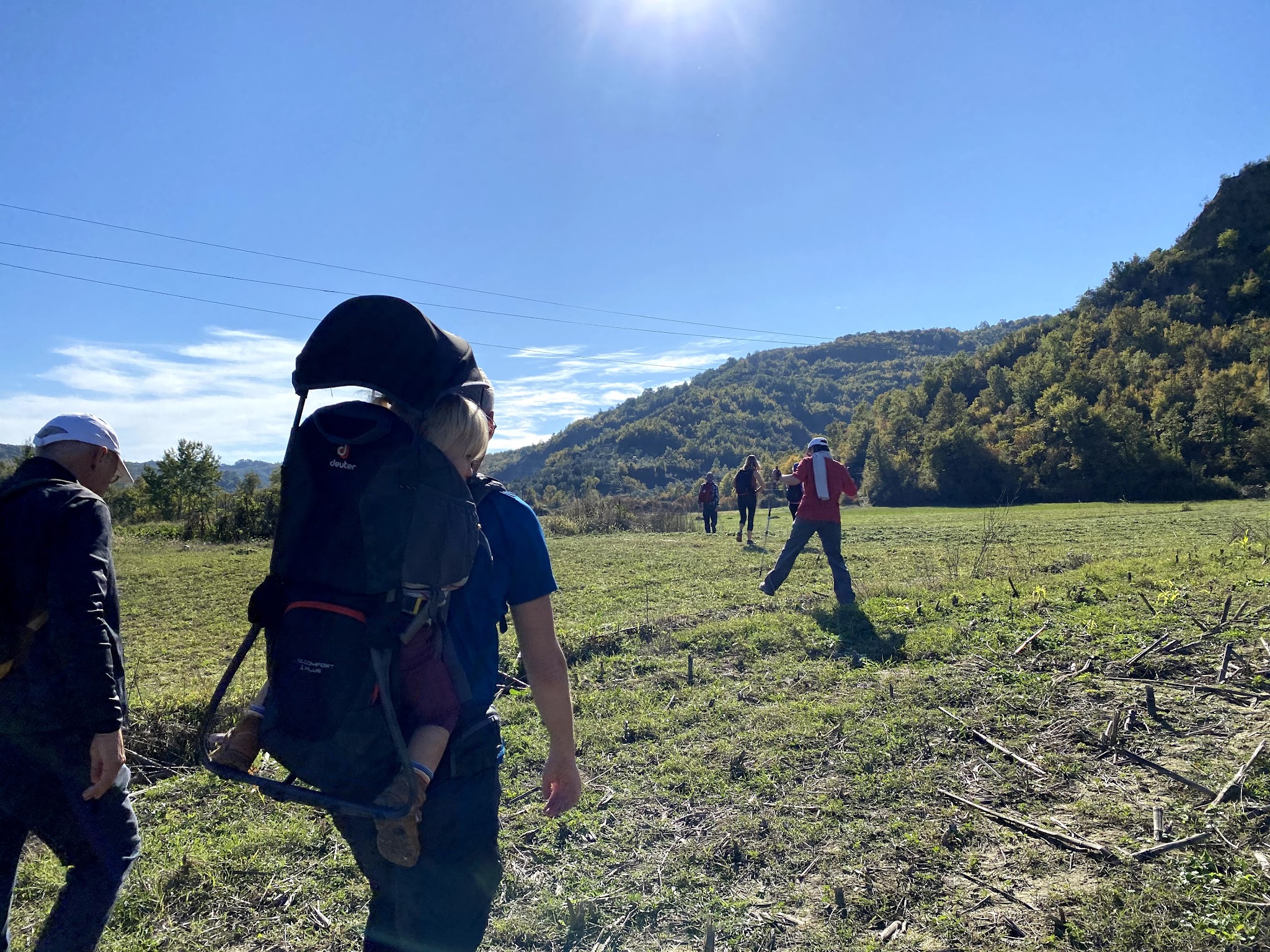
Everyone else showed up looking much more prepared than I did.
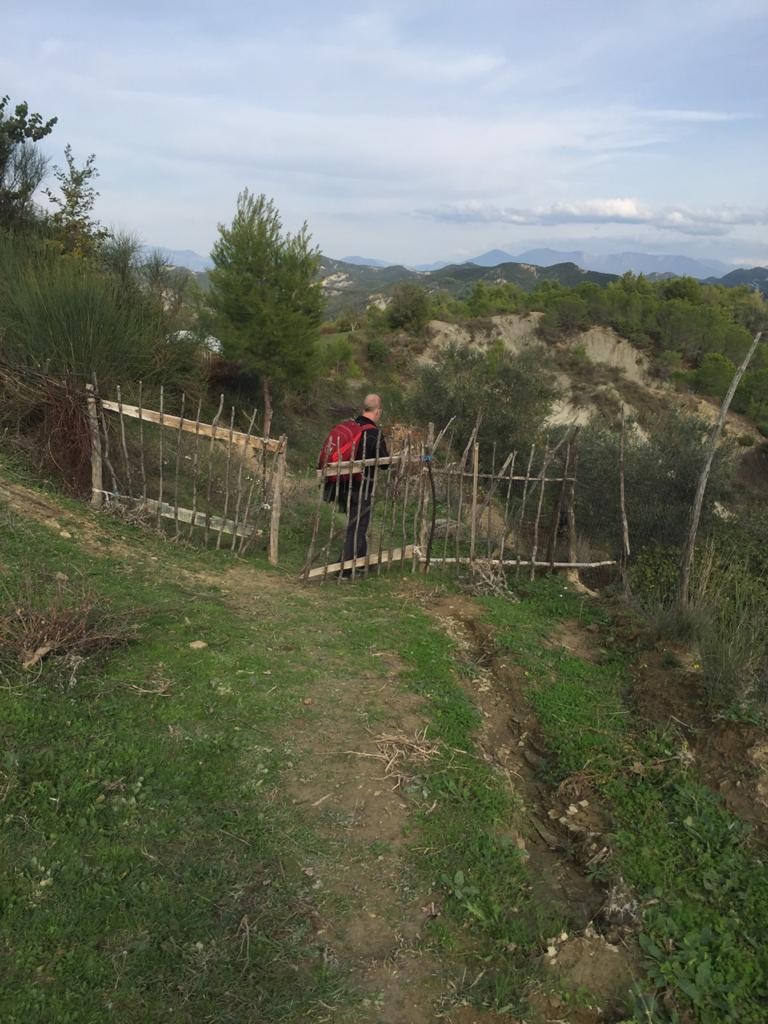
The rural route on my supposedly easy hike.
“Apparently ‘easy hike’ was a relative term.”
By that point, the guide had become genuinely worried about me.
I was exhausted, sweating, and struggling through terrain I had never expected to be on. At some point he spoke with a local man who had a horse. I have no idea exactly what was said, but the result was very clear: Alex was getting on that horse.
The man helped strap me in, and suddenly I was riding a horse for the first time in my life.
His son came with us and helped lead the horse down the mountain while the guide stayed nearby and explained what I needed to do. It was completely improvised. Nobody had sold me a horseback-riding experience. Nobody had planned this part of the day. I had simply reached the point where walking down the mountain was no longer a very good idea.
And it was incredible.
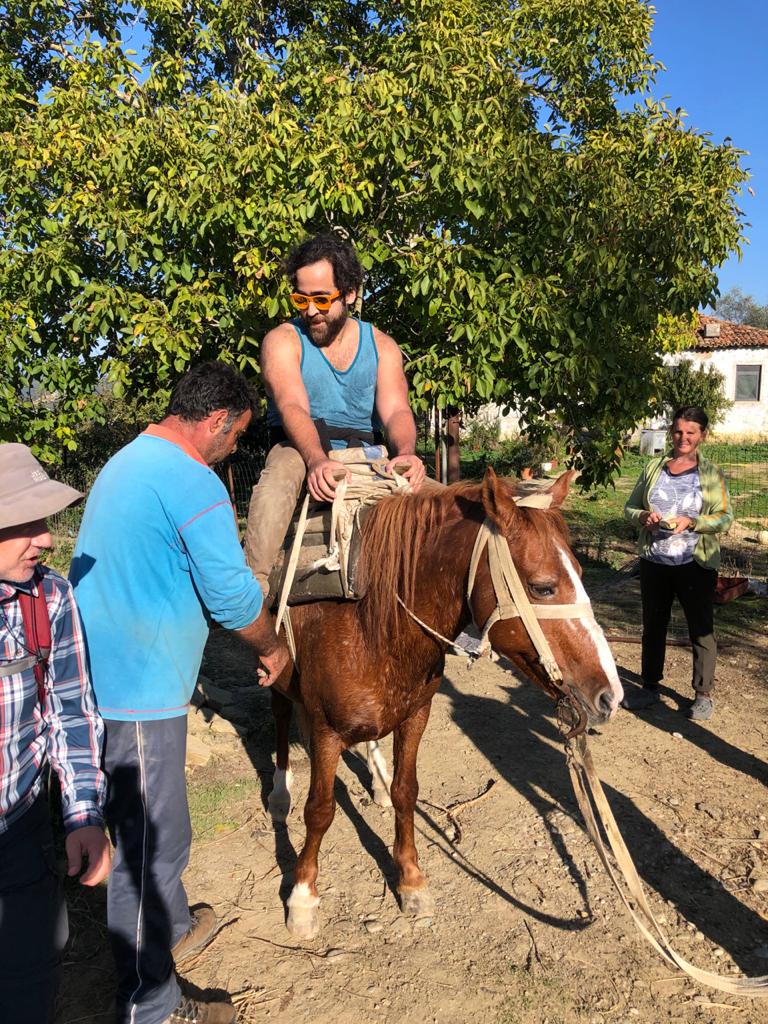
My first time on a horse, completely unplanned.
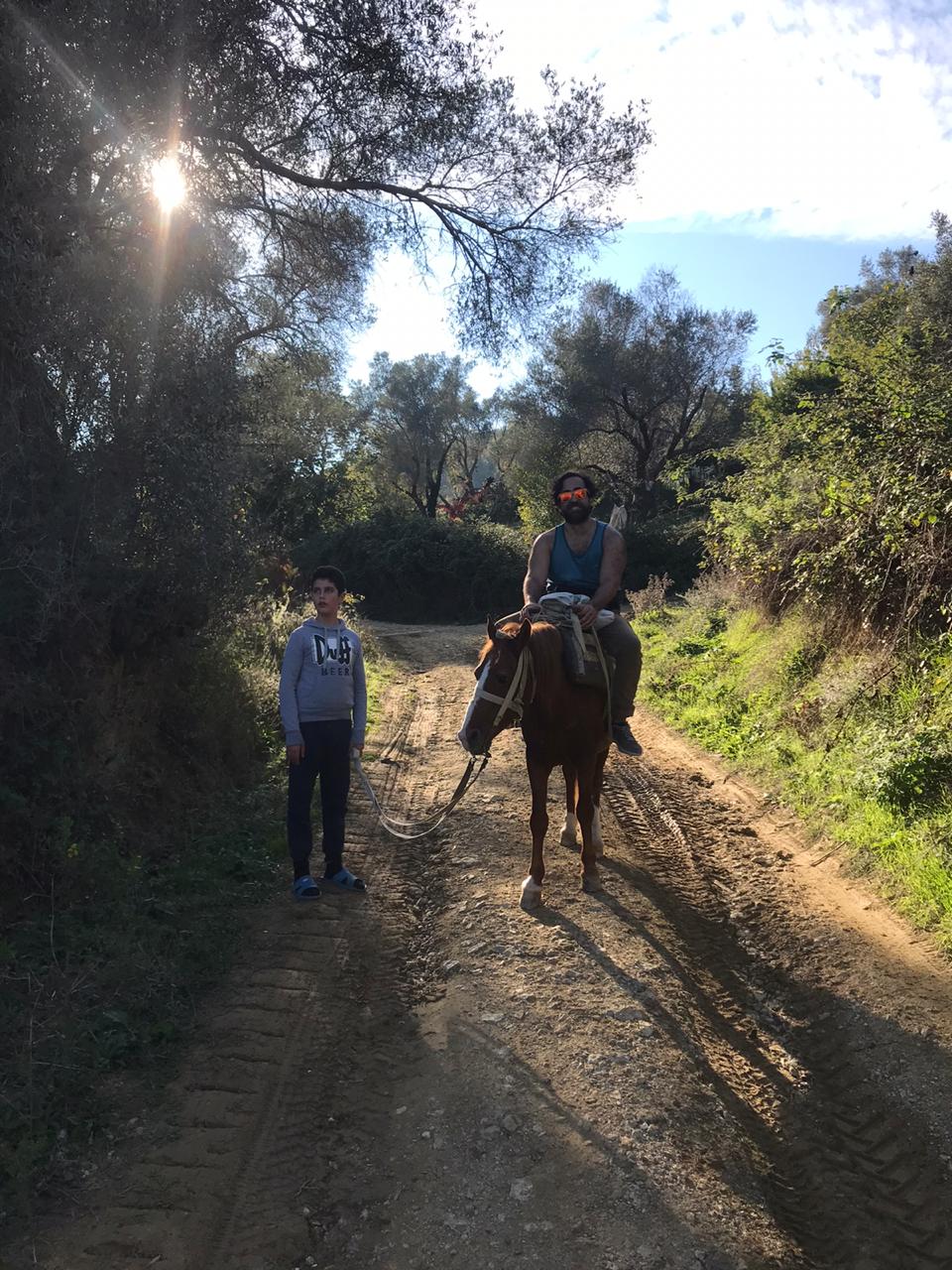
The boy who helped lead the horse down the mountain.
“This was not a special vacation. This was a random Saturday because I was bored.”
At the bottom, I tried to give the boy 100 lek as a thank-you. His English was limited, but he understood what I was doing. He kept saying, “No, no, no. Free. Free. Free.” Then he left with the horse.
I was standing there completely exhausted, and I remember thinking about how insane the day had been.
That was the moment something really clicked.
This was not a special trip I had saved for all year. It was not a once-in-a-lifetime vacation. I had gone on a hike because I was bored on a Saturday, almost completely misunderstood what I was signing up for, ended up on a horse in the Albanian countryside, and came home with a story I knew I would remember forever.
I felt like my life finally made sense.
When I got back to Tirana after that hike, I had a decision to make.
The original plan had been simple. Go to Albania for about thirty days, experience something different, then go back to Puerto Rico and resume normal life.
But now I did not want normal life back.
I could have gone home. I asked around about places to rent and looked at a few options. I probably could have found something if I had really committed to it. The problem was that I was no longer very interested in trying.
There was another option sitting right in front of me.
I was already in Europe.
Why go all the way back to Puerto Rico just to someday spend money flying back across the Atlantic again? London was right there. Everyone my age seemed to talk about visiting London eventually. I knew I would probably want to see it one day anyway.
So why not now?
This was the first time the trip stopped feeling like a trip with a fixed ending. I was not choosing a permanent life abroad. I was not announcing that I would travel forever. I was making a much smaller decision.
I just was not ready to go home yet.
I looked at London and immediately learned another lesson about travel: some places can destroy your budget very quickly. I saw the prices and thought, there is absolutely no way I am staying here for a month.
So I gave London two weeks.
Two weeks felt manageable. It would extend the trip a little longer. Maybe by the end of it, going back to Puerto Rico would make more sense. Maybe the world would be more open. Maybe I would finally feel ready to go home.
I had no larger plan than that.
But the important part was that I had made the decision.
Thirty days had been the experiment.
Tirana convinced me to keep going.
C H A P T E R 4
────────
The Extension
London, United Kingdom, November 6 to November 21, 2020
London was not the city that changed everything for me. London was the city where I bought myself more time.
After Tirana, I already knew one thing for sure: I did not want to go back to Puerto Rico yet. The original idea had been simple. I would travel for thirty days, do something different, then go home. Tirana ruined that plan.
By the time I reached London, I was no longer thinking about this as a normal vacation. I was starting to think about something much stranger. What if I just stayed abroad?
I did not have some giant plan. I was not planning a tour of Europe. I was not trying to see every famous landmark before going home. I was trying to figure out how to make wherever I happened to be feel like home. London was my first attempt at that.
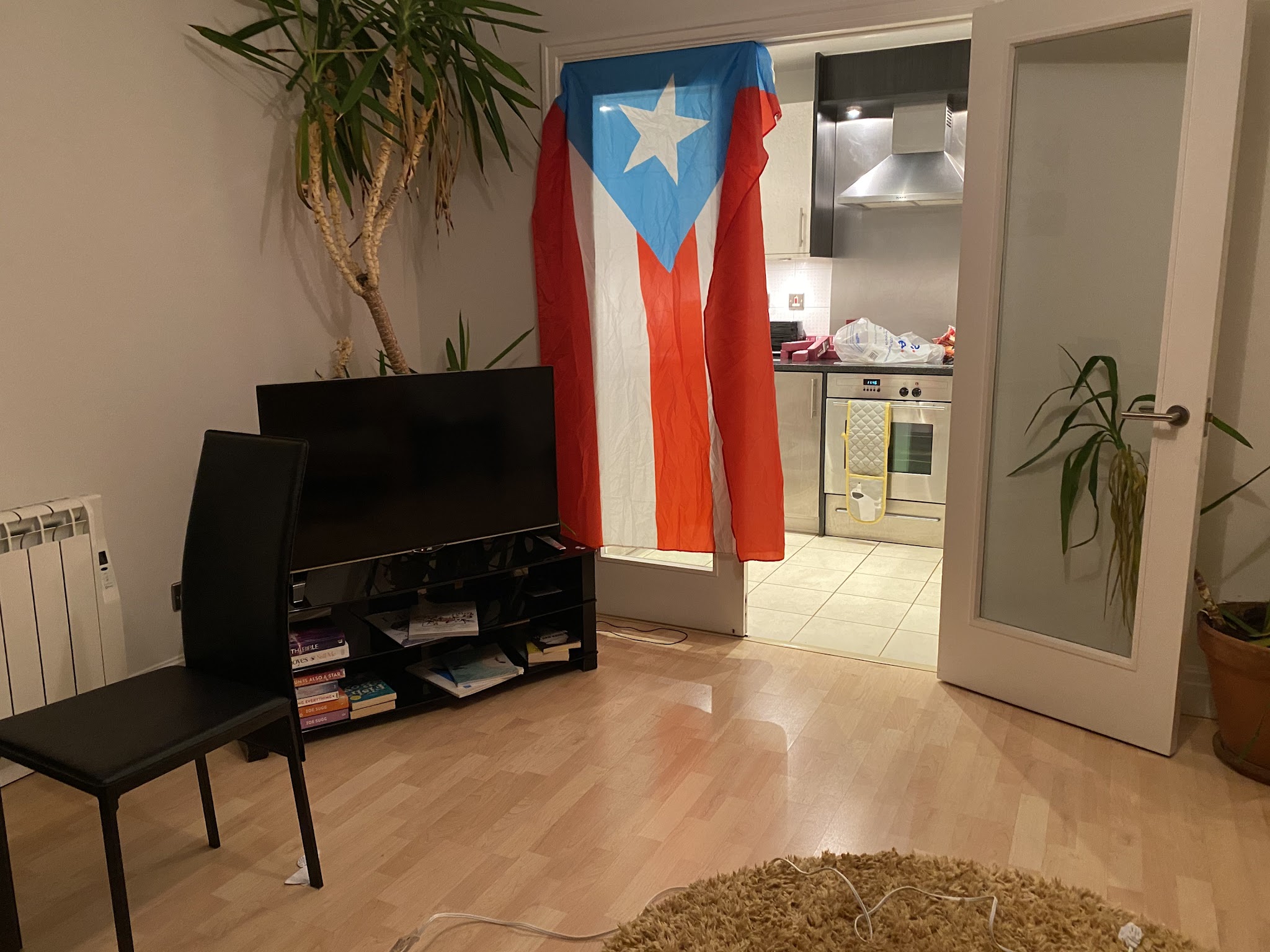
The Puerto Rican flag followed me from Old San Juan to Tirana and then London.
I stayed in a nice business area that felt very corporate, clean, and organized. I liked it. There was nothing particularly dramatic about my daily life there. I worked. I bought groceries. I stayed inside a lot. I walked around when I felt like it.
And that was kind of the point. For the first time, I was starting to understand that I did not have to constantly do things just because I was in another country. I could simply live there.
I still wanted at least one stereotypical London picture. So, of course, I found the red phone booth. That was really all I needed.
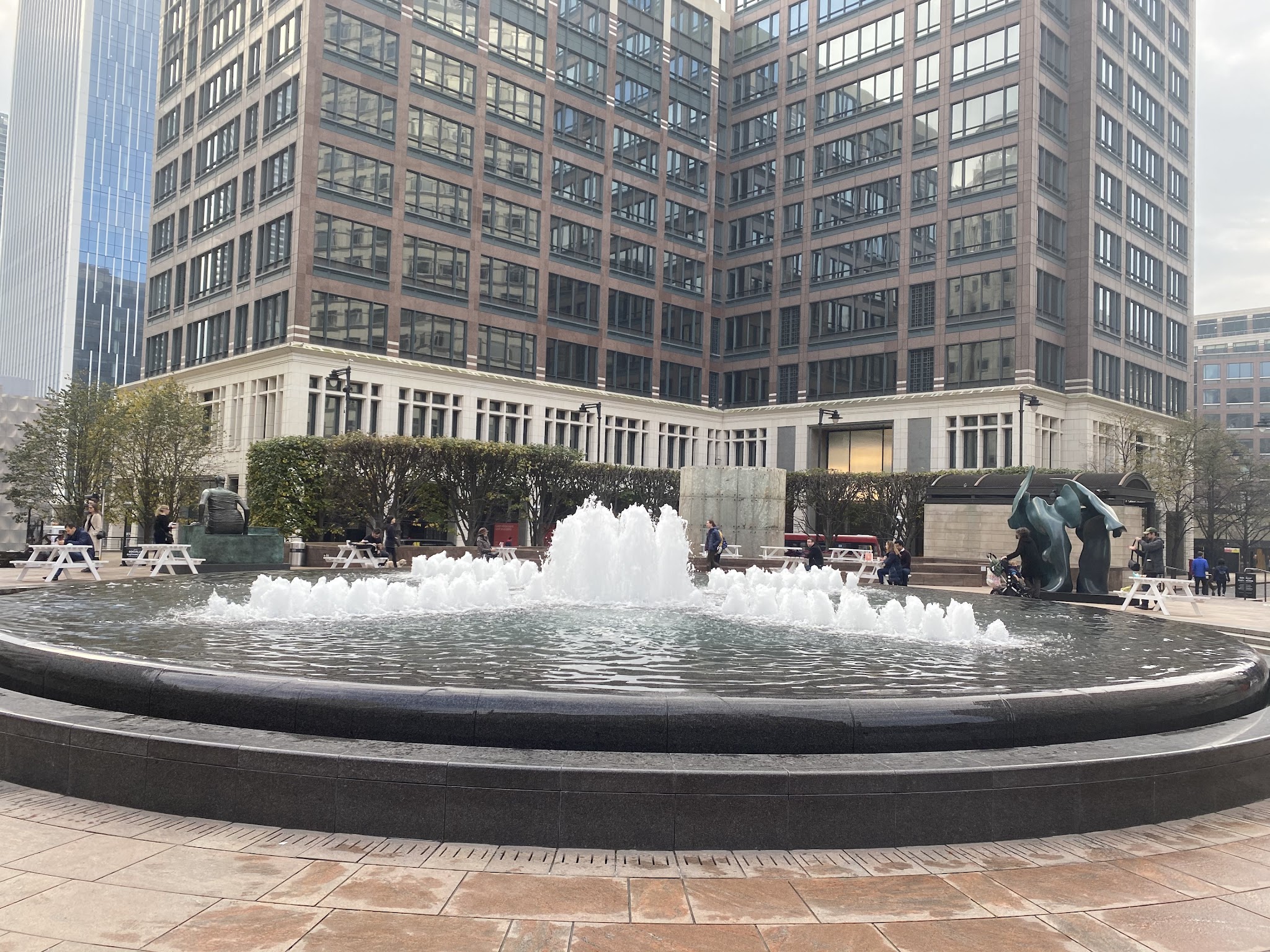
The quiet business area where I spent my two weeks in London.
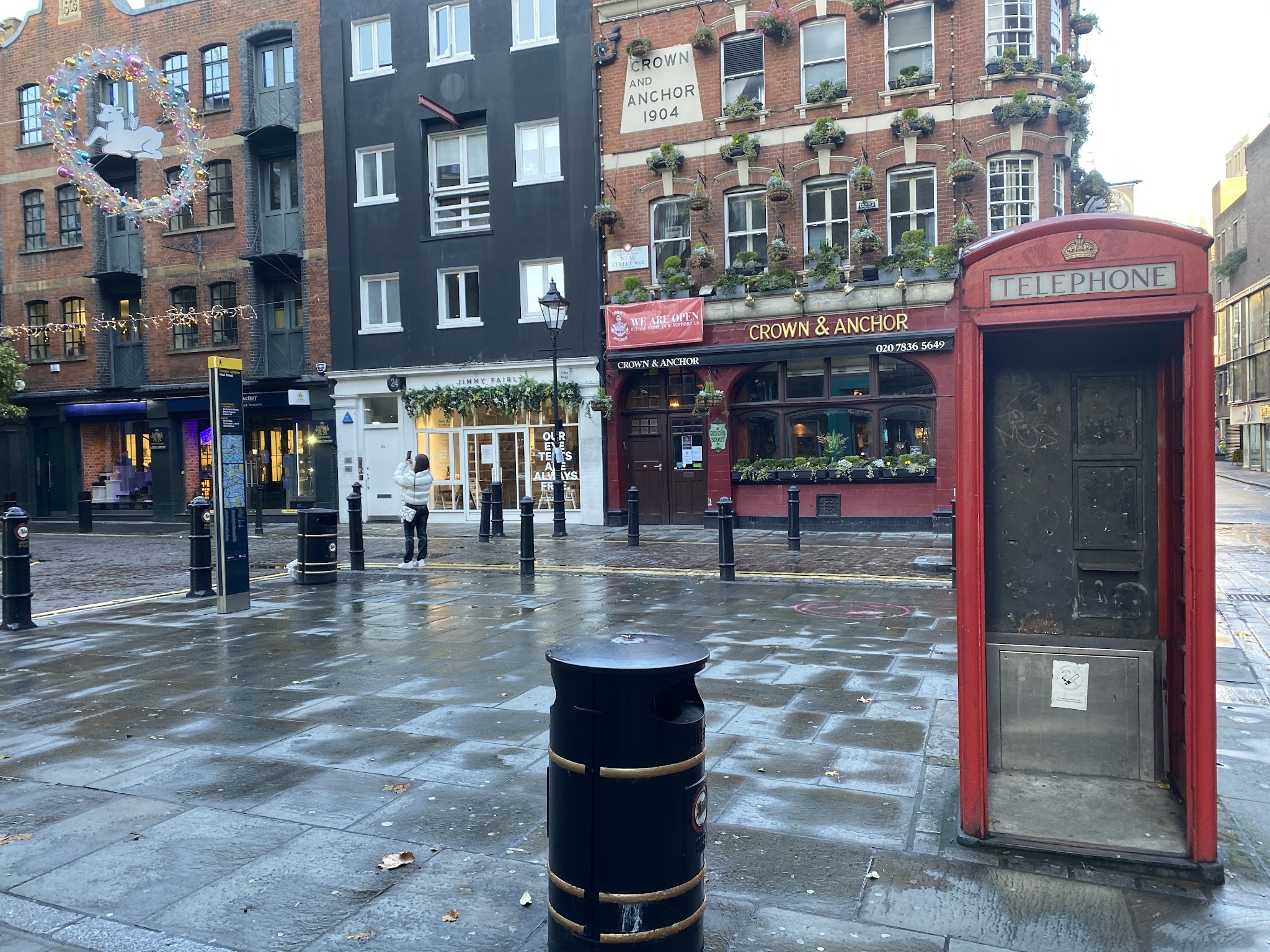
I was not above taking the classic London photo.
London also started teaching me that some of the best parts of traveling were not major attractions. Sometimes it was just finding something ridiculous nearby.
I am a huge Gordon Ramsay fan, so when I saw Gordon Ramsay Plane Food at Heathrow, there was no chance I was going to ignore it. I had a traditional English breakfast there. That counted as tourism for me.
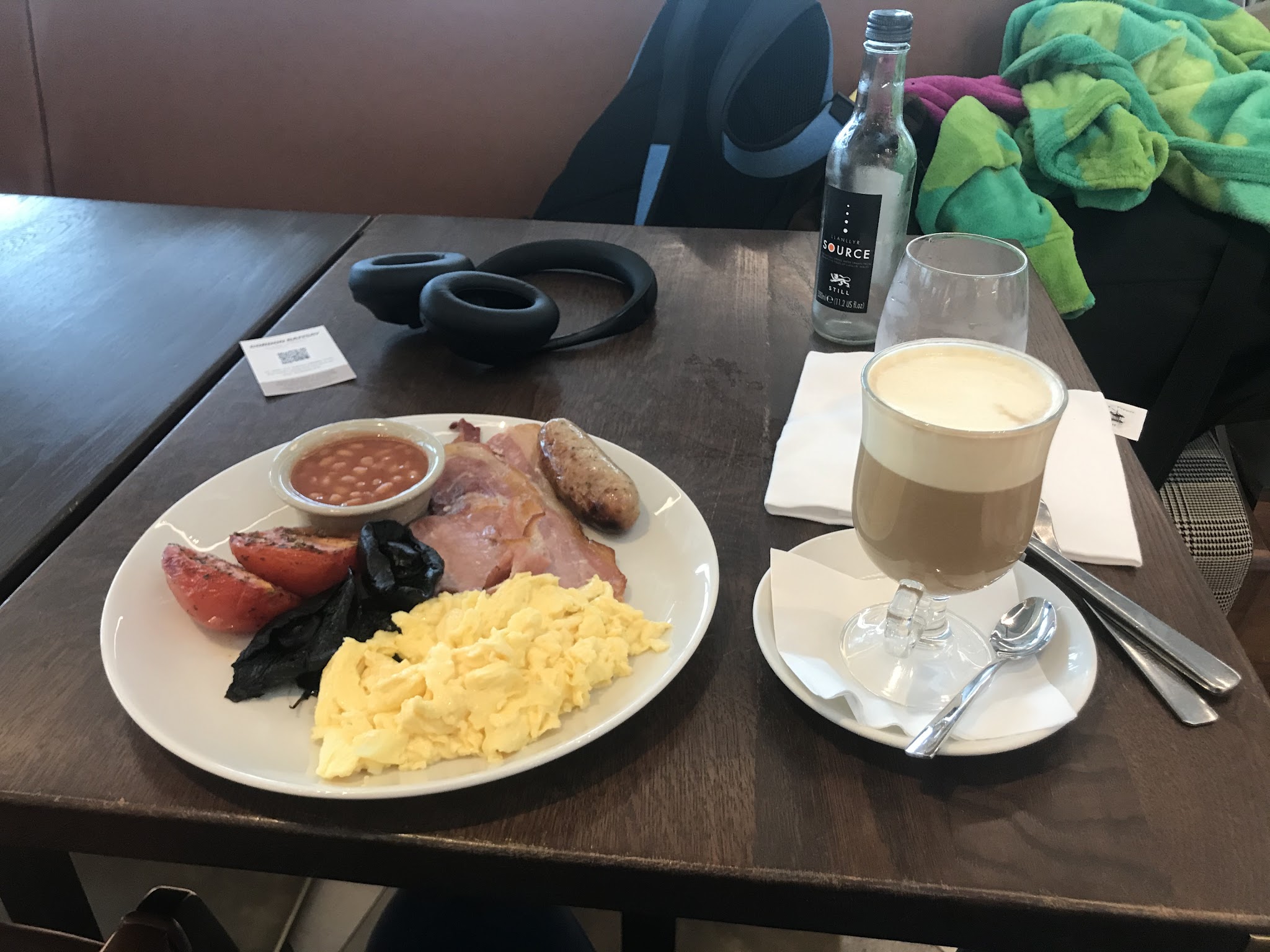
A traditional English breakfast at Gordon Ramsay Plane Food.
Then I discovered something even better. I was looking through food delivery options one day and saw Los Pollos Hermanos. Yes. The fried chicken restaurant from Breaking Bad. I ordered it immediately.
Out of everything London had to offer, being able to say that I ate Los Pollos Hermanos was genuinely one of the things I was most excited about.
It also taught me something useful. I did not need to climb a mountain or stand in front of a monument to have a story. Sometimes I could just live somewhere long enough for weird things to find me.
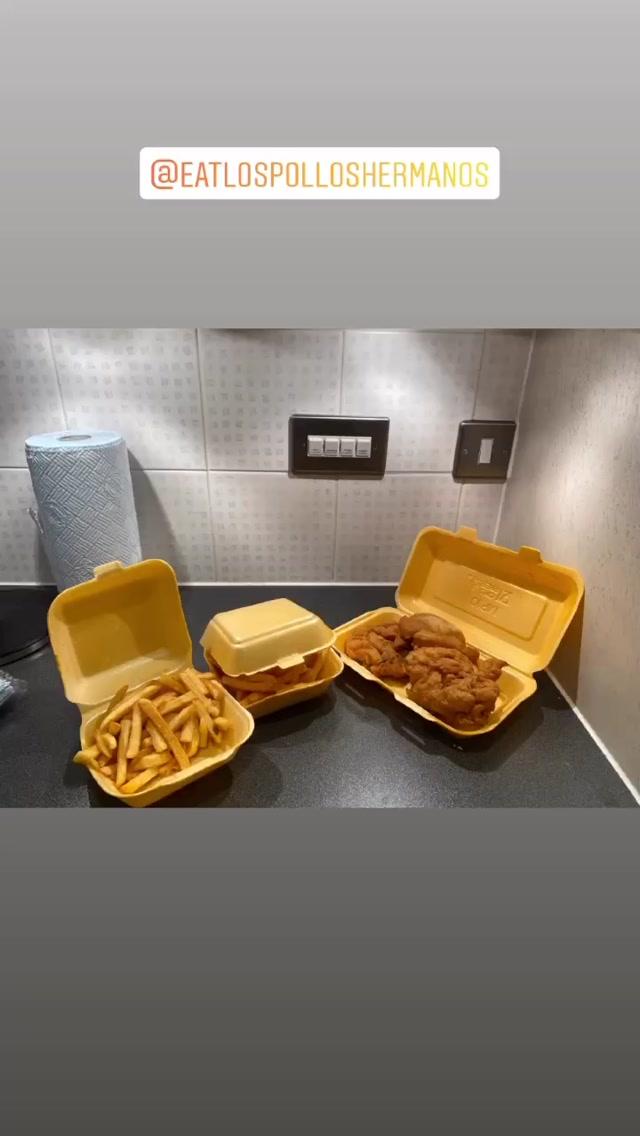
One of my proudest London discoveries: Los Pollos Hermanos.
At one point, I even rented myself a private business room so I could work. Looking back, this was completely unnecessary. I think I still had this idea that working remotely needed to look professional in some traditional way.
So I rented a conference room. For myself. I put my business on the television screen, sat there alone, and worked like I had important executives coming to meet me.
Nobody was coming.
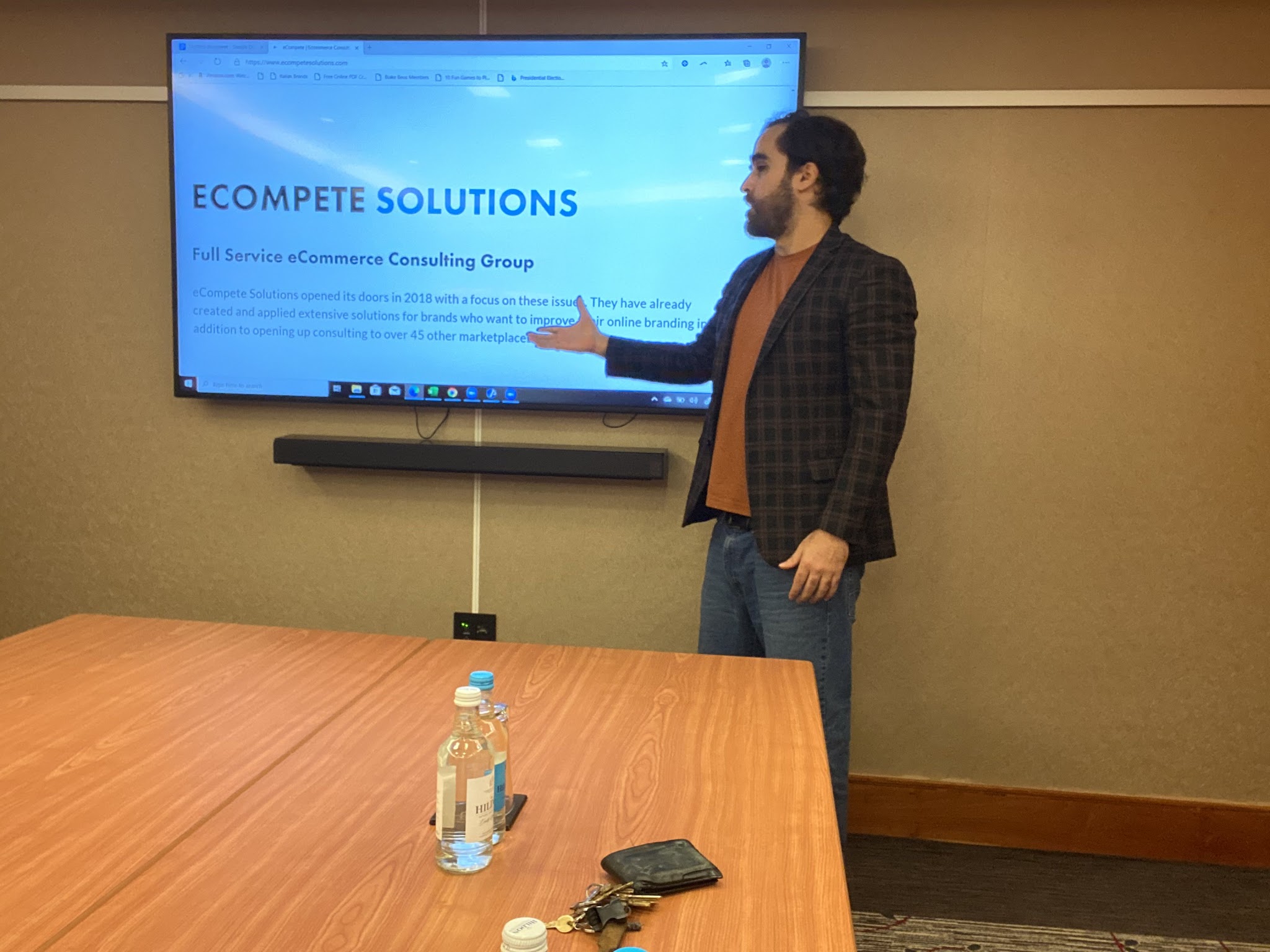
Renting myself a conference room because apparently my laptop was not professional enough.
It was ridiculous, but I was still figuring this life out. That was what London really was. It was not a spectacular travel chapter. It was a learning chapter.
About a week into the trip, something changed. I stopped asking when I was going back to Puerto Rico. I started asking where I was going next.
I originally decided that the next place would be Lisbon. It seemed logical. I was already in Europe. Portugal looked like it was accepting travelers under certain conditions, and I was able to buy a plane ticket. I also rented an Airbnb in Lisbon for about a month. It cost around $1,000.
Everything looked fine. Until I tried to board the flight. At Heathrow, the airline employee told me I could not go to Portugal because I did not have residency. That was news to me. My immediate thought was: then why did you let me buy the ticket? Nobody had any trouble taking my money.
The airline eventually refunded the flight because I was not allowed to board. The Airbnb was a different problem. I was too close to the reservation date to simply cancel without losing a large amount of money. I believe I lost roughly the first month, around $1,000.
It was frustrating. But surprisingly, it did not break me. I was annoyed for a little while, and then I had another problem to solve. My London Airbnb was ending. I needed somewhere to sleep. And I needed another country.
This was probably my first real test of whether I could actually live this way. Plans changed. Money was lost. Nobody was going to fix it for me. So I changed plans.
I booked the Sofitel at Heathrow. There was a cheaper hotel available, but the Sofitel was the nicer option, and at the time I thought this might be my only time staying in London. If I was going to get stranded at an airport, I figured I might as well get stranded comfortably. I booked a few days and used the time to regroup.
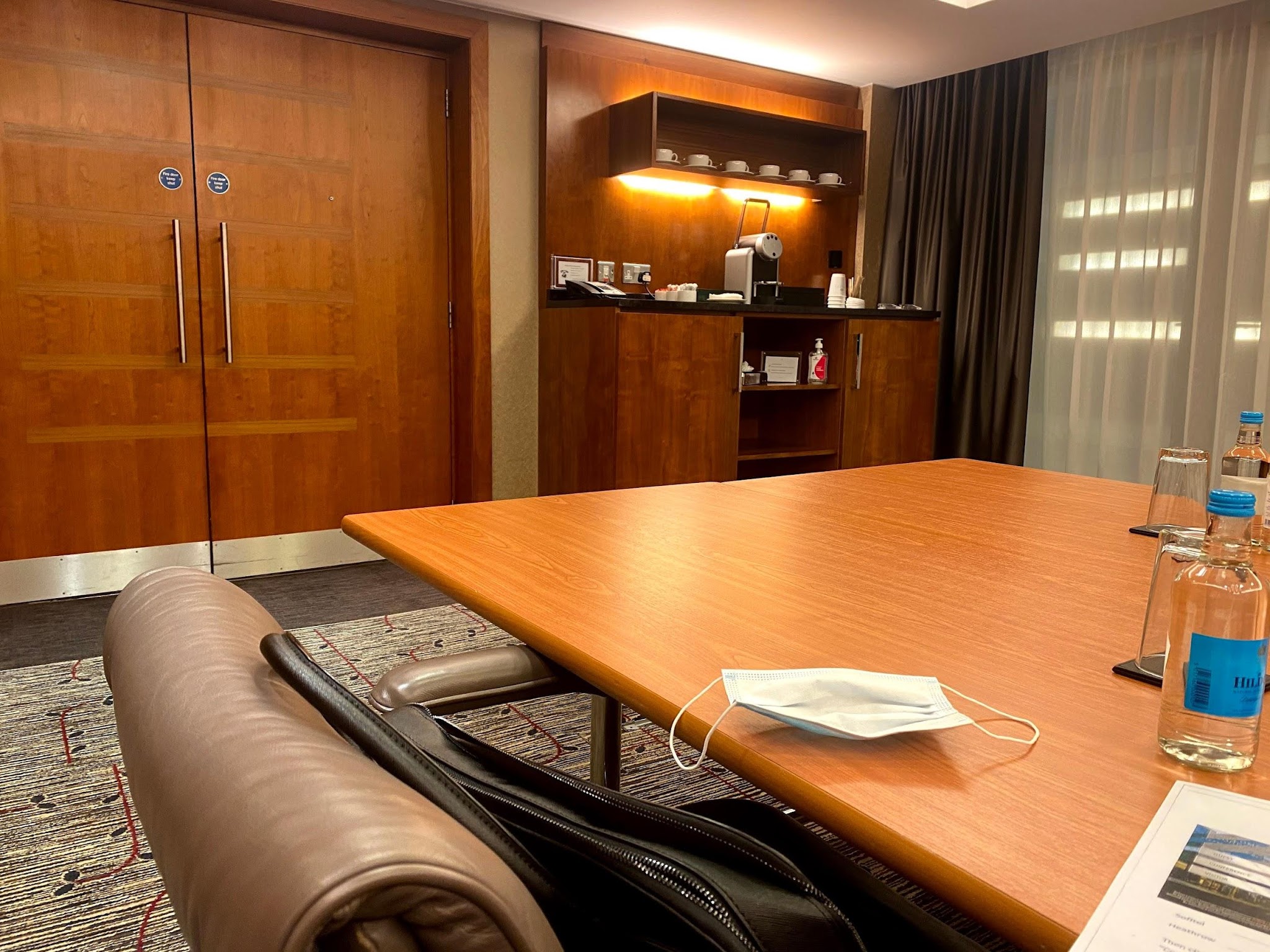
The other side of my completely unnecessary private office.
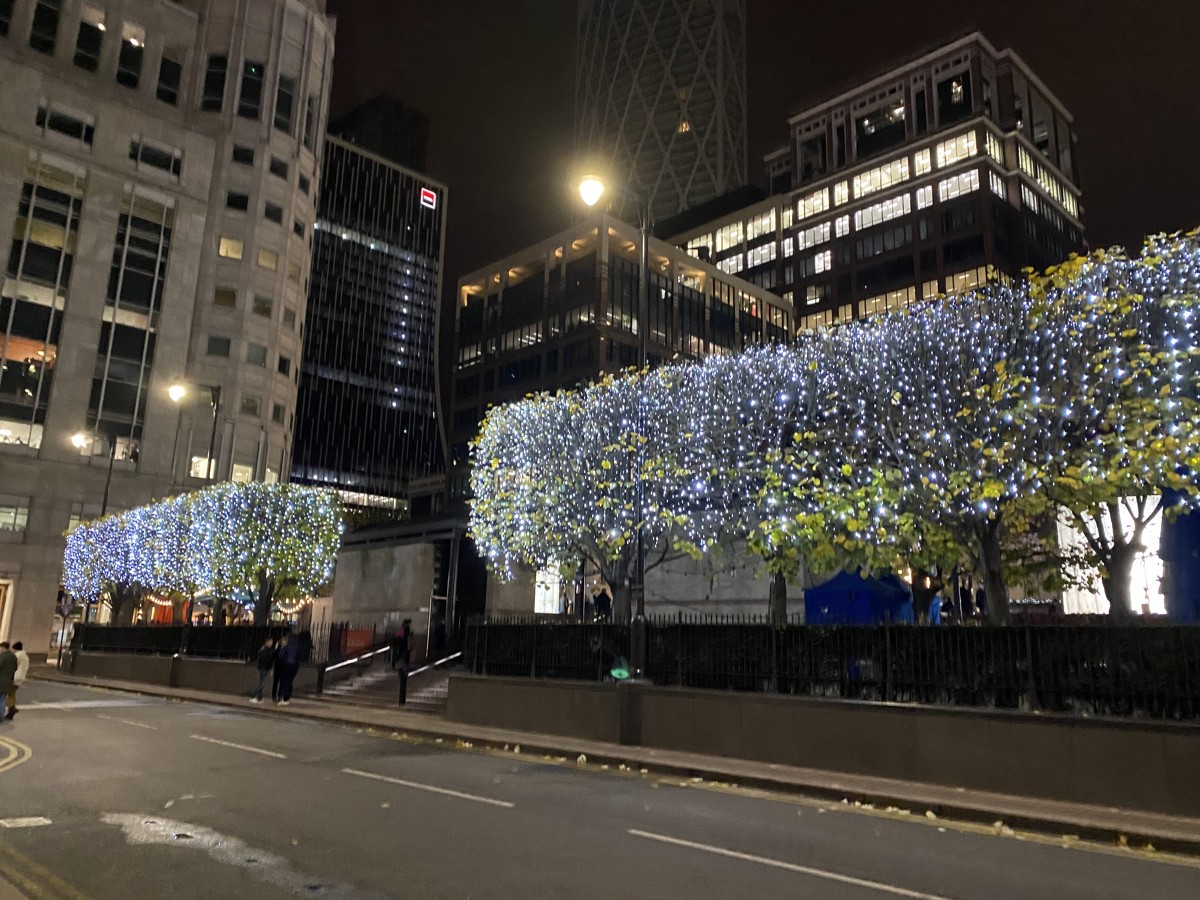
Christmas lights near my London apartment.
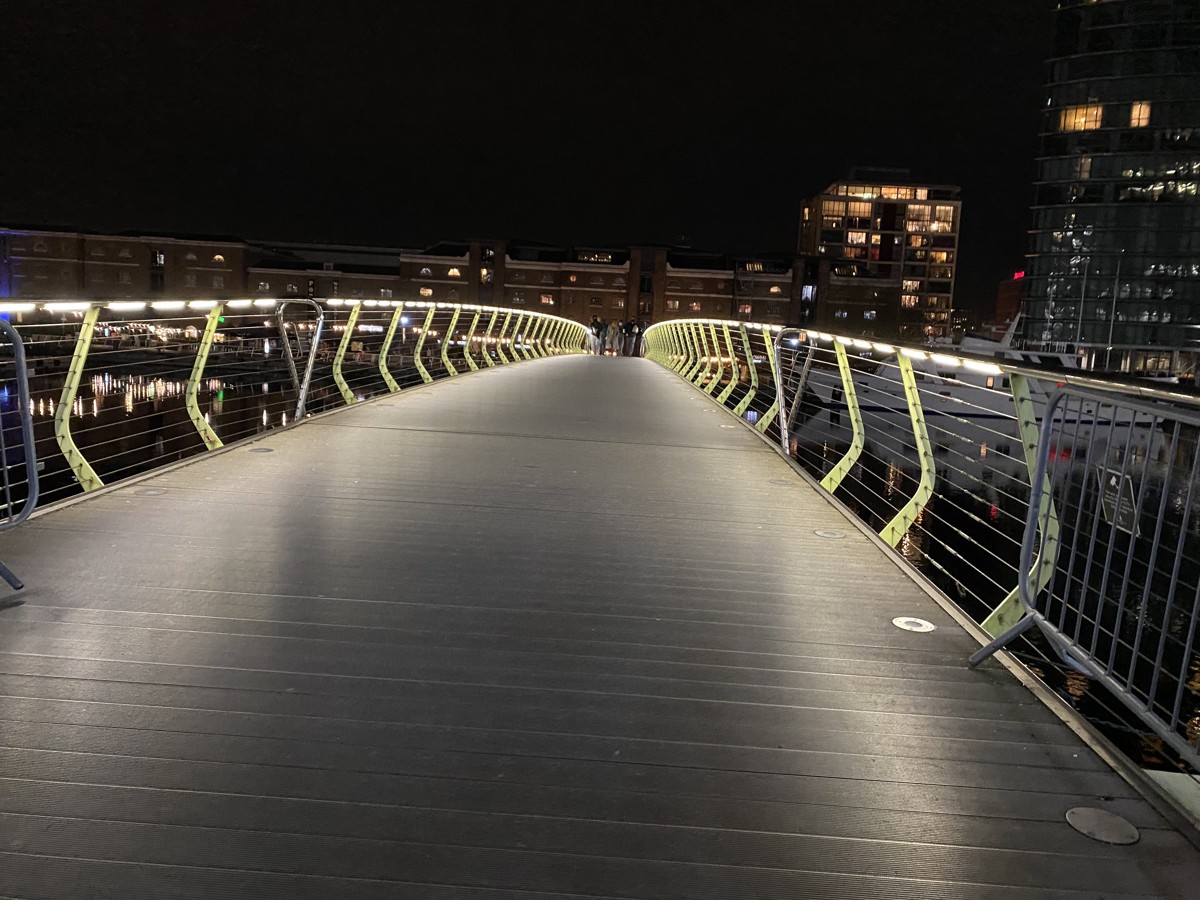
The bridge I crossed, lit up for Christmas.
“I was not extending a vacation anymore. I was extending my life abroad.”
That was when Florence started making sense. I had always wanted to visit Italy. It looked possible to enter with the restrictions that existed at the time, and I realized that instead of going home, I could simply change directions again. So I booked Florence.
Then London gave me another problem. Because this was during COVID, traveling between countries usually meant getting tested. I had taken COVID tests over and over again while traveling. One of the tests I took in London came back positive. I was convinced something was wrong. I felt completely normal, and the result did not make sense to me.
Fortunately, the Sofitel had its own very streamlined testing service. So I tested again. Negative. Then I tested again. Negative again.
I contacted the original testing company because I believed they had given me a false positive result. I left them a terrible review. They called me afterward, apologized, and refunded the test. At least I won that argument.
With my negative test ready, I thought I was finally finished with the London problems. I was not.
For my flight to Florence, I woke up around four in the morning. I got to Heathrow extremely early. There was already an enormous line. I stood in it like everybody else.
The problem was that I actually had priority. I could have used the priority lane. I did not know that. I also do not like assuming that I am allowed to skip people, so I just stood there waiting. And waiting. And waiting. Eventually I reached the counter. I had missed my flight. After waking up at four in the morning, I was furious.
Fortunately, it did not become a disaster. The airline employee simply moved me to the next flight, which was two days later. They also explained something very useful: next time, use the priority lane. Good to know. I had to extend my hotel stay again. This time I moved to a more basic hotel on the other side of Heathrow because it was closer to where I actually needed to check in.
It was inconvenient. It was expensive. It was exhausting. But it was also my first real introduction to something that would become very normal over the next several years: airport problems, missed flights, entry restrictions, hotels booked at the last minute, plans changing with almost no warning, and money disappearing because something somewhere went wrong.
At the time, I did not realize how many times I would eventually deal with situations like this. I would get much better at it, but London was where I started learning. And through all of it, there was one thing that never really changed. I still did not want to go home. That was the important part.
London gave me every excuse I needed to stop. The Lisbon plan failed. I lost money. I dealt with COVID testing. I missed a flight. I spent days sitting around Heathrow waiting to leave. And my reaction was still not: I should go back to Puerto Rico. My reaction was: Okay. Where else can I go?
That was when the decision from Tirana became something more permanent. The thirty-day experiment was over. I had decided that, for now, the world was home. And the next place I was going to try living in was Florence.
C H A P T E R 5
────────
Magic Is Real
Florence, Italy, November 25, 2020 to February 13, 2021
Florence was supposed to be a change of plans. It became the place I would measure other places against for years.
After the final stretch in London, I was ready to be somewhere that was not an airport hotel. Portugal had fallen through, but Italy had been a dream long before any of this. Around 2018, I had started telling people that I wanted to live there for a while. I had not known which city. Then, almost on the spot, Florence became the answer.
The rental prices were not exactly cheap, but they were within reach. With so little tourism during COVID, I felt I had found an opportunity I might not get again. I had been thinking in terms of ninety days, not another two-week extension. I wanted as much time in Italy as I could get, so I booked the apartment and checked that I could enter.
I arrived. My luggage stayed in London.
The airport was smaller than I expected, and eventually it became clear that my bags were not coming around. I went to a counter, filled out a form, and gave them my address. We managed to sort it out despite the language gap. The next day, a van brought the bags to my apartment. One day without my spare clothes, and it was over. After Heathrow, I could live with that.
Then I could get on with the part I had been dreaming about. I was not just visiting Italy for a few days. I had an apartment in Florence, work to do, and time to settle in. Outside were stone buildings and statues that looked like they belonged in a museum. Except they were just there.
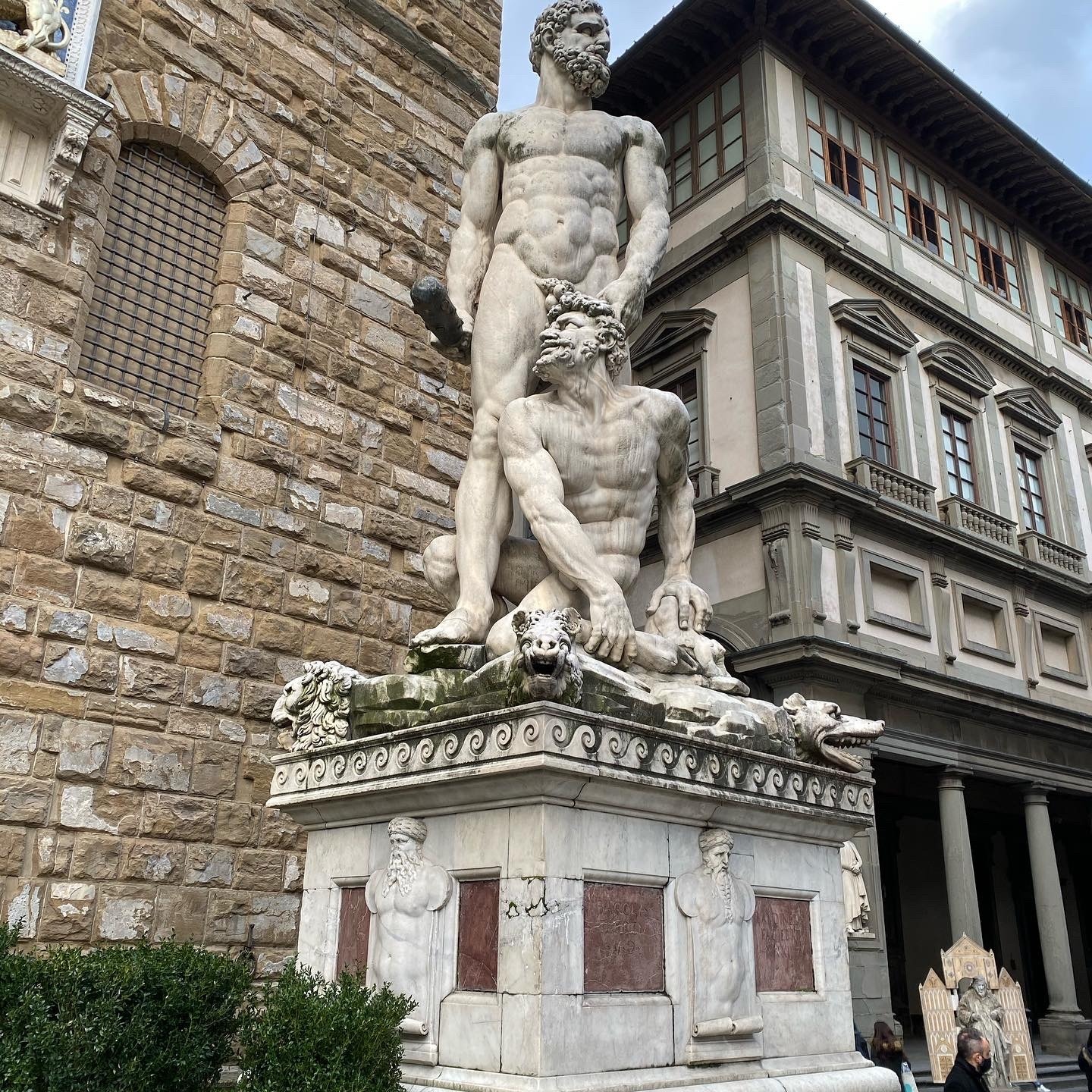
Not inside a museum. Just part of the city around me.
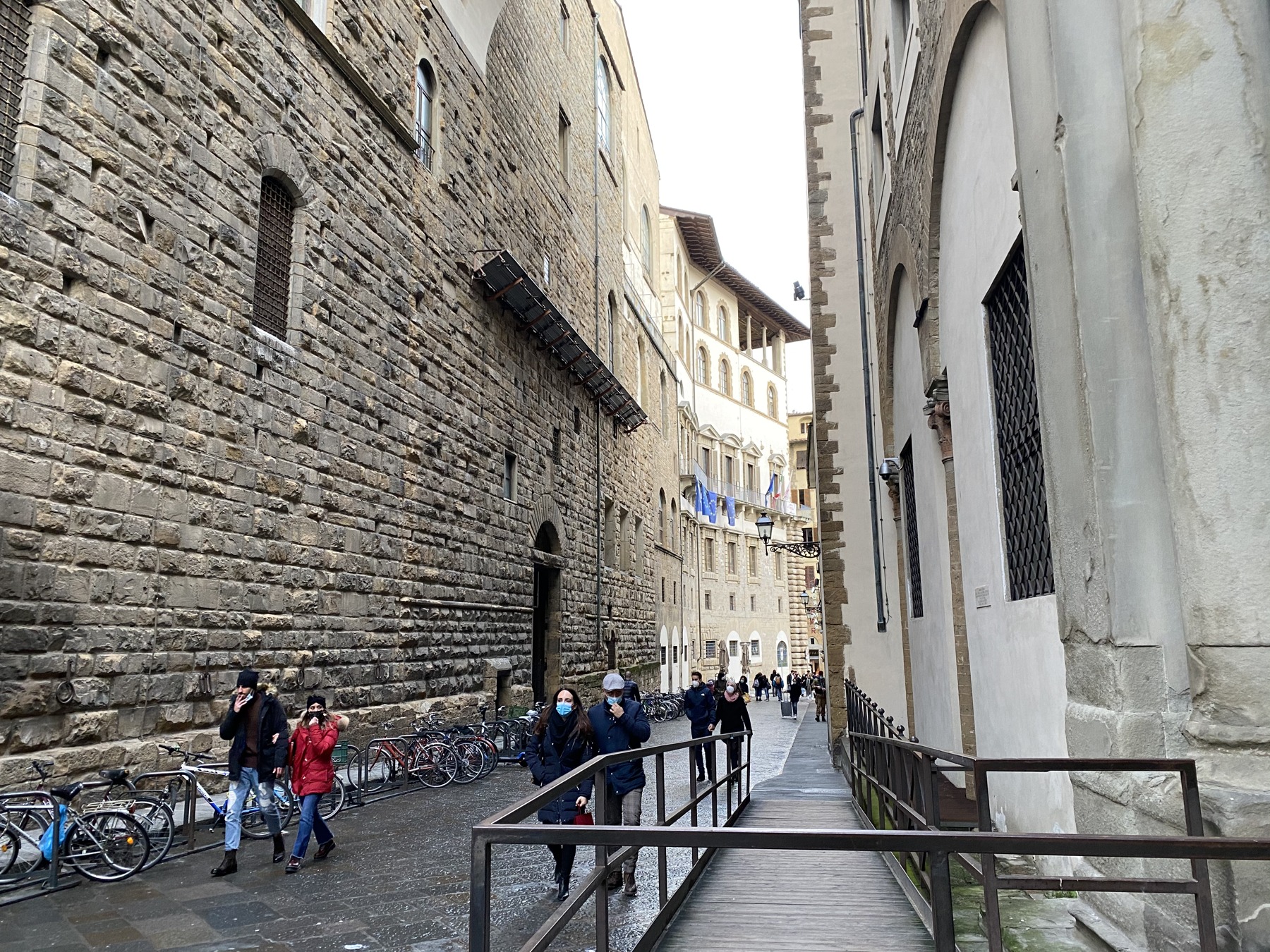
An ordinary walk through Florence.
“I had an apartment in Florence, work to do, and time to settle in.”
One day, I walked to a supplement shop to buy protein. That was the entire purpose of the outing. I was not following a tour guide or hunting for a famous view. I needed something from a shop.
The walk was one of the most beautiful things I had ever seen. There was the river, the old buildings, the narrow streets, and all these details I would have missed if I had been rushing somewhere. I had gone out to run an errand, and the route itself felt like an experience.
That was Florence. At least, that was the Florence I was living in. The beauty did not wait behind an entrance or at the end of a long drive. It started outside my door. Even when I was not trying to do anything interesting, something would make me stop and take a picture.
There were statues standing out in the open, with enormous old buildings behind them. Other sculptures were protected by small barriers. I knew not to touch them, but I did not need to buy a ticket to stand there and look. On another walk, I came across a white church glowing against the night sky. I did not know its name. I just knew I had to stop.
I also kept crossing a bridge called Ponte Vecchio. At the time, it was simply how I got from one side of the river to the other. There were things I wanted across the bridge, so I crossed it. Sometimes I saw people filming there. I thought it was a cool place, but I had no idea how famous it was.
Only after leaving did I really understand what I had been walking through. I had been living beside something people traveled across the world to see, using it to get on with my day.
I had thought traveling meant going somewhere special. Here, I was already somewhere special. I did not have to keep leaving my neighborhood to find the reason I had come.
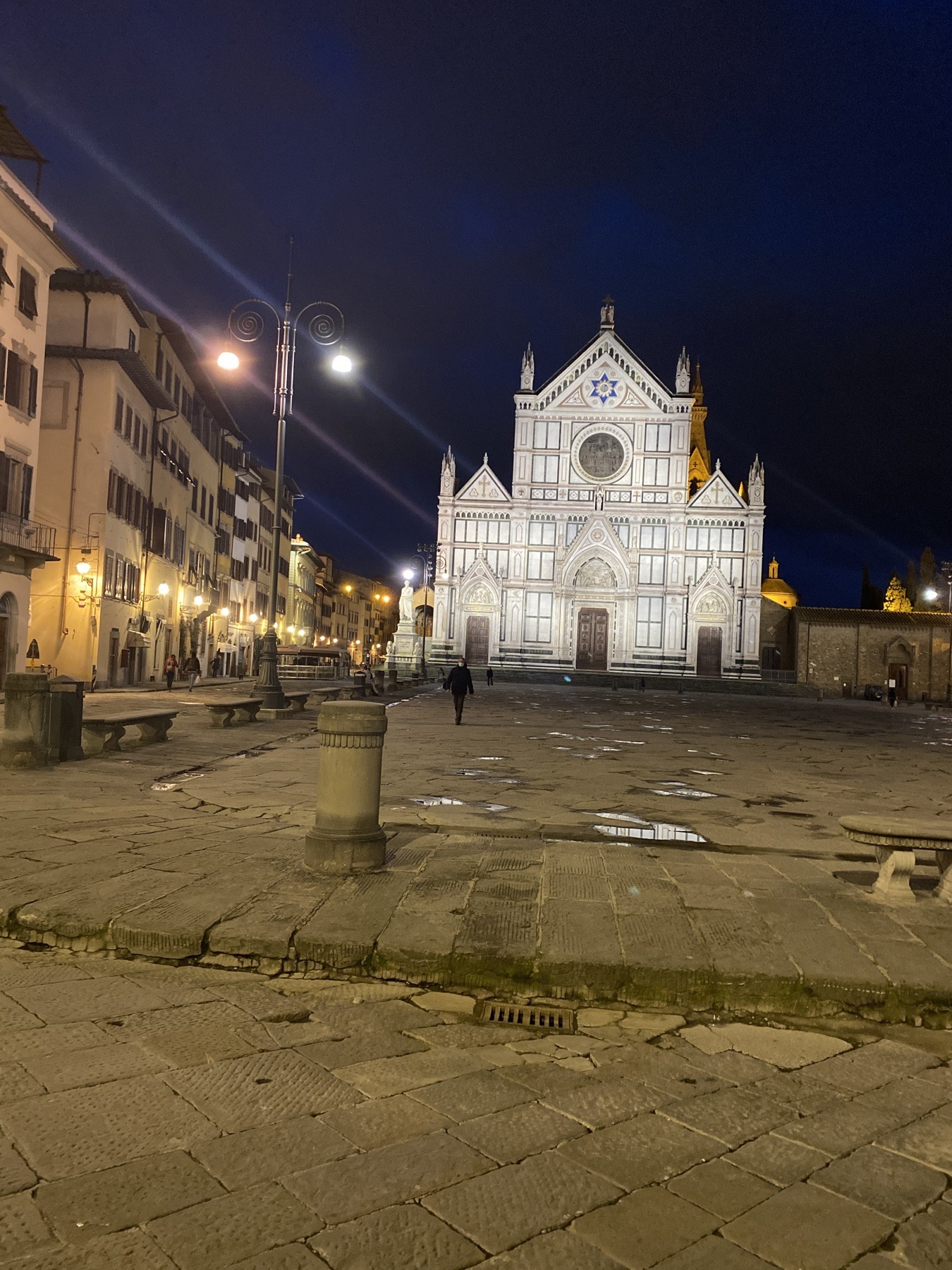
Santa Croce at night. I stopped without knowing its name.
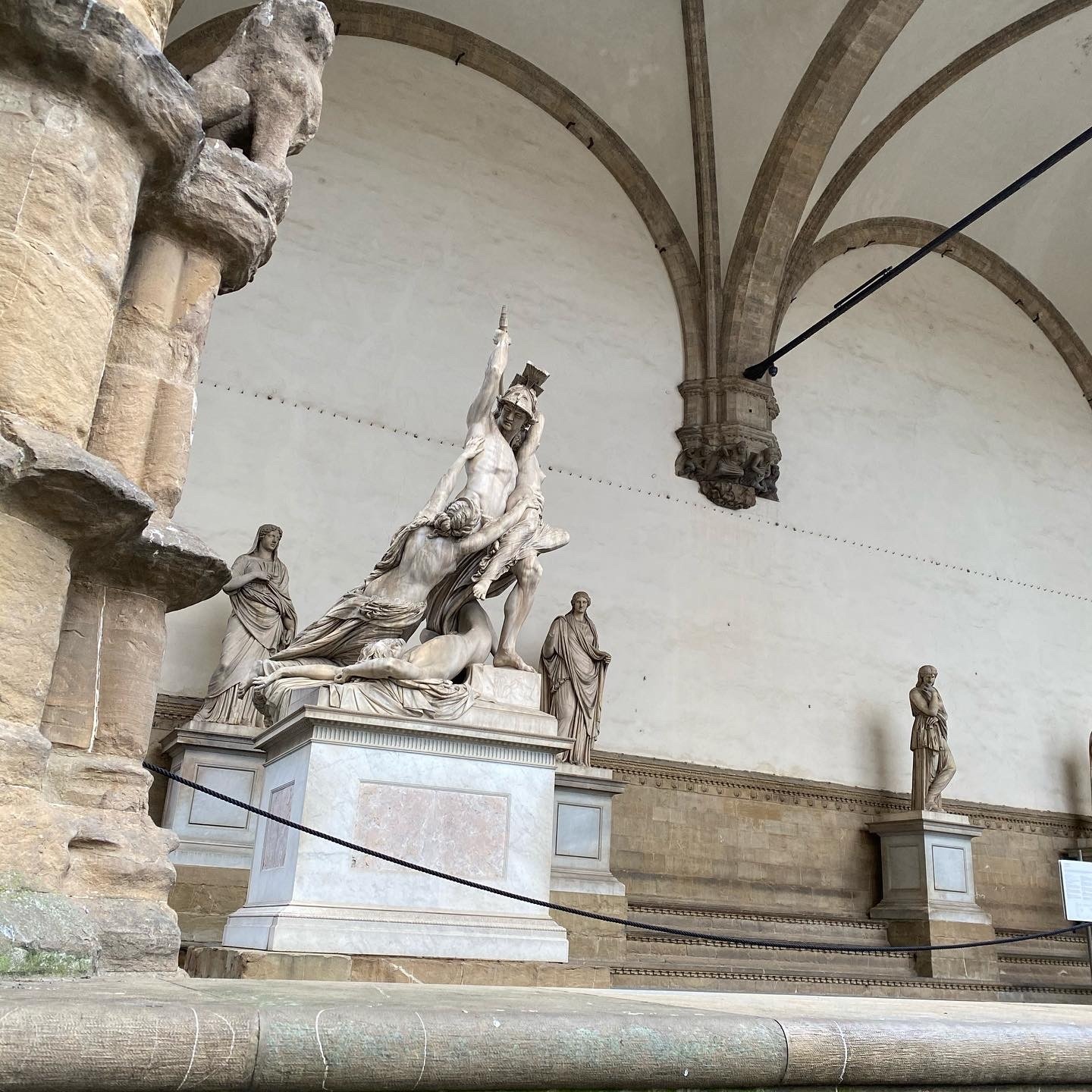
More art in the open, with a barrier reminding me to look, not touch.
“The beauty did not wait behind an entrance. It started outside my door.”
One of the memories I keep coming back to is a sandwich.
I was walking along a narrow street when I found a tiny shop. There were cold cuts in the display, a menu, and barely any room to sit. Nothing about it felt like a major event. It looked good, I was hungry, and I decided to get something to eat.
I ordered a prosciutto sandwich. The bread was fantastic, and the sandwich came with a glass of wine. A free glass of wine, with lunch. I remember thinking that this was about as Italian as an experience could possibly feel to me. I had not booked anything. I had just walked into a little shop and ended up very happy.
At the time, that was all it was. A good sandwich. A glass of wine. A picture before I ate. I did not sit there thinking that I was creating a memory I would still talk about years later. I was just having lunch.
Looking at the picture now feels completely different. I remember the little shop and the fact that, for a while, this was the kind of thing I could find by stepping outside. The lunch is over, but the memory keeps getting better. Apparently, some of the best parts of your life do not introduce themselves when they arrive.
I was still working, too. Moving to Florence had not made my clients disappear. I had normal days at my computer, bought groceries, and found ways to entertain myself. I was living my life, just with Italy around it.
I even bought a chessboard. I loved chess, and as someone traveling alone, I wanted something to keep me busy. A chessboard seemed like a sensible thing to take around the world. Later, I would learn that liking something and needing to carry it everywhere were two different things. First the scarf in Tirana, now the chessboard. I was still figuring out what belonged in my luggage and what could simply stay a memory.
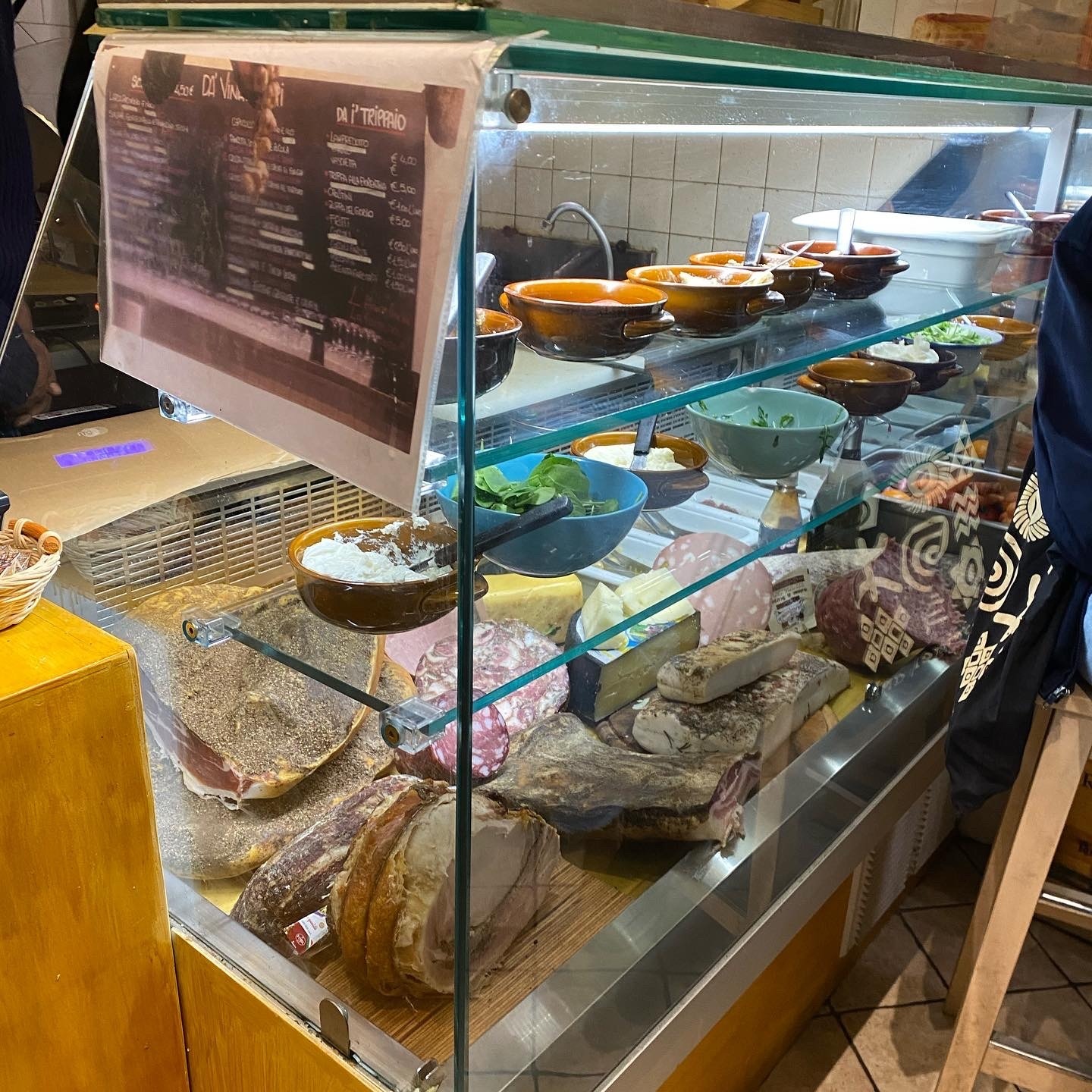
The little sandwich shop that caught my attention.
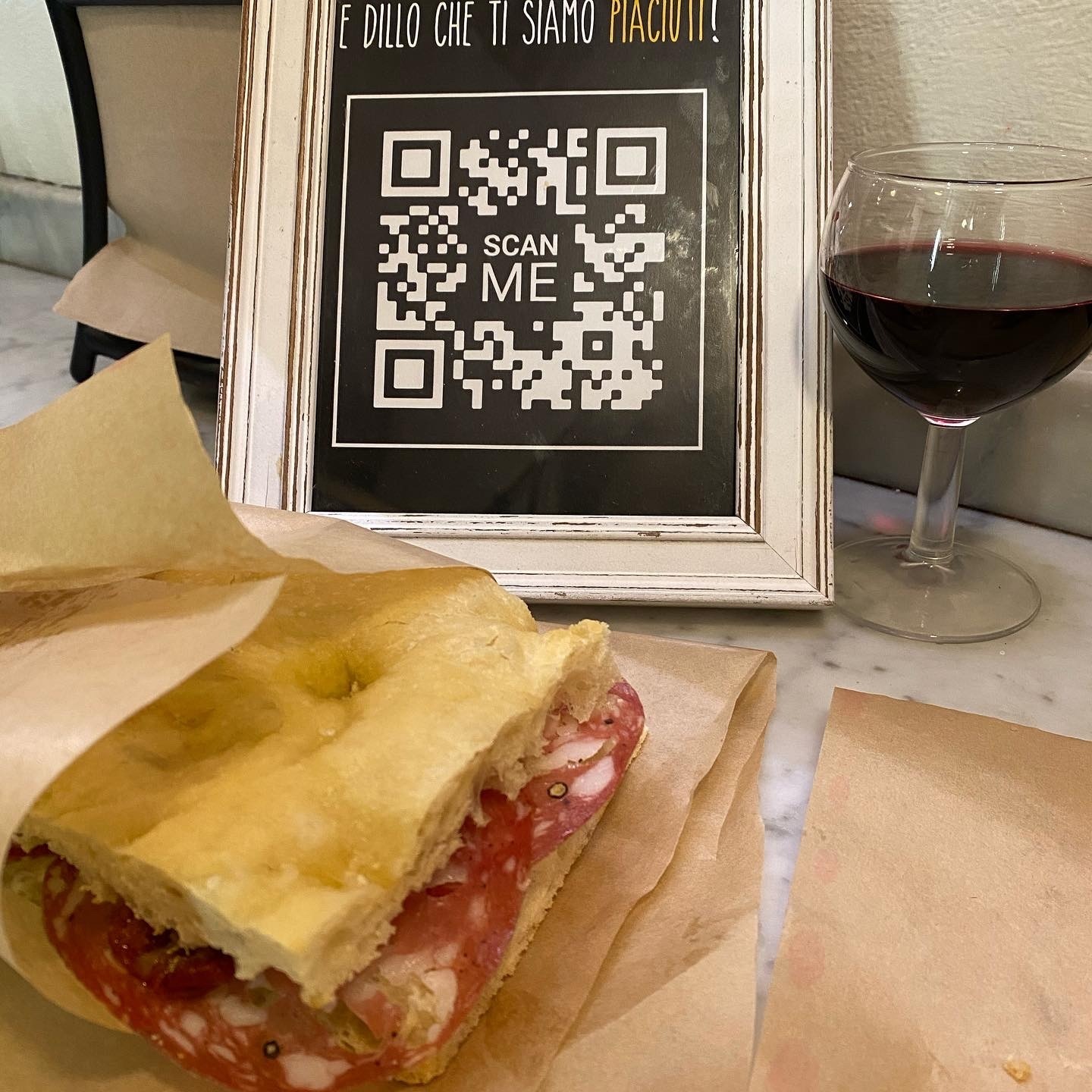
A prosciutto sandwich and the glass of wine that came with it.
“At the time, that was all it was. A good sandwich. A glass of wine.”
The holidays made Florence feel even more unreal. I walked around the shopping streets and the Duomo area, looking at Christmas lights. The city was already beautiful to me. Then somebody went and decorated it.
This was still life during COVID, not an ordinary Italian winter. I remember the red and yellow restrictions, masks, and curfews. What I could do depended on the rules at the time. But my memory of those months is not simply of sitting indoors. I worked at home and went out when I could, and the city became part of my routine.
For Christmas, I booked a little escape near Scandicci. The property arranged to pick me up in Florence, and about half an hour later I was somewhere that felt completely removed from the city. There were trees, a carefully kept lawn, and almost no sound. There was also no phone reception where I was staying. Off the beaten path had become a very literal thing.
It was beautiful. It was also another experiment. I still thought a special occasion needed a special outing, so I had arranged one. Looking back, I know I could have been happy staying in Florence. That does not make the getaway a mistake. I was learning what I enjoyed, rather than what I thought a traveler was supposed to enjoy.
At New Year, the apartment buildings in Florence seemed to celebrate together. I could hear people counting down in Italian, then shouting and banging pans from their homes. We were in separate apartments, but the sound traveled between us. It was a strange, wonderful way to welcome another year.
I also visited a museum for the first time in my life. I crossed the bridge and did the thing I thought I should do in Florence: went inside to look at the art. I took pictures of sculptures and paintings. They were beautiful, but the visit was not what defined the stay for me.
I was slowly discovering that I did not need to keep buying another experience to justify being there. An ordinary day in Florence was already giving me what I had come for.
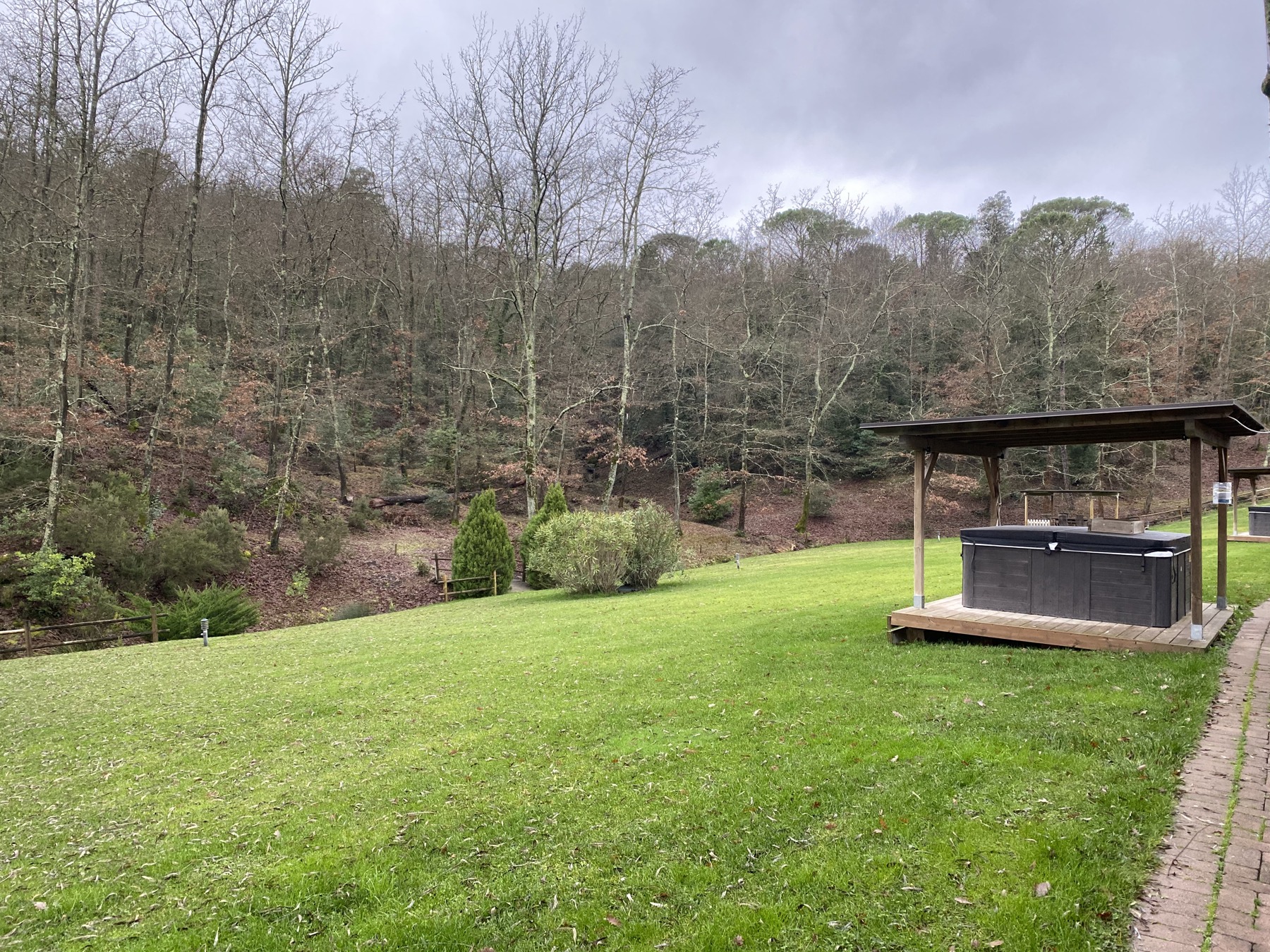
My quiet Christmas escape near Scandicci.
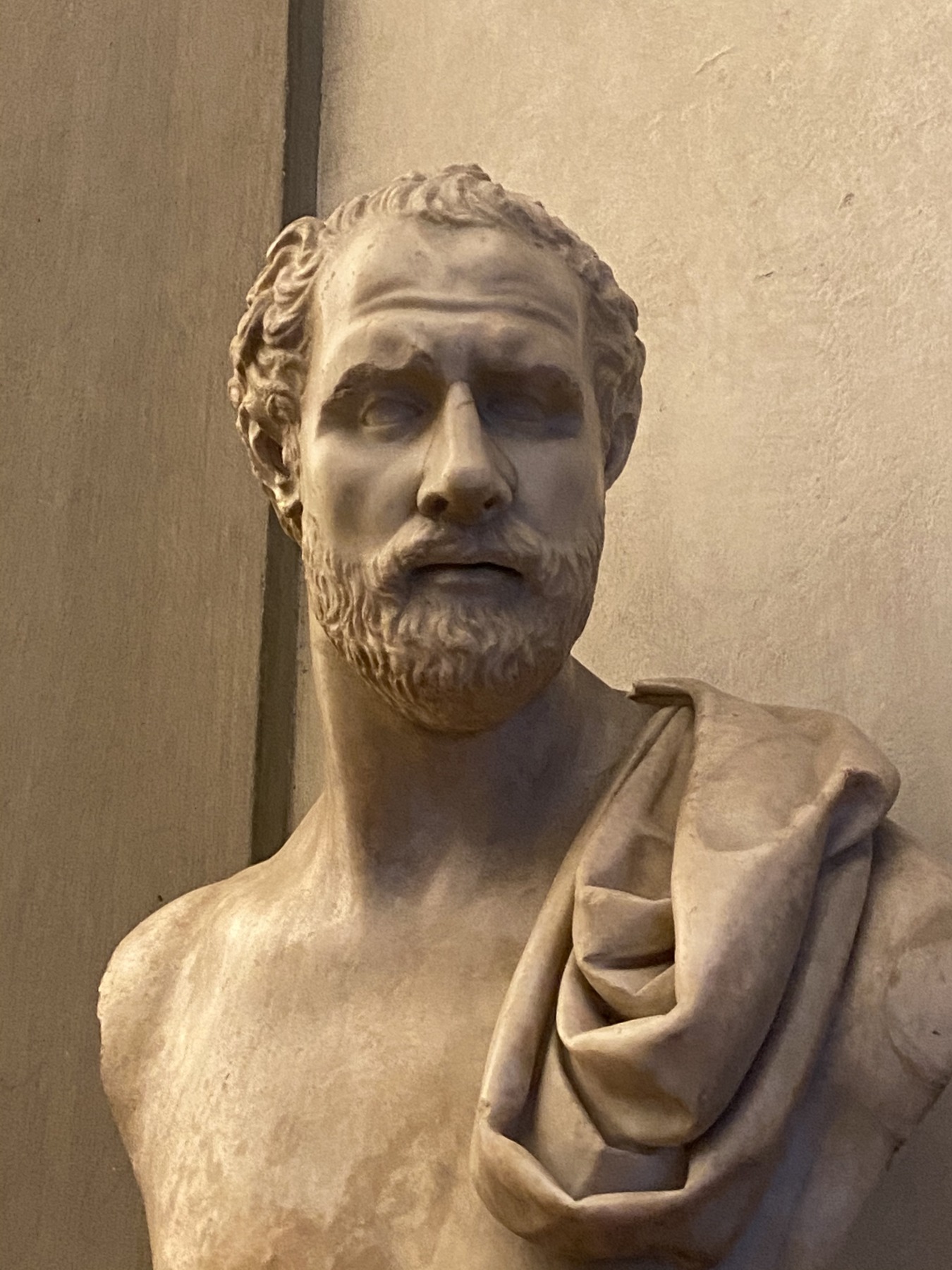
A sculpture from my first museum visit.
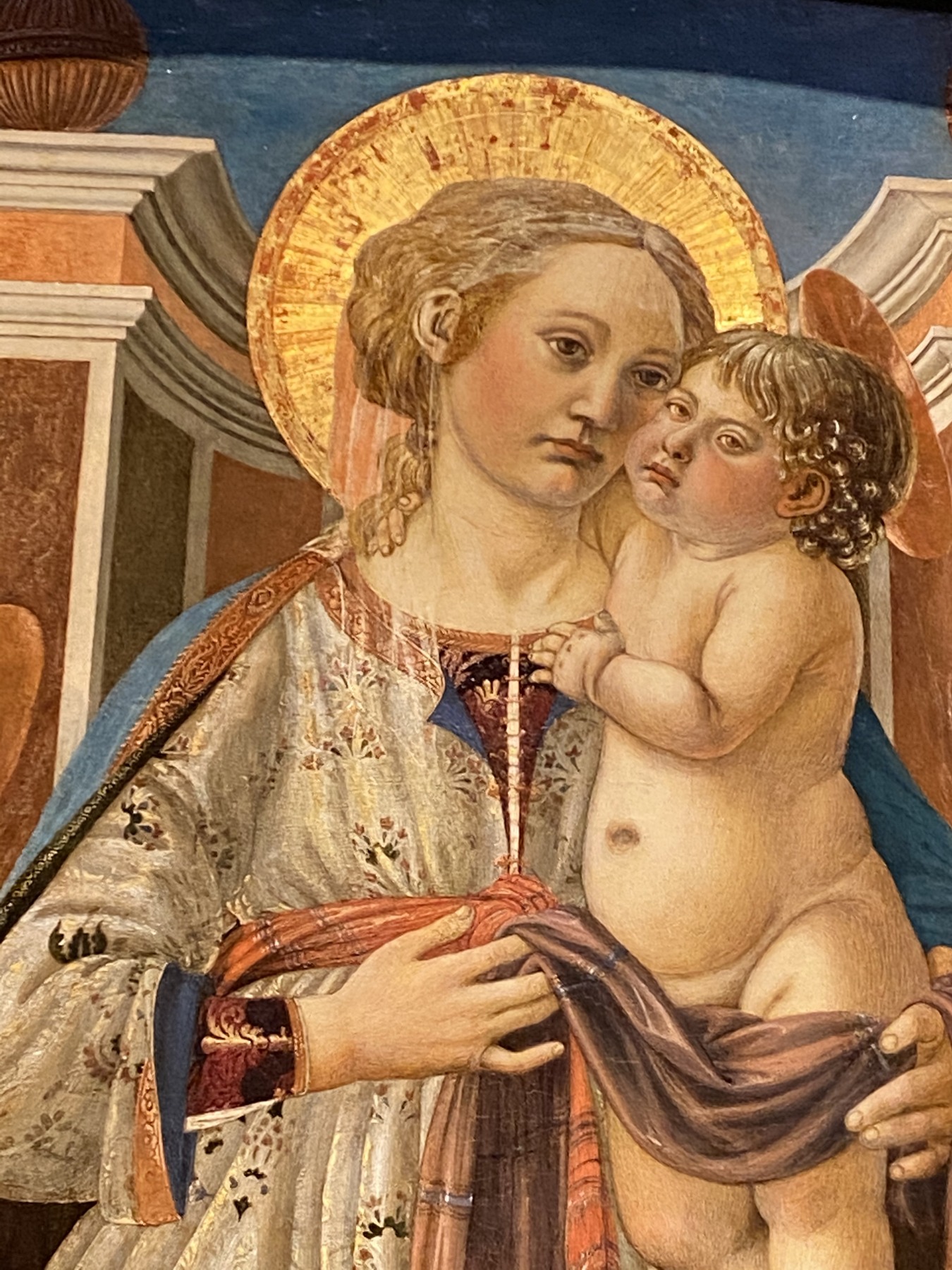
One of the paintings I photographed inside.
I had not entirely stopped trying to be a tourist. At one point, I joined a day trip to Lari, a small village outside Florence. Part of me was still following the same idea I had arrived with in Tirana: you go somewhere, then you find excursions to do.
Lari was a good place to try that. There were old buildings, narrow passages, and a brick arch where I stopped for a picture. It had a different feel from Florence, smaller and quieter, but still full of the details that made being in Italy feel special to me.
We visited Martelli, where pasta was made in a surprisingly small space. I had not walked into a giant industrial warehouse. I was standing in a compact production room, watching the process close up. There was pasta hanging there, people working, and a business that felt very different from the scale I had imagined.
The outing also included a winery. We went through cave-like cellars with arched ceilings and wine stored inside. I took pictures of the passages and barrels, and of two wines from Fattoria Uccelliera that we tasted. Both were fantastic. There was even a horse on the grounds, although this time my day did not depend on somebody putting me on it.
After the pasta visit, we also stopped at a little park with a view over the countryside. Once again, something as simple as standing outside turned out to be beautiful. I came home with good pictures and another experience I was glad to have had.
But the day did not change my life more than the ordinary days back in Florence. That was the useful part. I could enjoy a tour without needing to build my whole way of traveling around tours.
I did not have to fit everything into a week. I had time to work, stay in, go out, and let a place become familiar. I was beginning to prefer that to a schedule packed with things I was supposed to see. The longer I stayed in Florence, the less I felt I had to perform the role of a traveler.
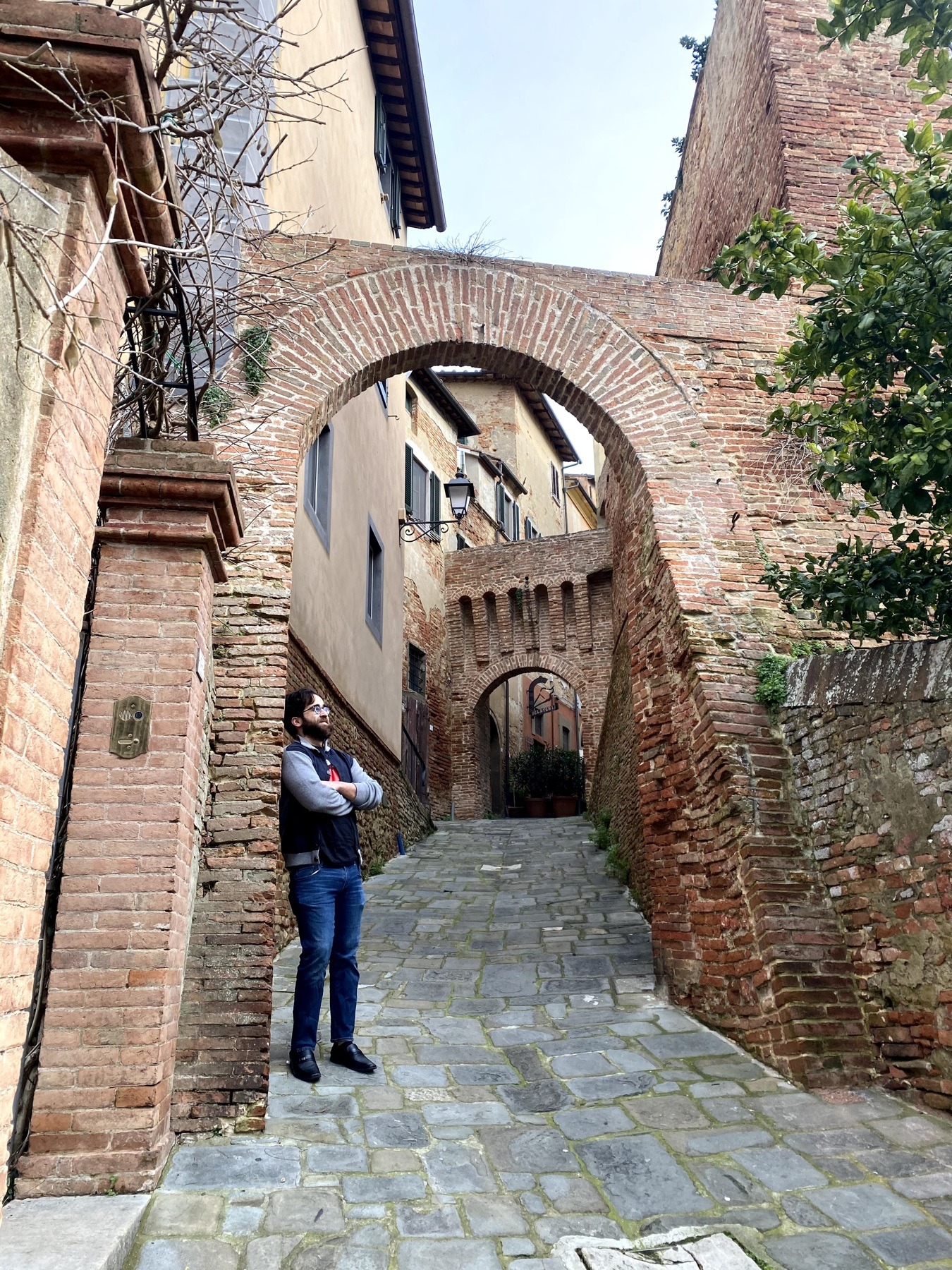
Under a brick arch in Lari.
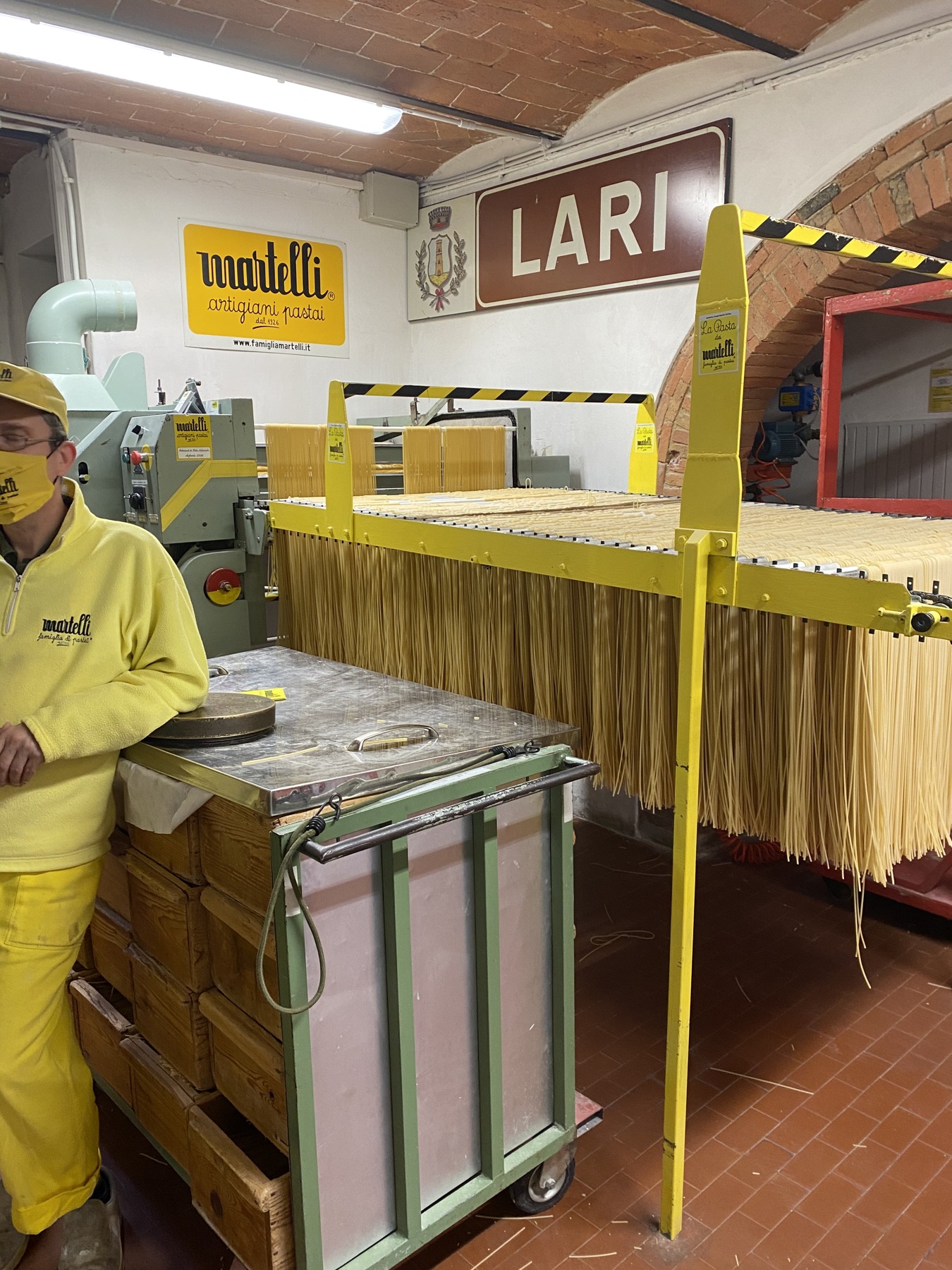
Inside the small pasta-making space at Martelli.
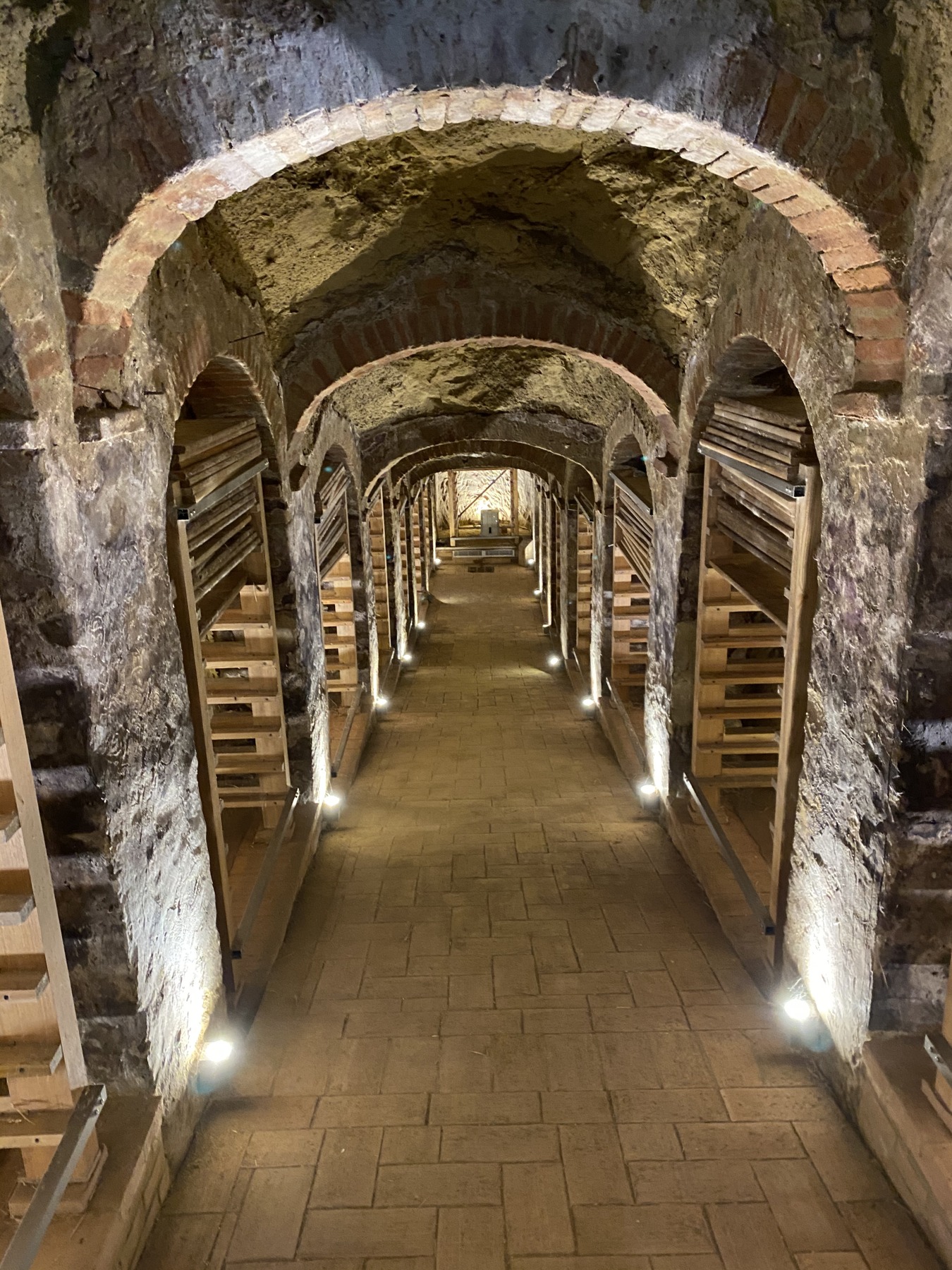
The cellar passages on the day trip.
Eventually, I had to leave. I did not yet understand how high Florence had set the bar. I just knew I had felt good there, day after day, and that I wanted to keep living this way.
Then the airport gave me another problem. I could not fly out of Florence because the airport was closed. I do not remember the exact reason. What mattered was that I needed to leave from Bologna instead, and getting there meant taking a train.
It was my first train journey. I took my luggage with me and discovered that this part was actually easy. The train was comfortable, the trip did not take long, and suddenly another way of getting around made sense to me. London had taught me a few things, so I also booked a hotel near the Bologna airport for the night before my early flight. I was not going to add a frantic morning train ride to the plan.
At the hotel, I ordered an iced coffee. It arrived in a martini glass. I took a picture because apparently even my coffee had dressed up for the occasion. It was a funny little detail before what I expected to be an ordinary overnight stay.
The next morning, I went to breakfast, looked outside, and thought I was dreaming. Everything looked white. It had snowed.
I was from Puerto Rico. I had seen snow on television, but never in front of me. I had never touched it or walked out into a place covered in it. I had already planned to go to Tbilisi, Georgia, and hoped that was where I would finally get to see it. Instead, it was here, outside an airport hotel in Bologna.
I took a picture through the doorway, then went outside and took more. There was not a huge amount. Somebody else might have looked at those cars and bushes and barely noticed. To me, it did not feel real. I was standing in a scene that had only existed on a screen before.
I had gone to Bologna because my original departure plan had failed. Now I was seeing snow for the first time in my life.
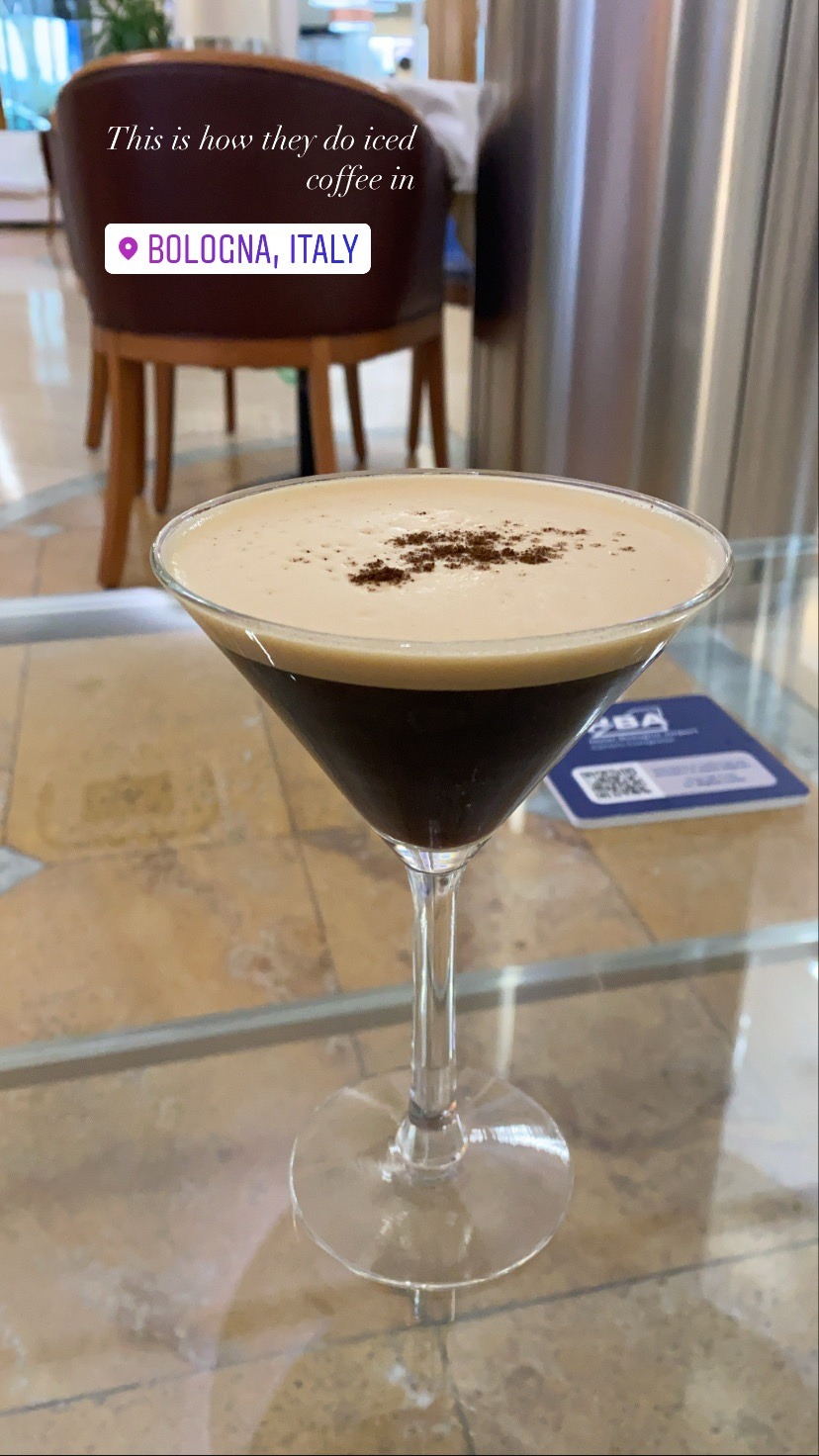
Iced coffee, dressed for the occasion. Bologna.
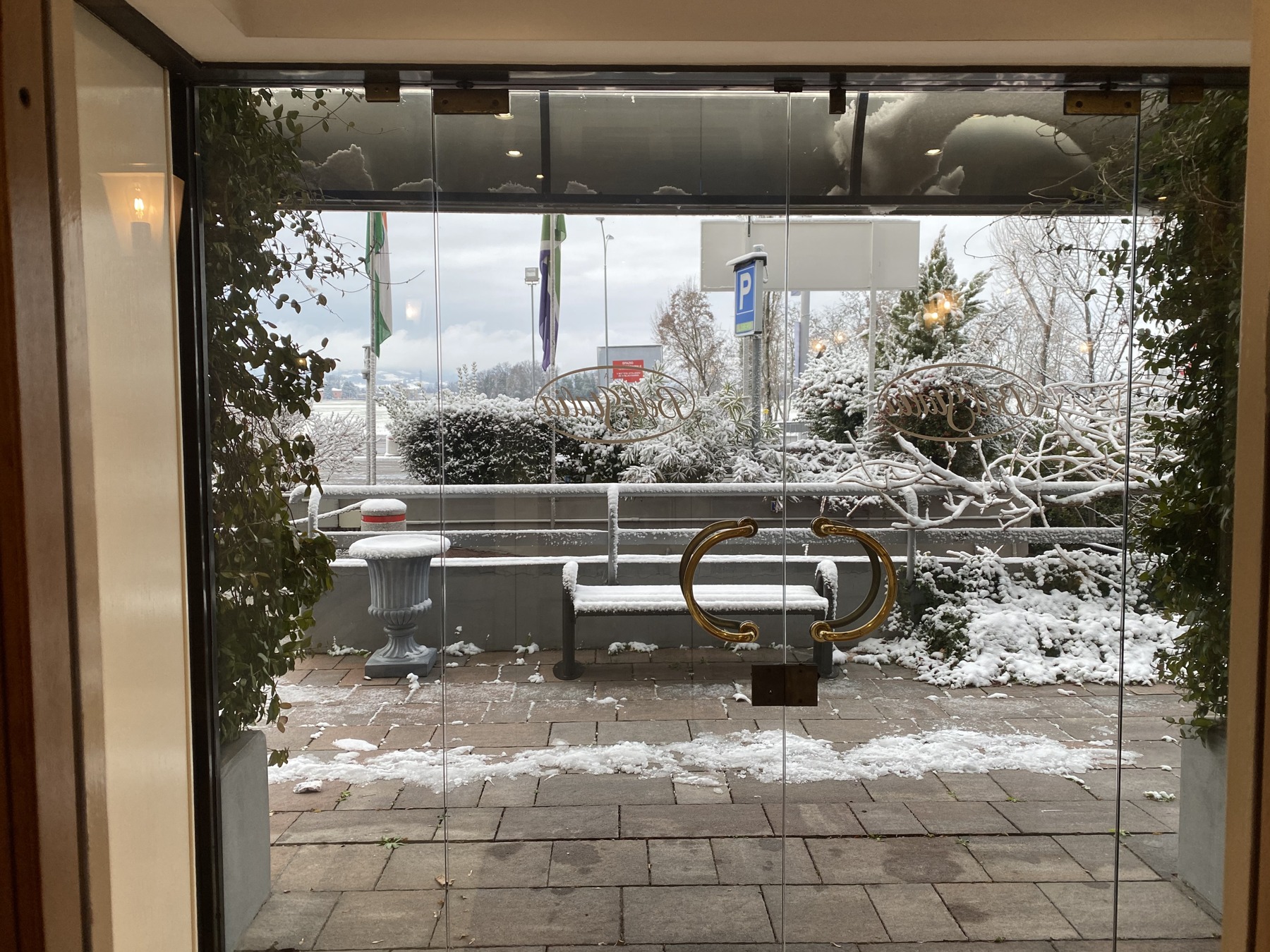
The first snow I ever saw, from the hotel doorway.
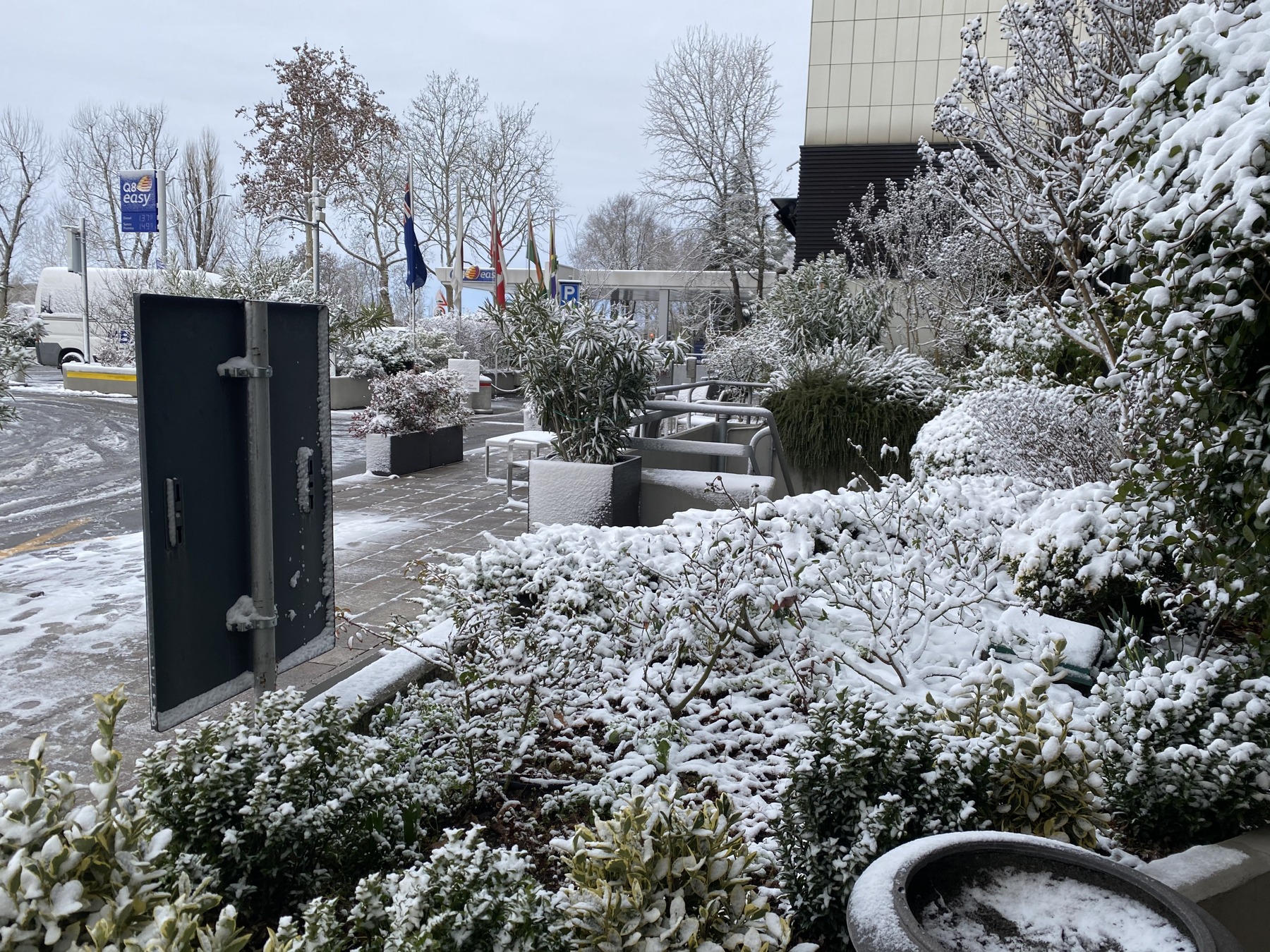
Then I went outside. This was real.
Looking at those snow pictures now, I know they are not spectacular travel photographs. There is a car park. There are bushes. There is a hotel entrance. But I do not need a better picture of snow. I need that picture, because that was the first time it happened to me.
That was what I was starting to understand about this life. I was still working. I still needed groceries, clean clothes, somewhere to sleep, and a way to get to the airport. None of those ordinary needs had gone away. What had changed was where I was meeting them, and what could happen around them.
Back in Puerto Rico, I could have kept doing the same things in the same surroundings. I would not have looked outside over breakfast and seen snow. I would not have crossed Ponte Vecchio without knowing it was famous, or found that little sandwich shop on a walk. Those moments had not required me to become somebody else. They had required me to be somewhere else.
Florence changed the question I would carry into the rest of my travels. It was no longer only about what a country had for me to visit. It was about what my days could feel like there. Could I walk out for something ordinary and be happy with everything around me? Could I enjoy the place without having to keep escaping my apartment to find an experience worth having?
I did not put all of this into words while I was there. At the time, I was mostly eating sandwiches, working, walking, and feeling good. Only later did I see how much those months had shaped the places I would choose and the way I would live in them. Florence had quietly become my standard.
The dream had been to live in Italy for a while. I had done that. What I brought away was the belief that a life could feel extraordinary without every day needing an extraordinary plan.
I had wanted to see snow in Georgia. Italy had given me a first look before I even left. The next stop was Tbilisi, and I was ready to see what else could happen simply because I was there.
Magic was real. Sometimes it was waiting outside.
C H A P T E R 6
────────
Nothing Is Perfect
Tbilisi, Georgia, February 26 to March 16, 2021
Florence had shown me how good this life could feel. Tbilisi reminded me that it was still real life.
I had left Italy with a new idea of what I wanted. I did not need a busy schedule or a list of attractions. I wanted to live somewhere, work from home, and enjoy the place around me. Georgia was the first stop where that did not come together. It was beautiful. I just did not feel welcome.
The beginning did not help. I was required to isolate in a hotel as a COVID precaution, and I remember being there for about two weeks. The hotel itself was nice. The problem was that I could not leave it. I did not feel ill, and being confined to a room felt excessive to me. I understood that this was still travel during COVID, but understanding it did not make the days any less frustrating.
There is a difference between choosing to stay home and being told you cannot go outside. I already spent plenty of time alone at my computer. Usually, though, I could decide that I had had enough and go for a walk. Here, that choice was gone.
When I could finally get out, there were things worth seeing. Tbilisi had beautiful streets and buildings, and I stopped to take pictures. Looking at them now, I can still see why I reached for my phone. The city was not failing to give me something pretty to look at.
But I had learned in Florence that living somewhere was about more than the view. The part I was missing in Tbilisi was how it felt to be there.
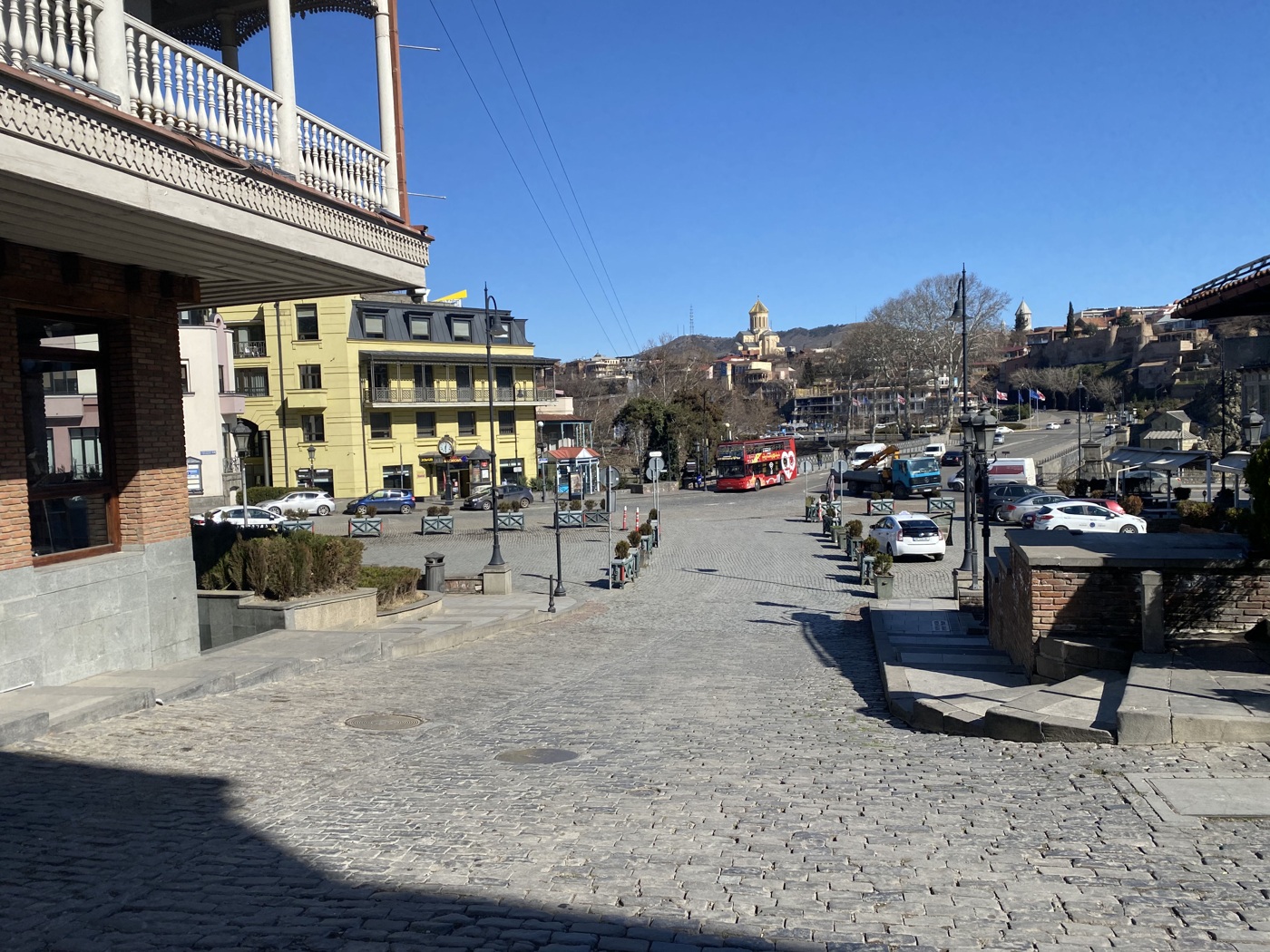
Tbilisi, photographed during my stay.
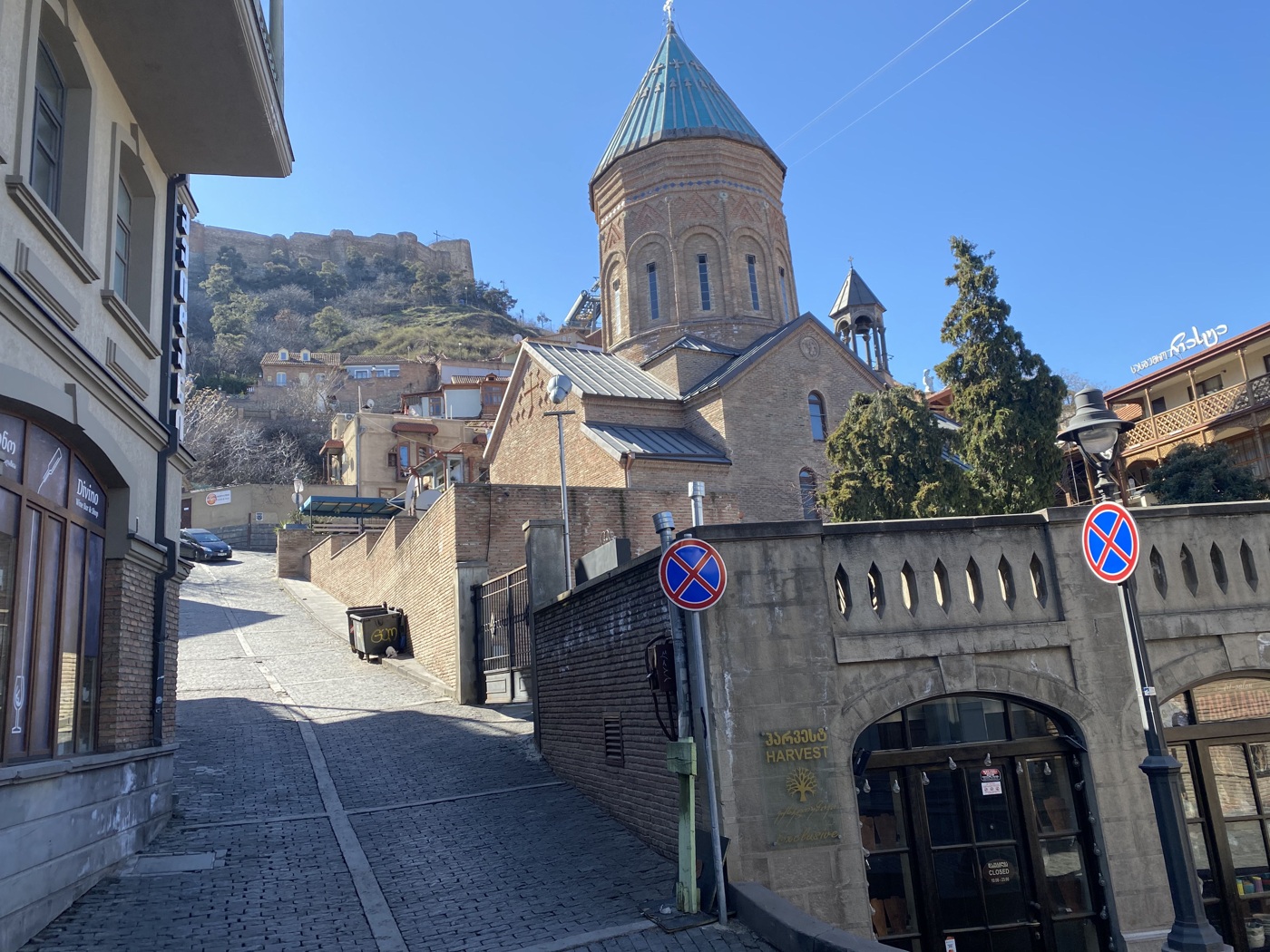
One of the views that made me stop for a photo.
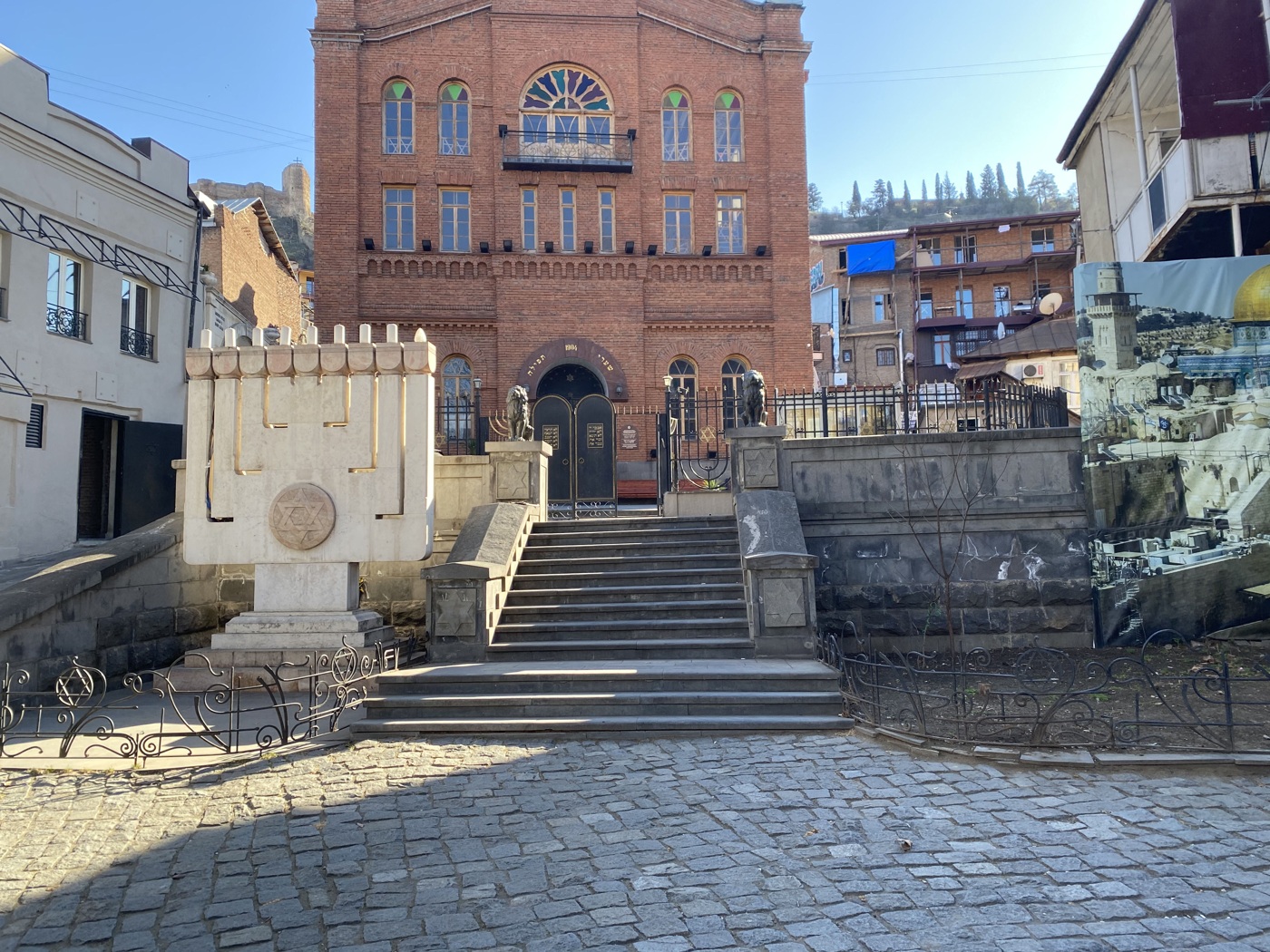
Brick buildings and cobbled streets.
In the shops and other places I dealt with, the service often felt cold or impatient. Ordinary things, like buying something, left me feeling as though I was bothering somebody. I did not feel the warmth I had felt in Albania, and that difference stayed with me.
English was limited in many of my interactions, but that was not what bothered me most. I was getting used to being somewhere unfamiliar. What wore on me was the attitude I felt on the other side of the counter. It is hard to make a place feel like home when your everyday dealings keep leaving you uncomfortable.
I was not having a terrible time every minute. There were good moments, and I do not need to erase them to explain why I did not enjoy the stay. I remember fireworks going off about once a week. The city was pretty, and there were small discoveries that made me stop and smile.
One of those was Dunkin’ Donuts. It was the first time I had ever seen one outside the United States, and I took a picture. After all the unfamiliar streets and buildings, there was a name I knew immediately. Apparently, even on a trip I was not enjoying very much, I could still get excited about finding a doughnut shop.
The good parts did not cancel out the bad feeling, though. I could appreciate what I was looking at and still know that I did not want to stay. Those were not opposite things. They were both true.
That was new for me. I had started traveling with all this excitement about doing something different. Now I was somewhere different, and I did not particularly like it. I did not need to turn that into a disaster. I also did not need to pretend it was wonderful just because I had traveled a long way to be there.
This was my first clear experience of a place not being for me. I was glad it was a short stay. I had no desire to return.
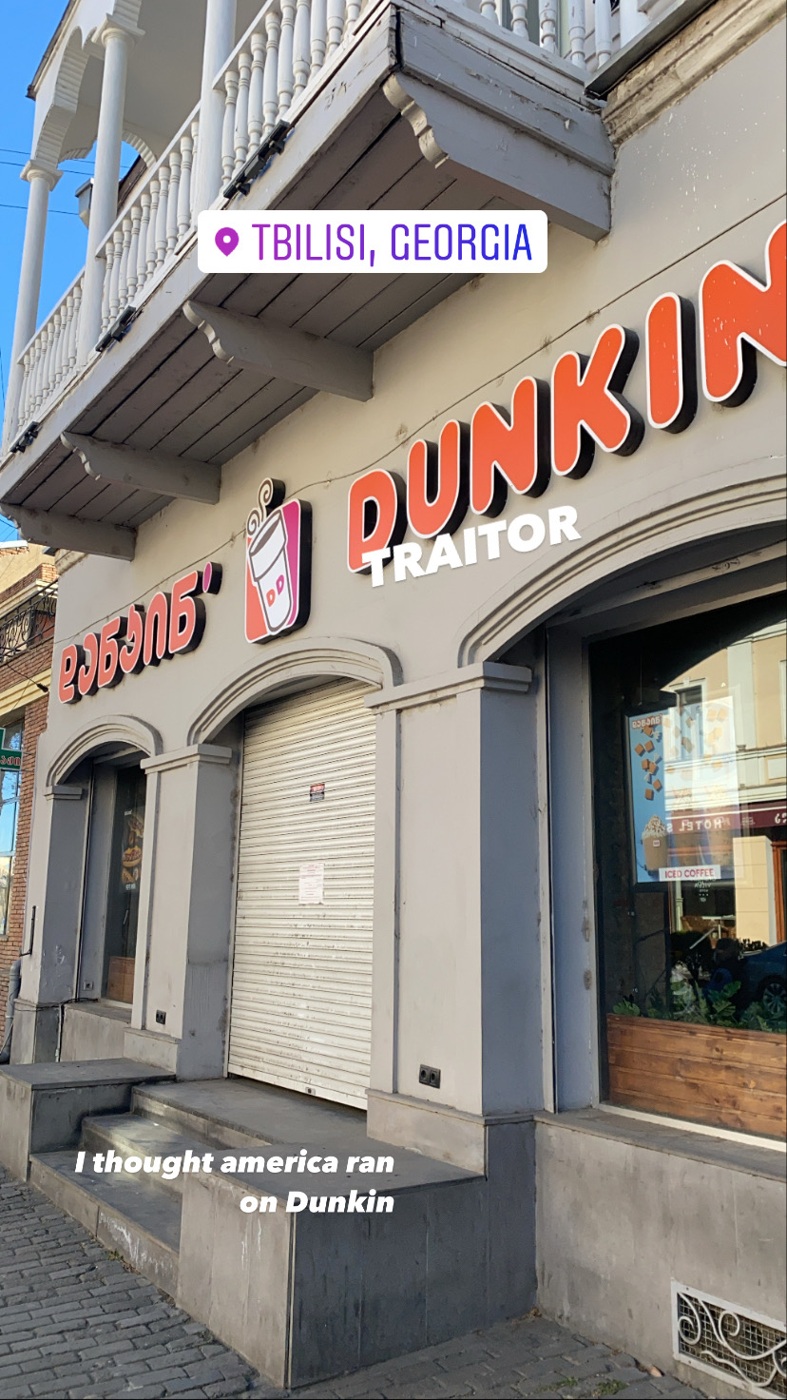
My first sighting of Dunkin’ Donuts outside the United States.
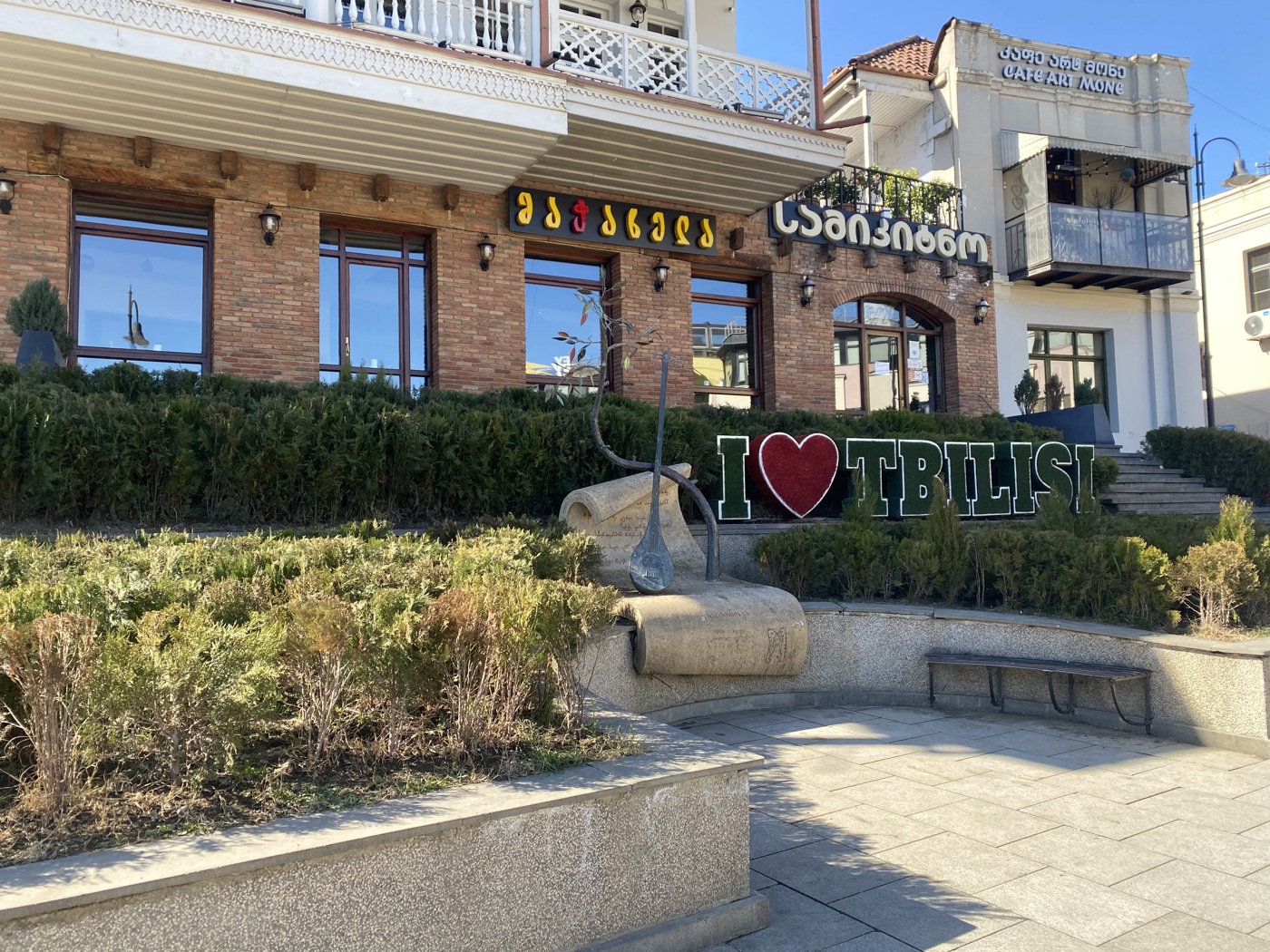
A pretty city, but not somewhere I felt at home.
“I could appreciate what I was looking at and still know that I did not want to stay.”
The useful part of Tbilisi happened mostly inside my accommodation. I worked, had food delivered, and spent a lot of time thinking about what came next. The place outside was not making me especially happy, but my life was still working. I could earn a living, take care of myself, and make another plan.
That gave me a different kind of confidence from Florence. Florence had shown me a life I wanted. Tbilisi showed me that I could manage a place I did not love. My ability to keep traveling did not depend on every city giving me the best weeks of my life.
I did not have to force myself to enjoy every interaction or approve of everything I encountered. Being open to another place did not mean giving up my own judgment. I could be disappointed. I could dislike the way I felt I was being treated. And I could decide not to come back. This was my life, not an assignment to write a glowing review of the world.
Once I stopped trying to make Tbilisi into something it was not for me, the next decision became easier. I wanted to change continents. I had a wedding to attend in Miami, so I planned a week there before continuing to South America. It made a useful stop between this part of the journey and the next.
Miami was not going to be the end of my travels. I was not moving back. I would go to the wedding, spend that week there, and then head to Bogotá, Colombia. The next neighborhood I would try making home was Chicó Norte.
I was happy to leave Georgia. That did not mean I was unhappy with the life I had chosen. In a way, knowing the difference was the whole lesson. I could keep the good pictures, admit the stay had not suited me, and move on without treating it as a failure.
Nothing was perfect. It did not have to be. I still had somewhere else to go.
C H A P T E R 7
────────
Making Memories Without Even Trying
Chicó Norte, Bogotá, Colombia, March 22 to May 22, 2021
In Bogotá, I decided I was going to stop trying so hard. Naturally, that was where I ended up with one of the strangest stories of my life.
After Tbilisi and the brief wedding stop in Miami, I arrived in Chicó Norte with a different attitude. I did not want a list of attractions. I wanted a comfortable home, time to work, and permission to do absolutely nothing interesting. Florence had shown me how good ordinary life abroad could feel. Tbilisi had shown me that I could keep living it even somewhere I did not love.
I also wanted to change how long I stayed. A month was starting to feel too short. Instead of settling in and almost immediately thinking about leaving, I booked two months. That became the next experiment: less moving around, more living.
The apartment made staying put very easy. It had three floors, which still makes it stand out among all the places I have lived. I could work upstairs, eat downstairs, or sit on the sofa looking outside. I had brought the chessboard I bought in Florence. A little piece of Italy was now sitting in my home in Colombia.
I did not have to find something exciting to do that day. I already had somewhere I was happy to be.
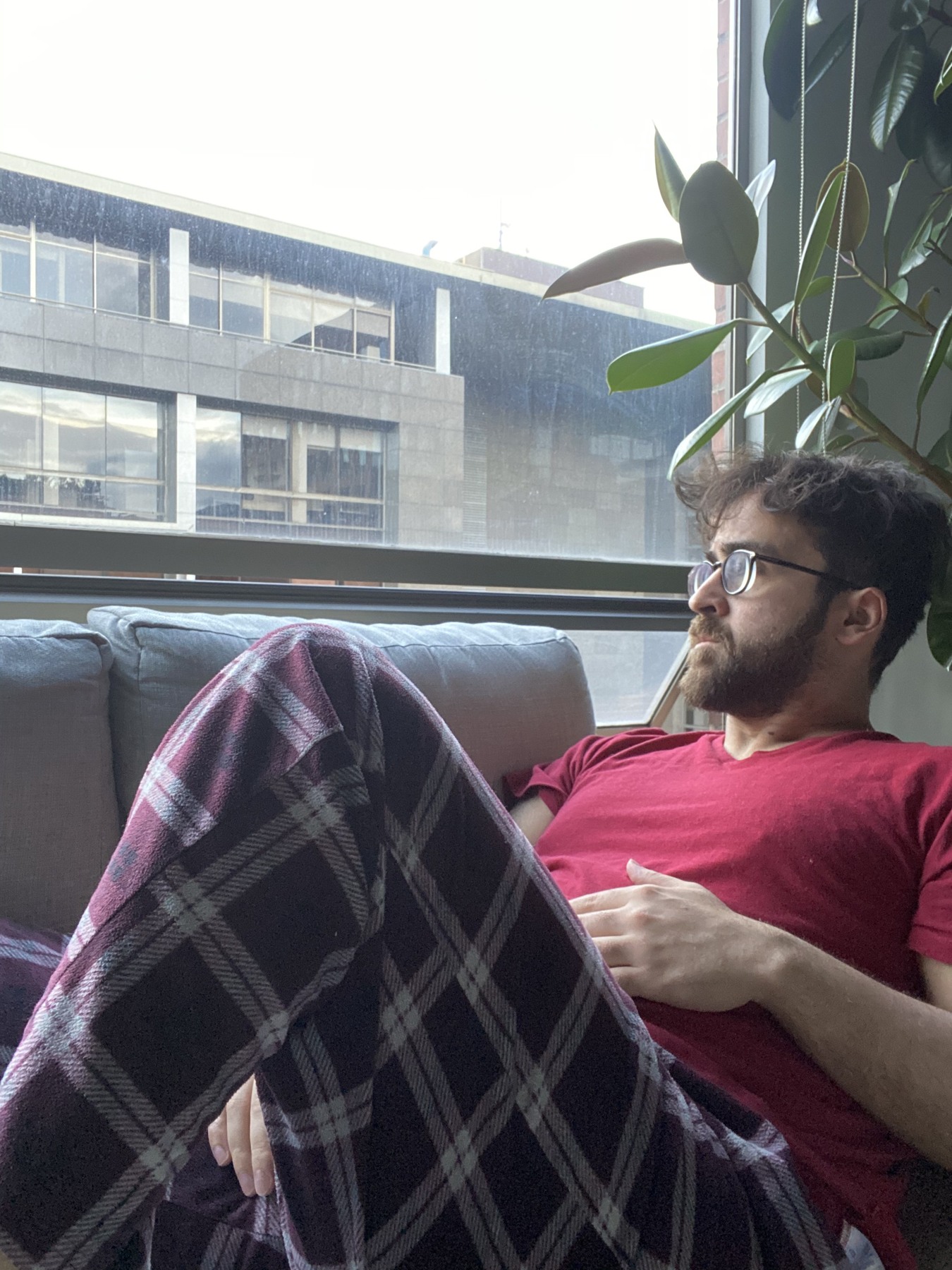
Doing very little, quite happily, in Chicó Norte.
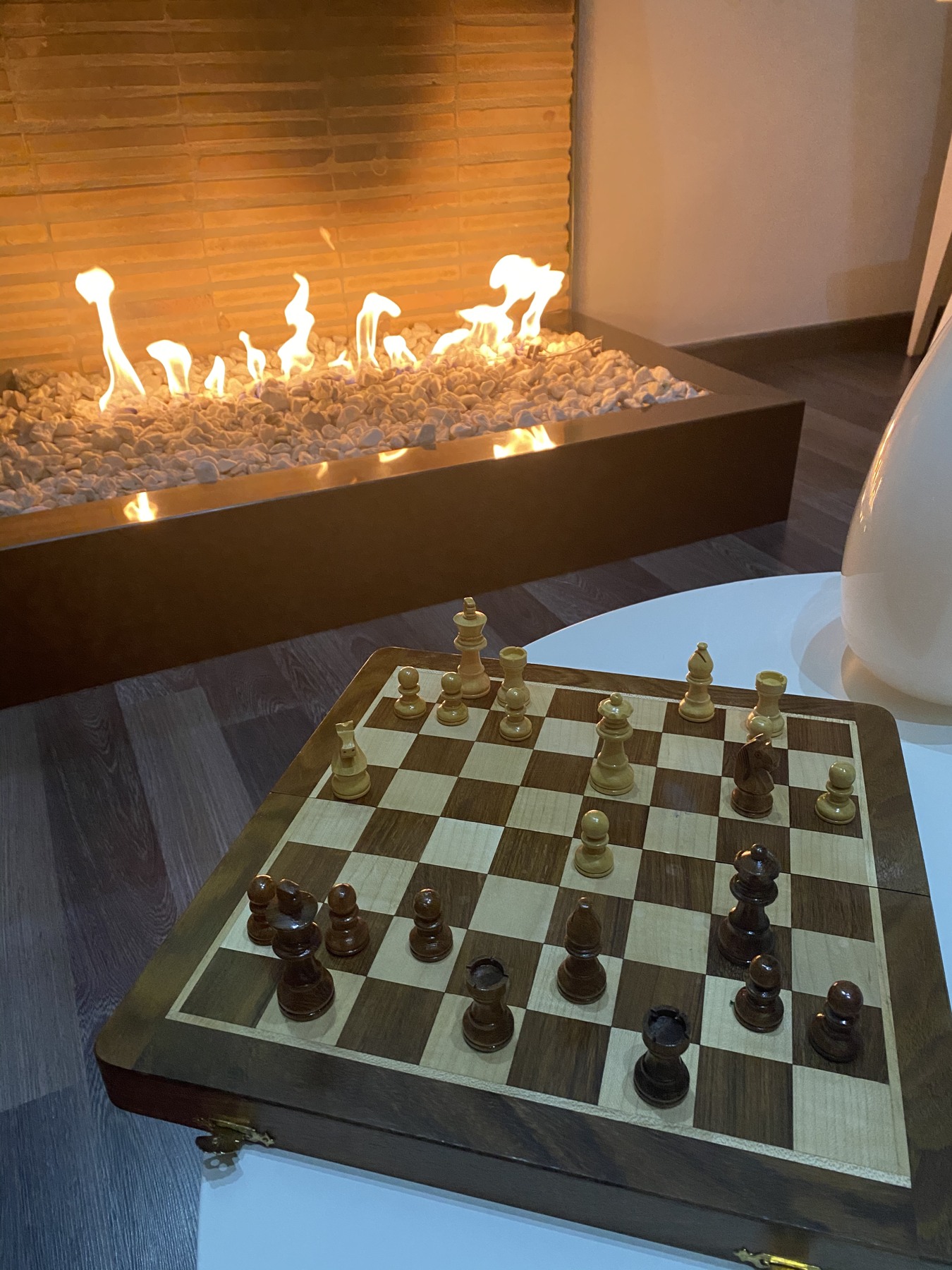
The chessboard from Florence made it to Bogotá.
I took the idea of living normally a little too far. I decided I would stop taking pictures of everything. People living their everyday lives did not need to photograph every meal, I thought. This was not a holiday anymore. It was just my life.
Looking at the photos I still have, I am very glad I did not follow that rule perfectly.
Most days were quiet. I worked on my e-commerce business, spent time at my computer, relaxed in bed, and had food delivered. This was where I first discovered Rappi, which became my answer to ordering almost anything I felt like eating. COVID was still part of daily life, and having to put on a mask to go out gave me another reason to enjoy staying in.
I did leave occasionally. I went to a mall to catch a movie because the cinema was operating. I remember going in with my mask. I even have a picture of the theater. I could not tell you what film I watched now.
I also went to a spa, wearing my Metallica Ride the Lightning mask. There were barely any people around, but I wanted to do something different. Another day, I had a really good pasta meal with a Club Colombia beer. There was cheese being added or something being finished beside the table, and the whole thing felt like a nice little occasion.
None of this was a grand tour of Bogotá. It was a movie, a meal, a quiet afternoon. I was starting to enjoy the idea that those things could be enough.
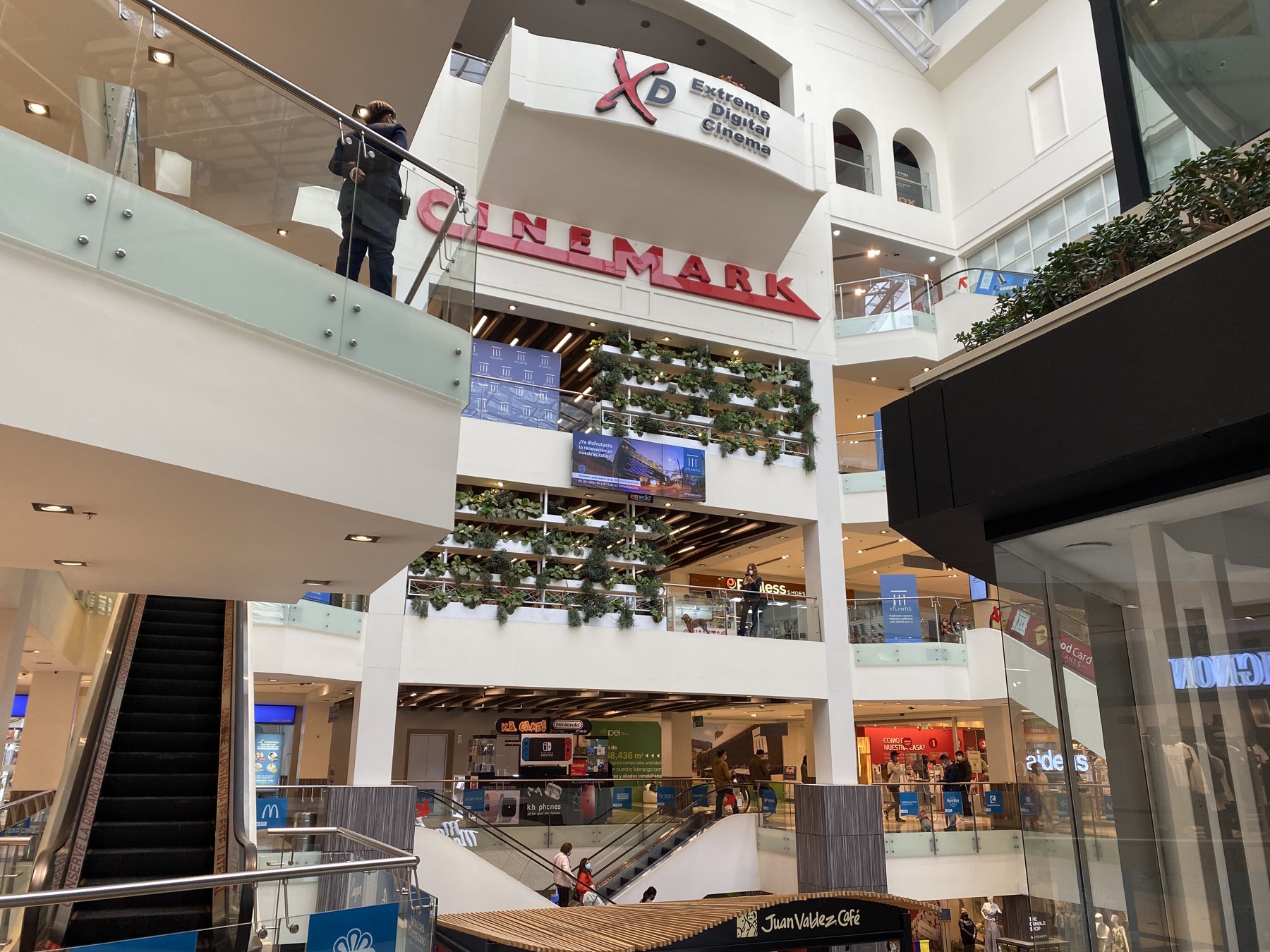
A trip to the cinema. The film itself has escaped me.
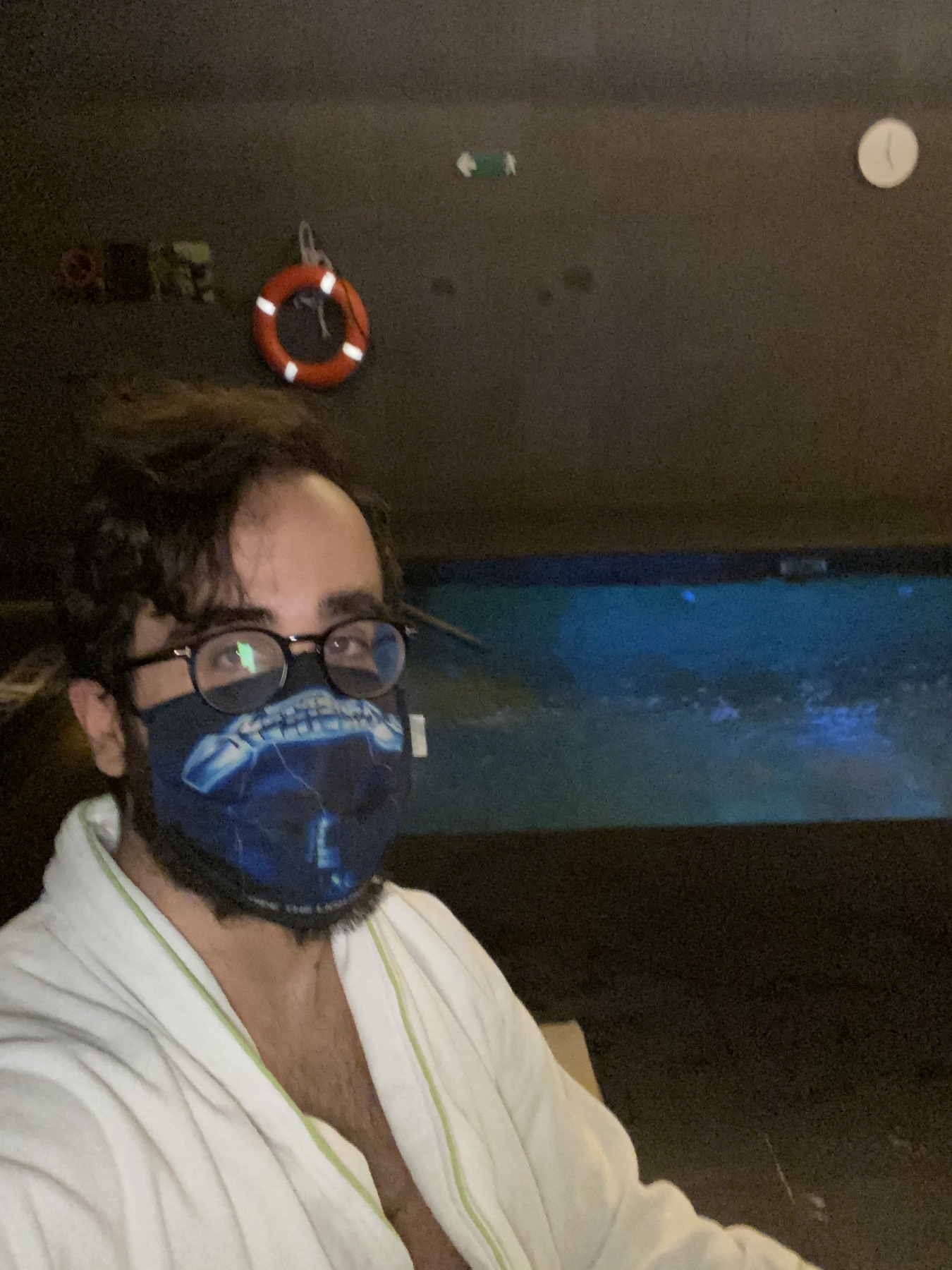
A spa visit, complete with my Metallica mask.
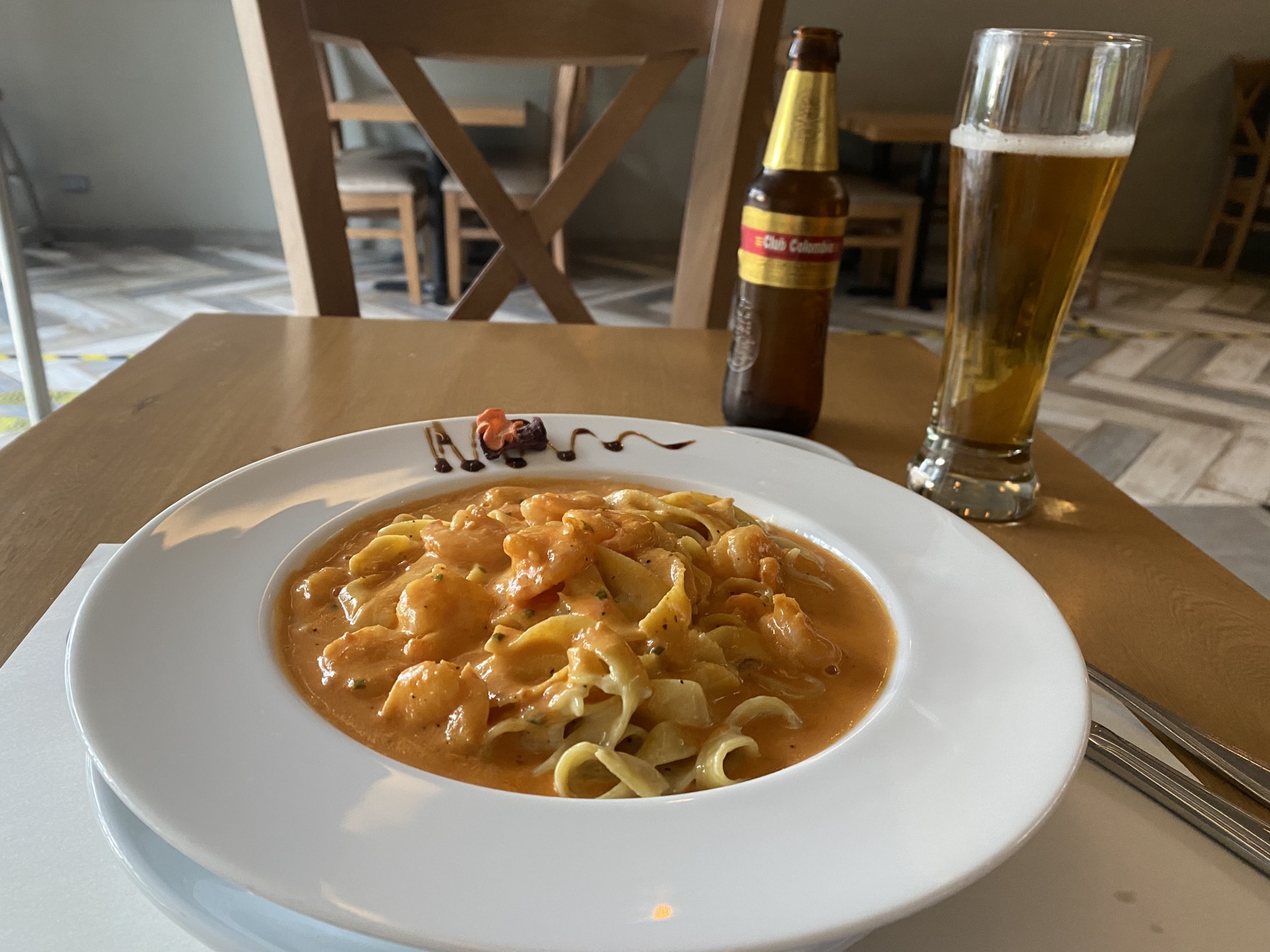
Pasta and a Club Colombia on a day out.
But while I was trying to make everything feel ordinary, something else was bothering me. Details were already getting harder to remember. I had been to Tirana. I had lived in Florence. Those places mattered to me, and I did not want them to fade into a vague list of countries.
I was not thinking about writing a book. I was thinking about something permanent. I already had a tattoo, so I decided to add to it. If the trip was becoming part of my life, I could make it part of my back.
I went to a local tattoo shop called Gotink and explained the idea: a symbol for each place I had been. I am proudly Latino, and I wanted to start this with an artist in Latin America. Being able to explain it all in Spanish suited me too. The artist understood what I wanted, and my back started becoming a travel record.
The Triforce from The Legend of Zelda represented Puerto Rico. Beneath it was the black Albanian eagle for Tirana. London got a red double-decker bus. Florence got a Vespa. The flowers near my neck stood for Colombia, the place where I was having all this done.
Tbilisi got a small building. I specifically told the artist not to put too much detail into that one. I had not liked the stay enough to give it the same treatment. Georgia was going on my back, but it was not getting special attention.
This was only the beginning. The idea was to put my first ten countries on my back, with more to come later. I liked that I could keep the whole thing to myself simply by wearing a shirt.
The process took three straight days at the shop, and it hurt like hell. Wanting a permanent reminder turned out to involve a lot of very immediate pain. But looking back, I have no regrets. I wanted to hold on to those places. Now I was carrying them.
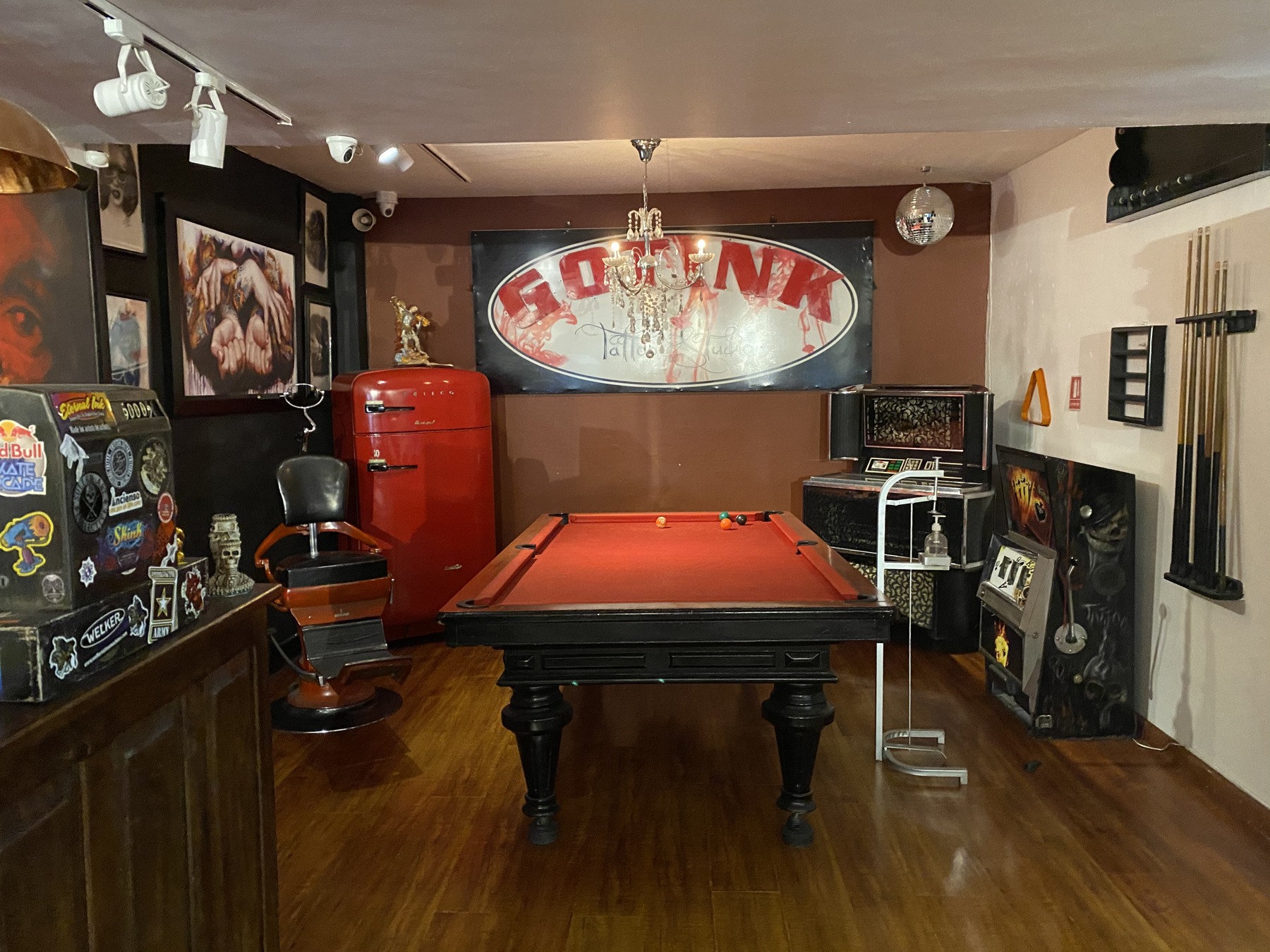
Gotink, where my back became a travel record.
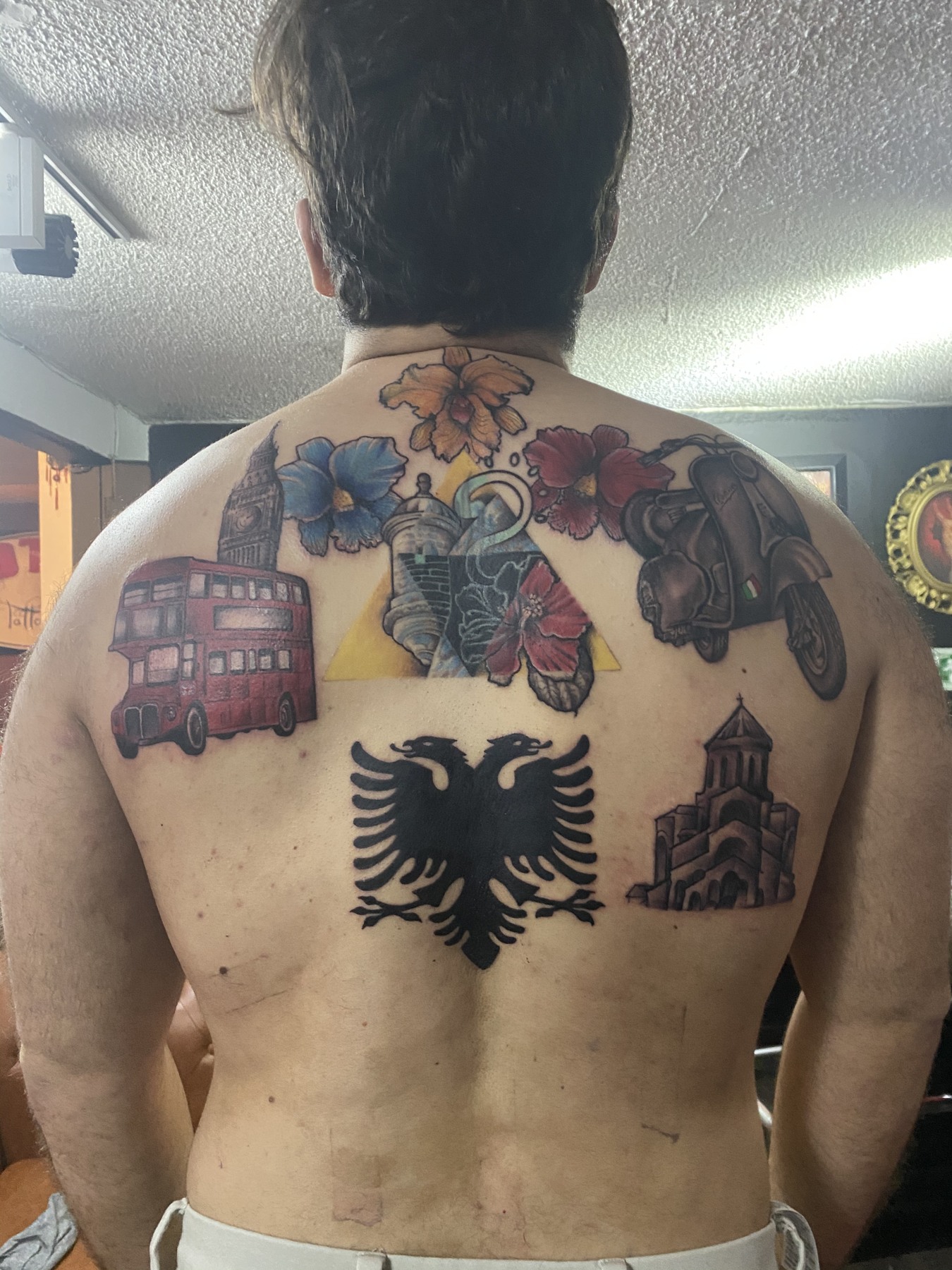
The first part of the collection, after three painful days.
“I wanted to hold on to those places. Now I was carrying them.”
The other big memory from Chicó Norte did not require a booking. It began in the apartment, where I was spending most of my time anyway.
One photo from that stay shows a pizza, a beer, and House on the television. That was a perfectly good evening to me. Look toward the middle of the table and there are also some small packages. They held cannabis gummies.
That part of the story goes back to brain surgery. Recovery had not been only about learning to walk again. I had also been through a great deal of stress and a very dark period emotionally. For me, medical cannabis had made an enormous difference. Where it was legally available to me, I made sure I had the proper documents. In Colombia, I used THC gummies as part of my nighttime routine.
I usually took half of one. I felt it helped me rest and wake up better able to get on with my work and my life. That was my own experience, not a routine I was trying to prescribe to anybody else.
The Airbnb host had arranged a cleaning lady who helped with the apartment and laundry. We got along well. I was happy for her to help herself to food. If she wanted a slice of pizza, she did not need to ask permission. I would often be upstairs working while she spent the day cleaning.
One day, I was on the third floor with my headphones on when she came up the stairs in tears. She felt terrible and did not understand what was happening. Then she told me she had eaten some of my candy.
She had eaten four. I normally took half of one.
The writing on the packages was in English, and she had not understood it. To her, they had simply looked like sweets. I told her they were my medicine, not ordinary candy. She was frightened, and whatever this story would sound like later, right then she needed help. We went together to a nearby clinic.
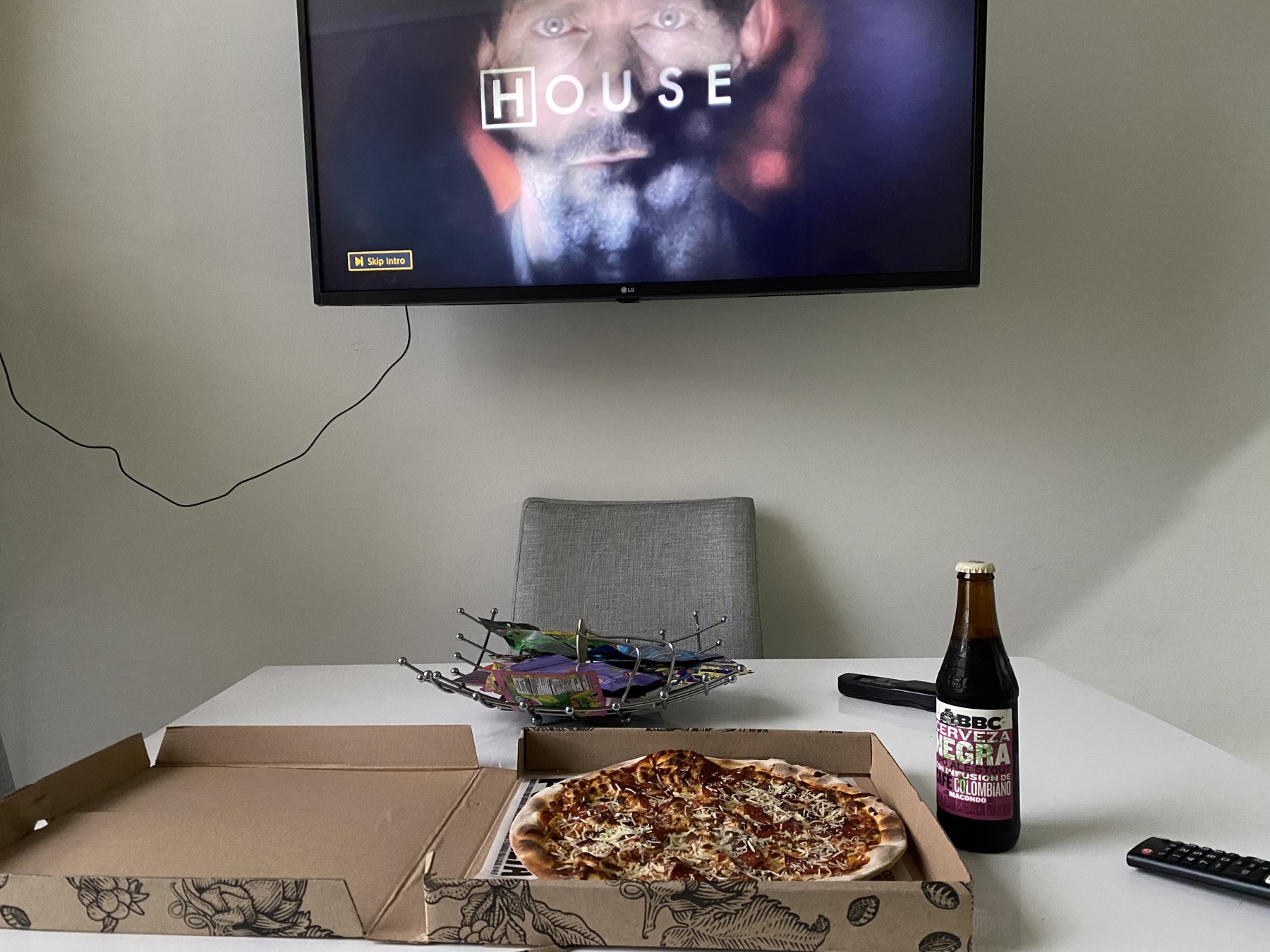
Pizza, House, and the little packages in the middle of the table.
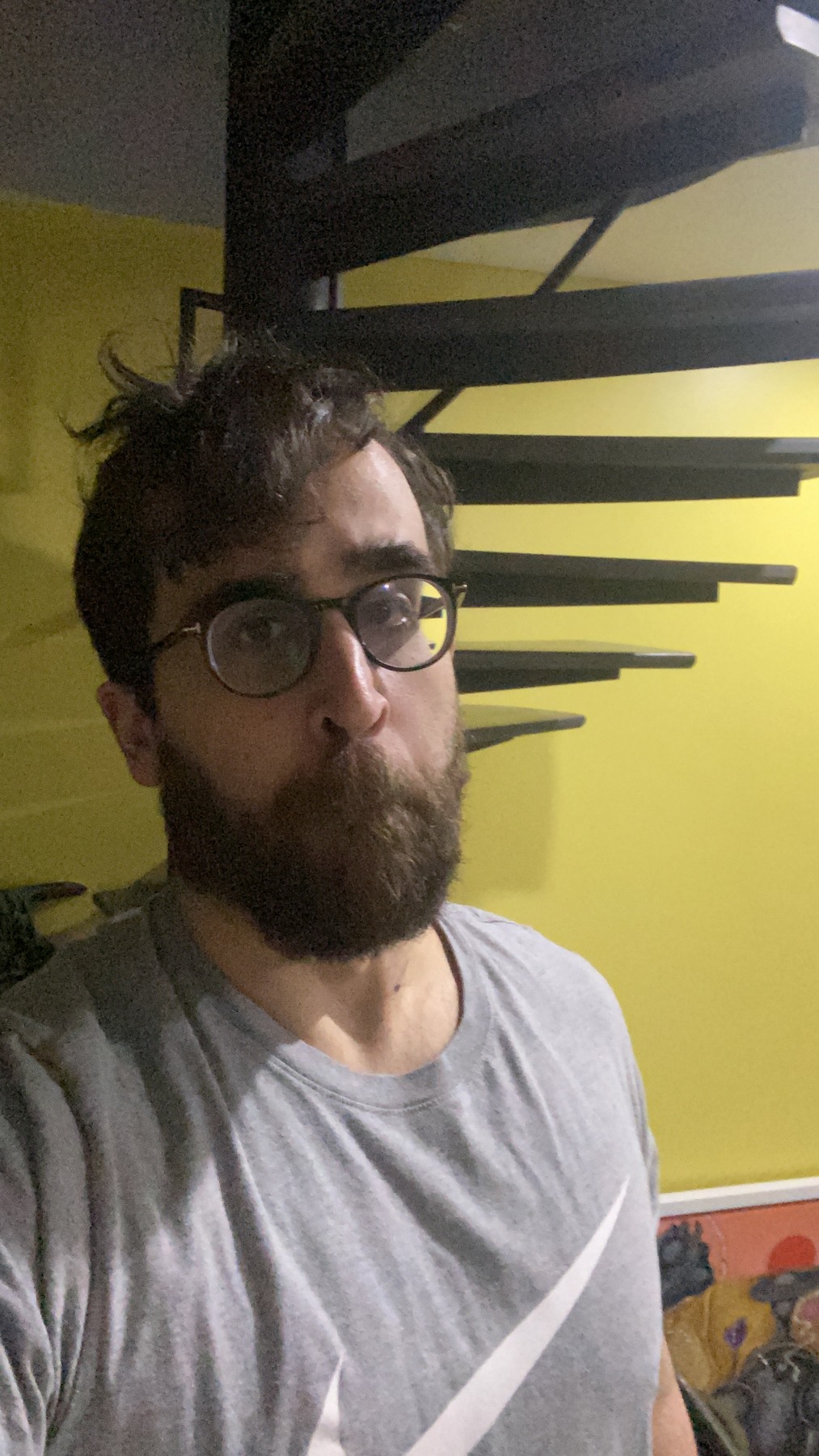
On the second floor, with the stairs to my work space behind me.
“Whatever this story would sound like later, right then she needed help.”
At the clinic, I explained what she had eaten and how much. I also explained why I used the gummies and told the doctor about my brain surgery. Once he understood, his reaction was much calmer than hers. As I remember it, he gave a little laugh and said, essentially, “So she is just really high, then?”
That was the situation. After she was checked, the doctor reassured me. But knowing what had happened did not make her fear imaginary. She had not meant to take cannabis at all, much less that amount. I stayed at the clinic for about eight hours, waiting until her daughter could come after school.
When her daughter arrived, I explained the mix-up. She laughed too, then went to see her mother. I walked back to the apartment. The clinic had been close enough that I could go home on foot, back to the place where this had started as an ordinary workday.
The following week, the cleaning lady did not come. About two weeks after the incident, she returned, apologized, and asked whether she could keep cleaning. Of course she could. I was not going to hold an accident against her. By then, she was okay, and we could both see the absurd side of what had happened. It became a story we could laugh about, not a reason to treat her differently.
That was the part I could not get over. I had arrived in Bogotá determined not to chase experiences. I was going to stop being a tourist, stop taking so many pictures, and just live. Somehow, I ended up with a back full of travel memories and an afternoon at a clinic explaining that the candy was not candy.
It was not that I wanted frightening things to happen to anybody. It was that even the quiet life I had chosen was turning into a story I could never have planned. I had not needed an excursion to meet people, make decisions, or find myself dealing with something completely unexpected. Ordinary life was still happening. It just happened to be in Colombia.
Most of those two months were genuinely calm. I got a lot of work done. I liked my apartment. I enjoyed my food deliveries, my chessboard, and the days when very little happened. The strange story did not replace all of that. It sat inside it.
Chicó Norte confirmed that this was the life I wanted. I could feel at home without staying forever, and I could enjoy a place without turning every day into an event. I was also beginning to see why I might want a few pictures of those ordinary days after all.
By May 22, the two months had flown by. I was ready for the next place, not because Bogotá had failed me, but because I was excited to see what came next. That place was Cusco, Peru.
After all my firm decisions about not being a tourist, Cusco was about to make me look very inconsistent.
C H A P T E R 8
────────
The Right Place to Get It Wrong
Cusco, Peru, May 22 to July 3, 2021
In Bogotá, I had decided I did not need to be a tourist. Before I even reached Cusco, I had apparently changed my mind.
Somebody mentioned Machu Picchu and asked whether I was going. Of course I knew the name. I just had not really put together that the famous place I had heard about was in the country I was about to visit. That probably tells you how much planning had gone into becoming a world traveler.
Once I realized I could see one of the New Seven Wonders of the World, I started looking at Peru differently. This time, I was going to do the tourist things. I began looking at tours before I arrived, and eventually I was going somewhere almost every weekend.
First, though, I had to learn what it felt like to be in Cusco.
I knew Bogotá was high, but I had not understood how much altitude could affect the way I felt. I had felt unwell for a couple of days there and worried about COVID. Looking back, I wondered whether the altitude had been part of it instead. In Cusco, I remember a brief wave of dizziness and a headache as I walked around the airport. It passed, but it got my attention.
That was also where I tried coca tea and other coca products. They were something new to me. I felt they helped me feel better and gave me energy, and they became part of my memory of arriving in Peru. I was still learning things by turning up somewhere and finding out.
Once I settled into my two-story place, the familiar routine was there again. I worked from home, found a gym, and started building an ordinary life around a rather ambitious list of weekend plans.
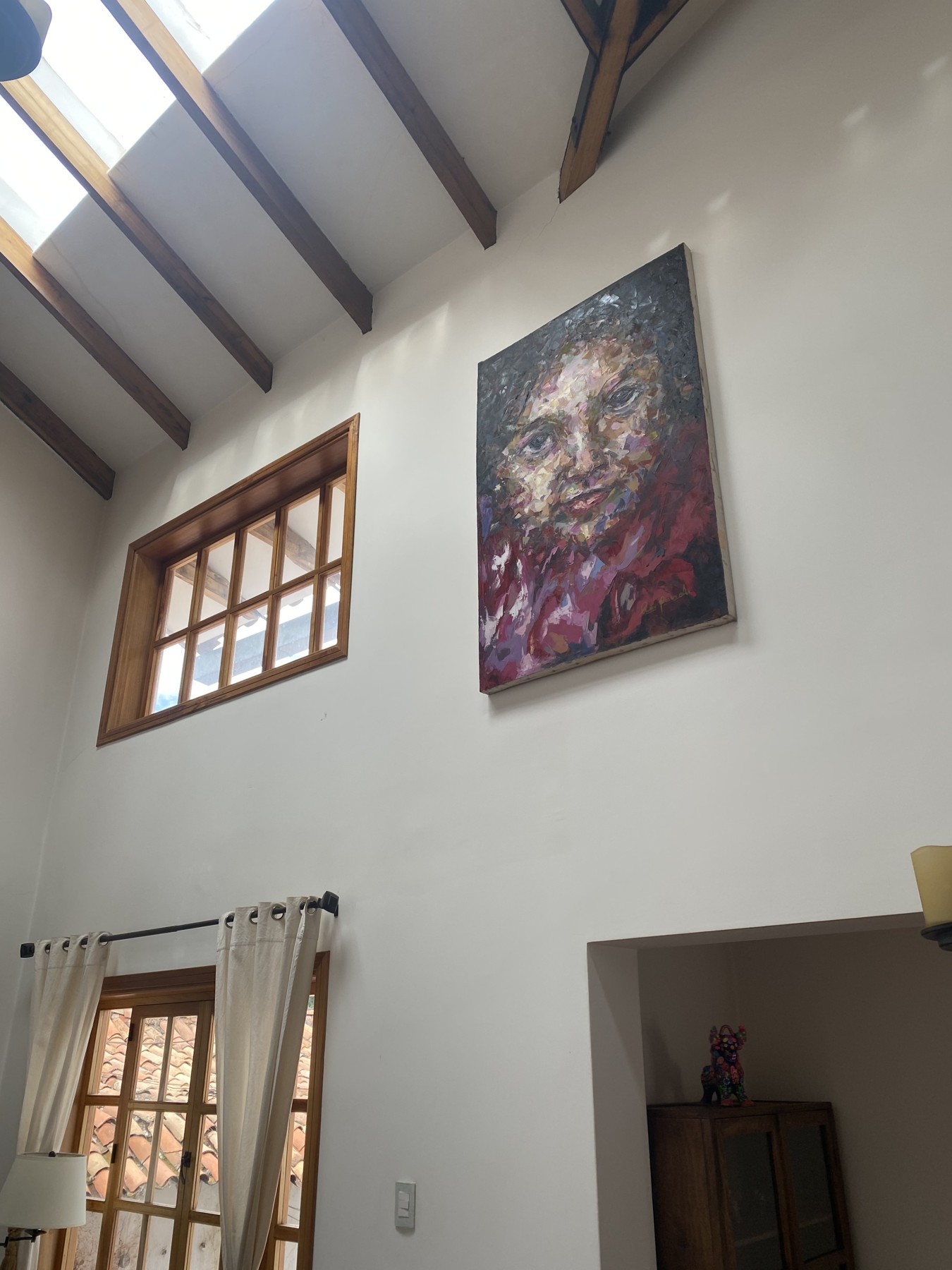
My two-story home in Cusco.
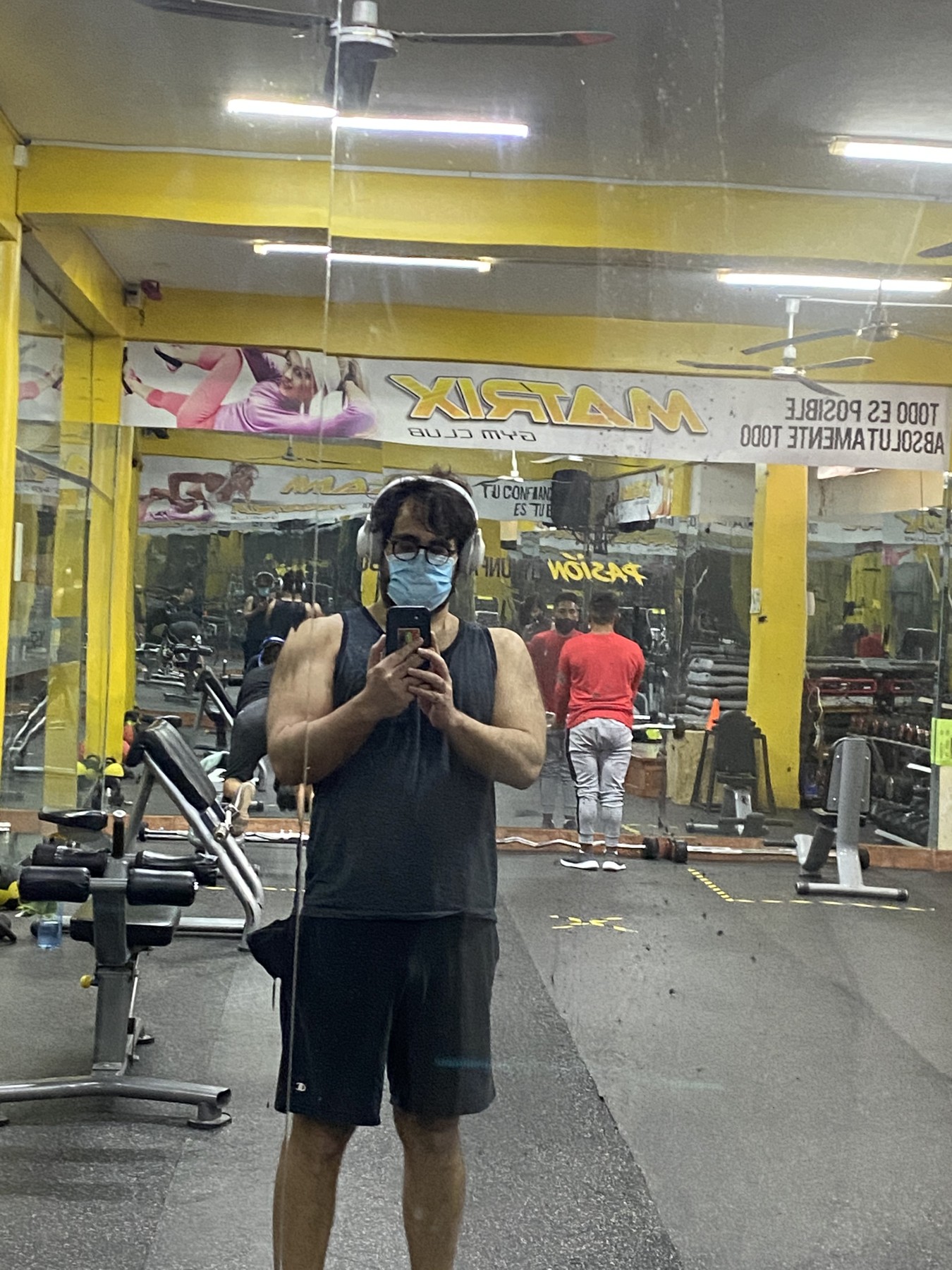
Still finding a gym, still wearing a mask.
The part between the tours was comfortable. I liked my accommodation, I liked the food, and I kept working. Traveling had not replaced my profession. It was happening around it.
Cusco had markets full of people selling all kinds of things. I had already encountered markets in Albania, but these were another version of that experience: different vendors, different food, and more things I had never thought about buying before. I also tried Inca Kola. To me, buying that bright yellow bottle felt like a small, very Peruvian thing to do. Sometimes the cultural experience was simply getting a soda.
The weather could change the whole feeling of a day. In the sunshine, I could feel perfectly comfortable, even hot. Then evening arrived and it became seriously cold. I learned not to let a pleasant afternoon make decisions for the rest of the night.
COVID was still part of everything. I wore a mask at the gym, and on the transport to Machu Picchu I had a face shield over my mask too. I remember looking at myself and finding the whole setup absurd. Every country had its own version of the rules, and I was still adjusting to the differences.
When I went into the center, there was Plaza de Armas, with its churches, shops, and the rainbow flag of Cusco. That flag represents the city, rather than being the Pride flag I might have assumed it was at first glance.
On another outing, I visited a church whose gold decoration was one of the things I remembered most. I could not take pictures inside, so I photographed the outside. I was not keeping a careful record of every building or every fact. I was mostly looking at things and thinking, that is amazing.
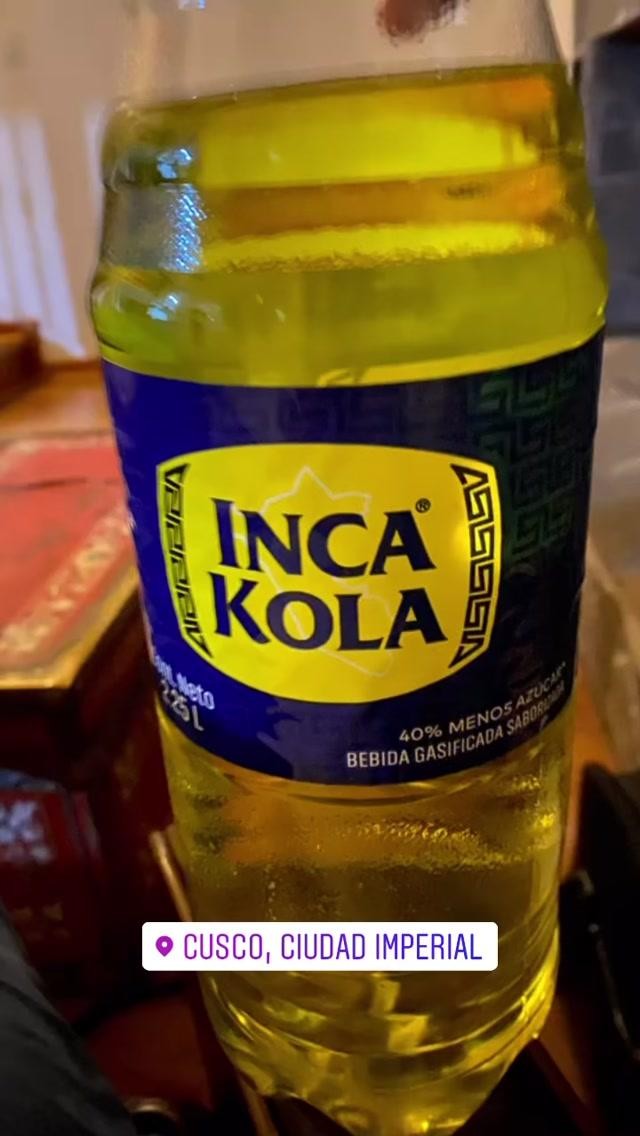
Inca Kola. A small taste of being in Peru.
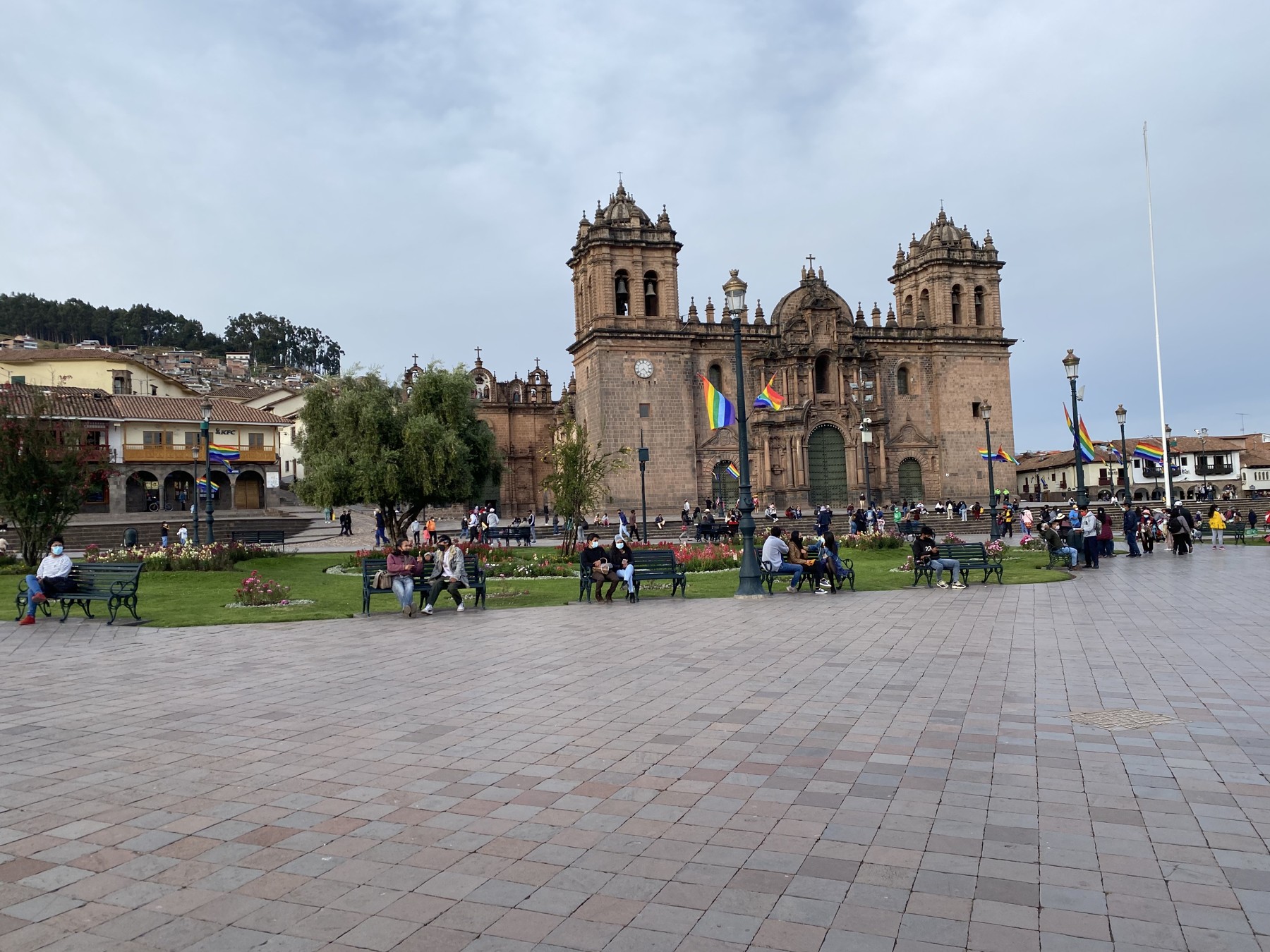
Plaza de Armas and the rainbow flag of Cusco.
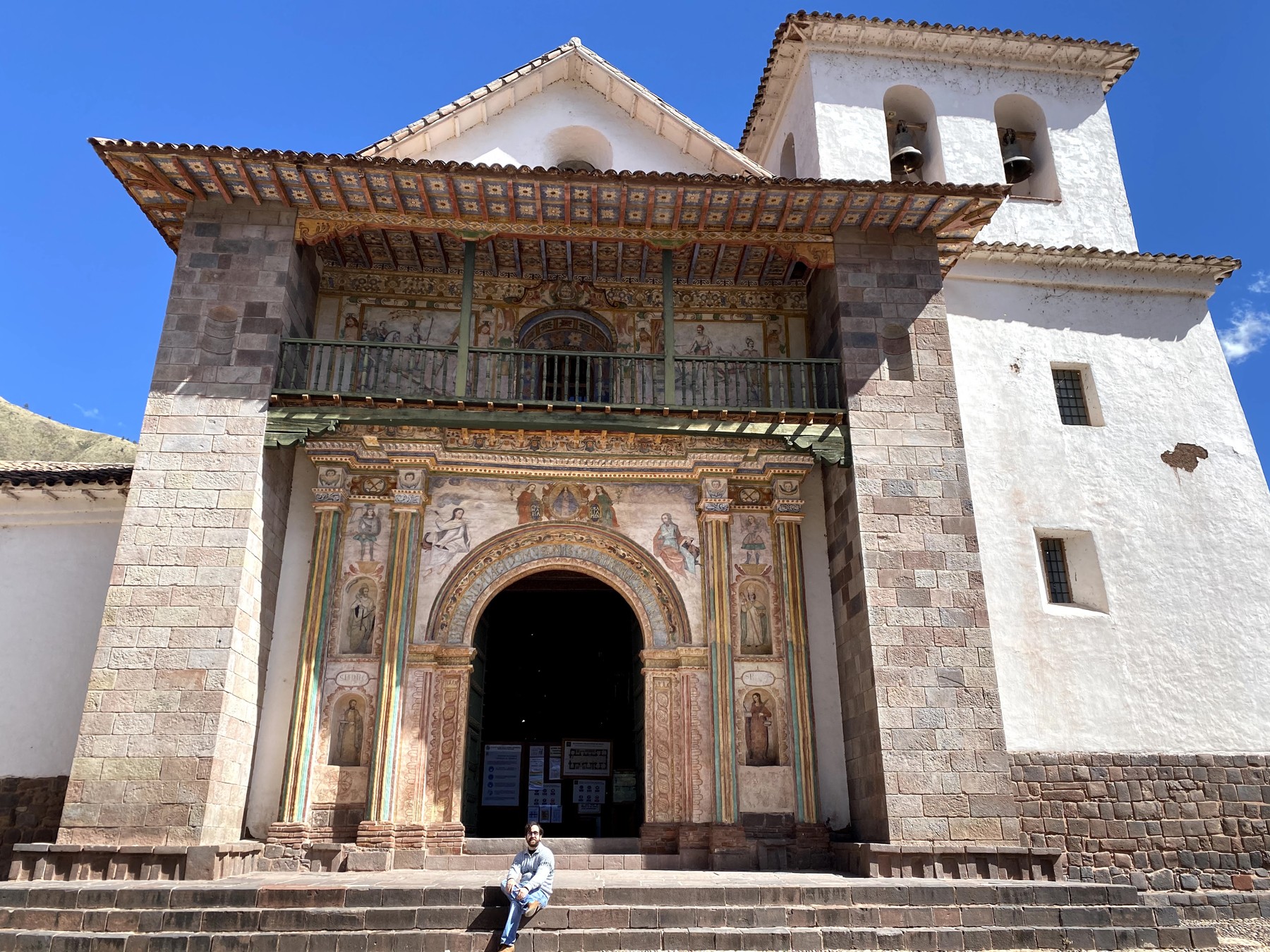
The church I could photograph only from outside.
The weekends were where I really overdid it. I would finish another stretch of work and then head out on a separate tour. Cusco and the surrounding area gave me plenty of reasons to keep saying yes.
The countryside was extraordinary. There were mountains that seemed to keep going behind other mountains, water running through the valleys, and views that did not look real even when I was standing in front of them. Some of my pictures still give me that feeling. I cannot always tell you exactly where every one was taken. I can tell you I was there.
The salt pans at Maras were one of those places. I took a picture with the pale terraces spreading out behind me and the mountains beyond them. It was another scene I would never have found by staying in my apartment, and I was glad I had gone.
That was the awkward part of the lesson I was learning. The tours were good. The places were worth seeing. The problem was not that I had wasted my time. It was that I was starting to build a schedule I would not want to repeat in every country.
After two quiet months in Bogotá, I had swung in the other direction. Almost every weekend now came with another outing. I was still figuring out how much of this I actually wanted, rather than how much I thought a traveler was supposed to do.
If I was going to make that mistake, though, Peru was a very good place to make it.
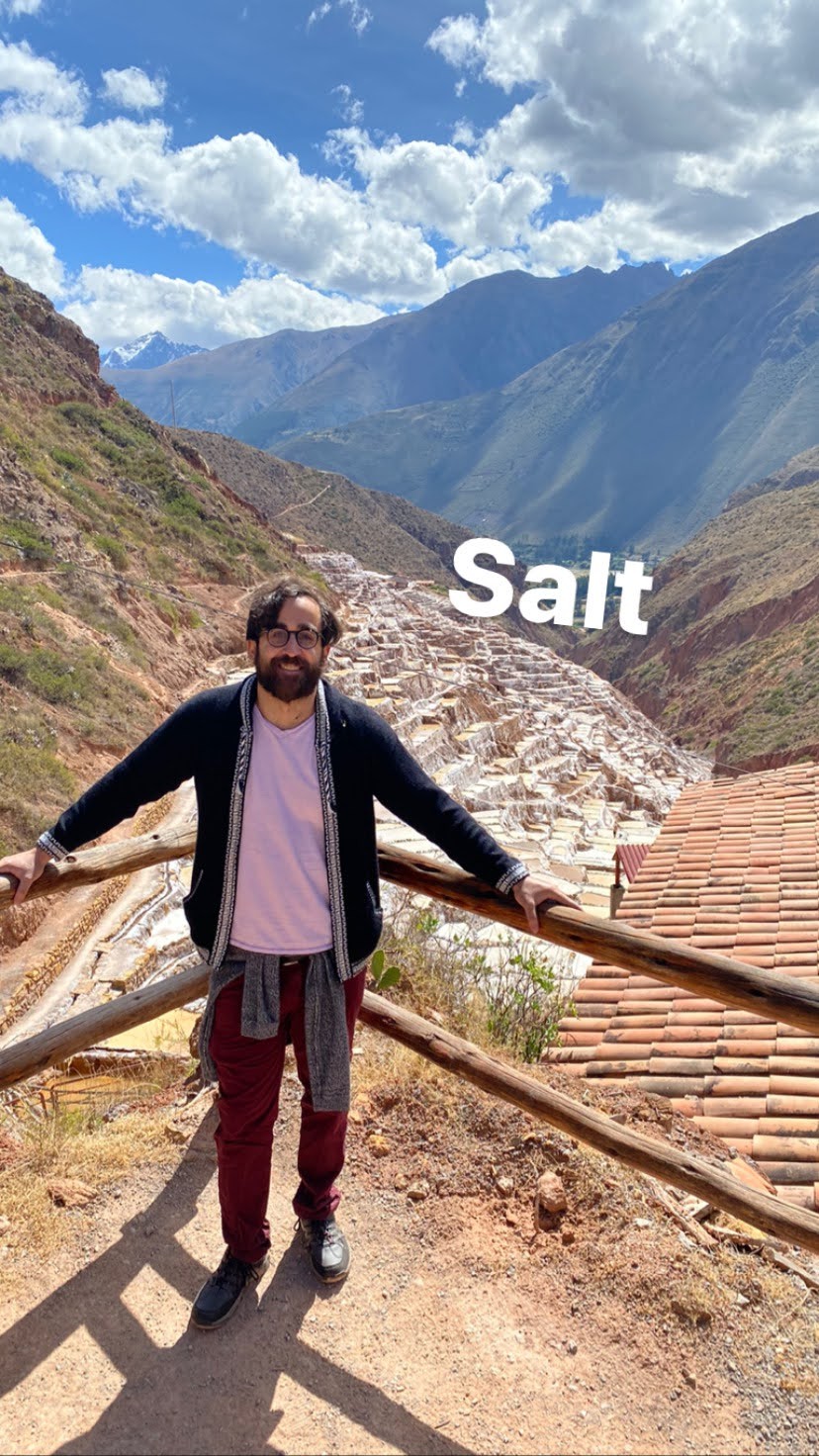
At the salt pans of Maras.
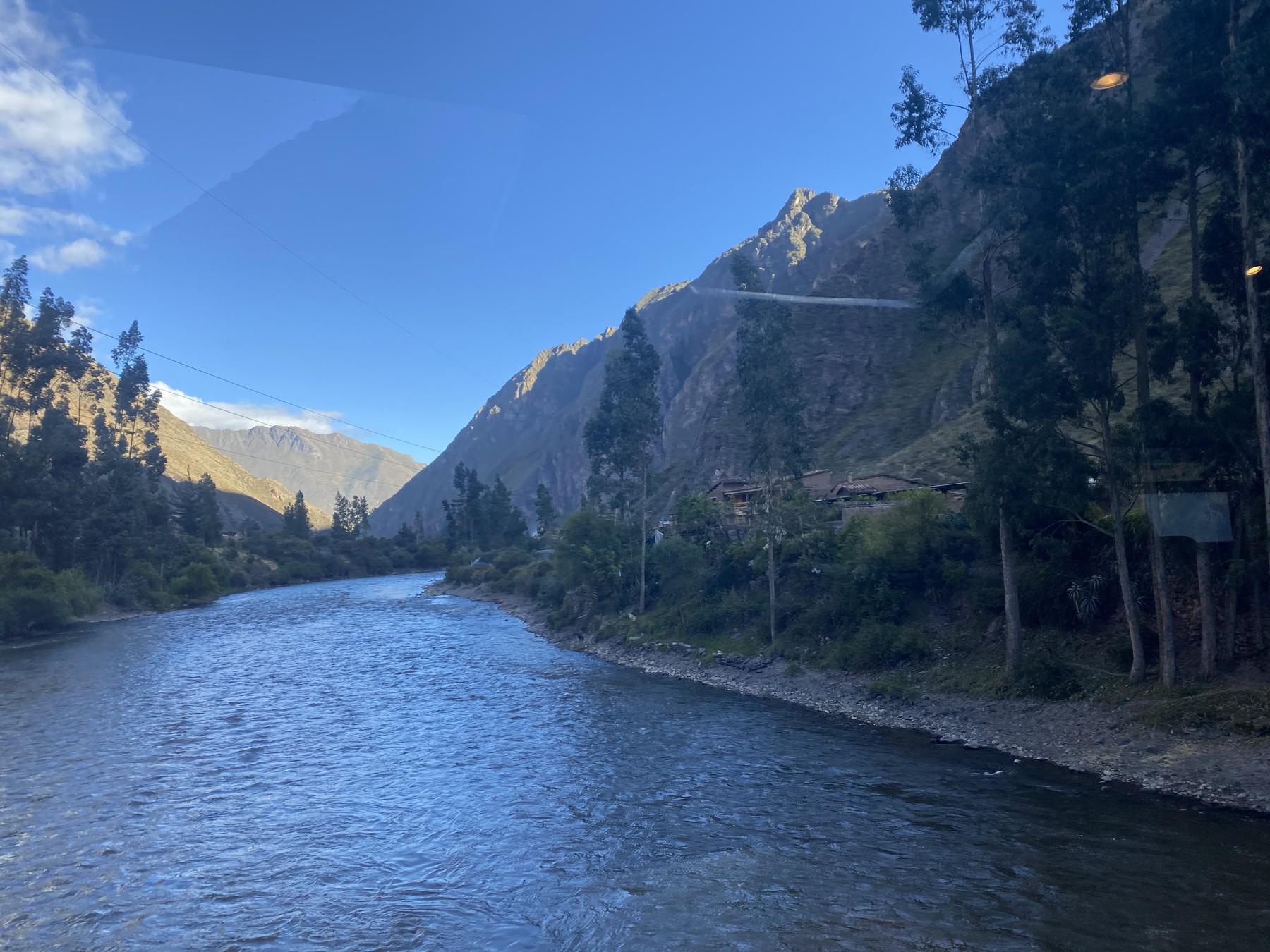
One of the views that barely looked real.
“If I was going to overdo the tours, Peru was a good place to do it.”
Machu Picchu was the clearest reason I was grateful I had made room for the tourist version of myself.
I had gone from barely connecting its name to Peru to standing there in person. The stonework, the paths, and the mountains around it made the whole thing feel bigger than the idea I had carried in my head. It was not only the famous view. I kept looking beyond it at everything surrounding the place.
Even there, outdoors, I still had my mask on. That is part of what makes the pictures feel so specific to this trip. There I am, somewhere I had heard about for years, dressed partly for an incredible day out and partly for a pandemic.
Then there were the llamas wandering around. I loved that detail. I had traveled to see this extraordinary place, and they were just getting on with their day. Apparently I was not the only one who could live somewhere impressive without treating every minute like a major event.
I took plenty of pictures. I am glad I did. I may not remember every historical explanation from the visit, but I remember being there and looking at those mountains. The pictures bring back something that a list of facts would not necessarily bring back for me.
There was no disappointment in seeing Machu Picchu. I would not pretend otherwise just because my idea of travel would later become less focused on famous places. It was fantastic. I was simply beginning to separate two things that I had kept mixing together: having an amazing excursion and finding a way of life I could keep enjoying.
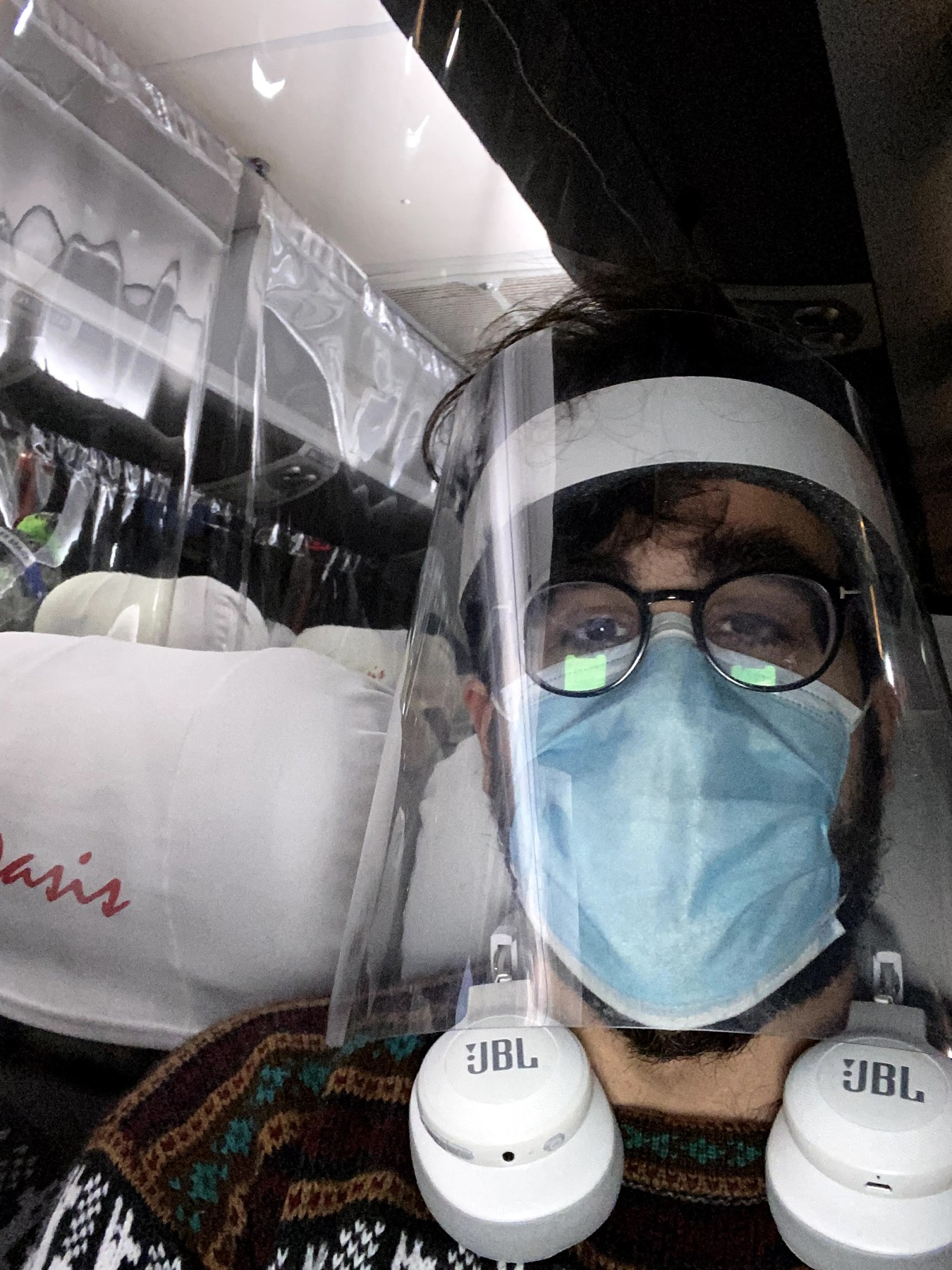
On the way to Machu Picchu, with a face shield too.
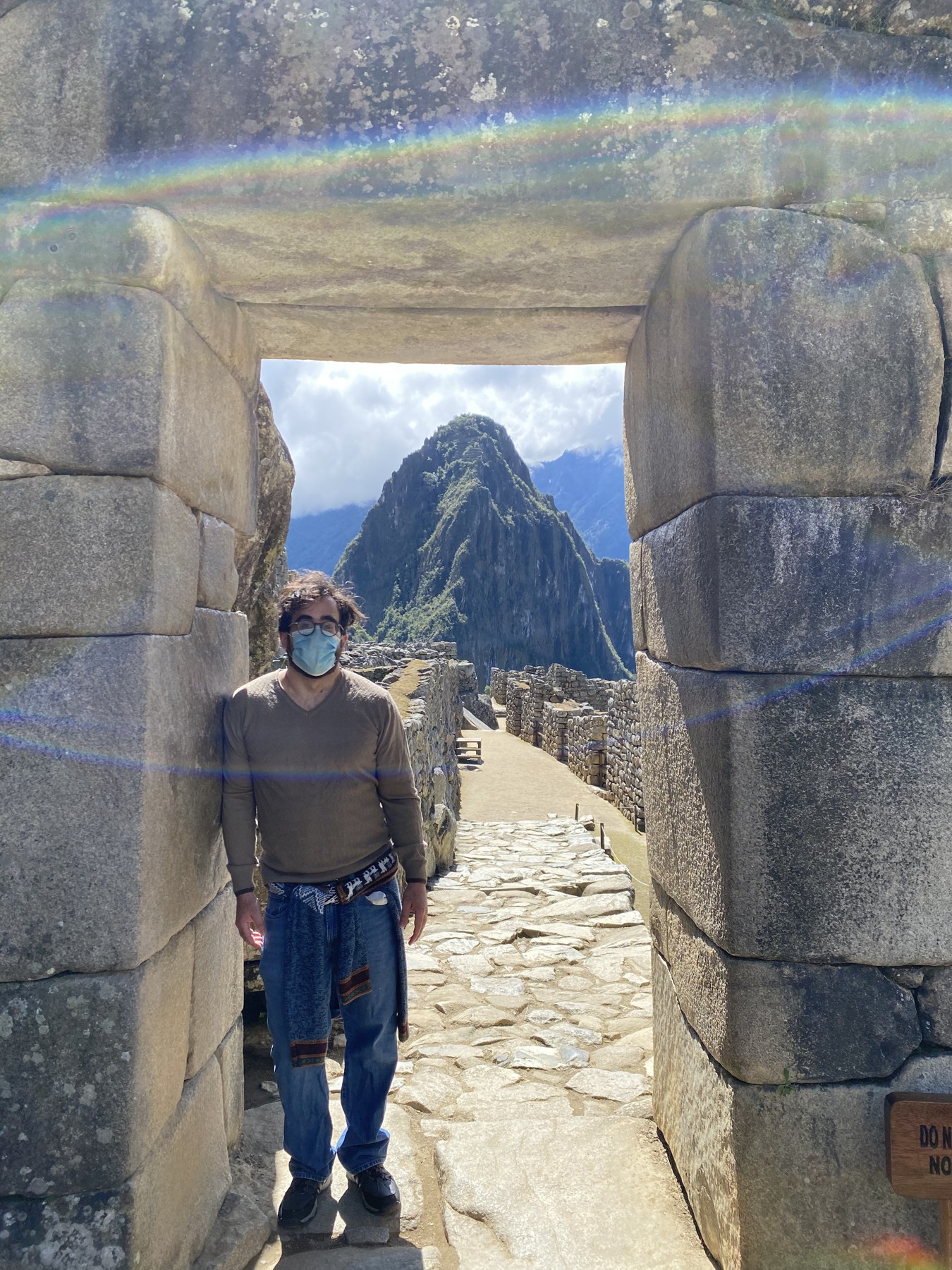
At Machu Picchu. This time, I was definitely a tourist.
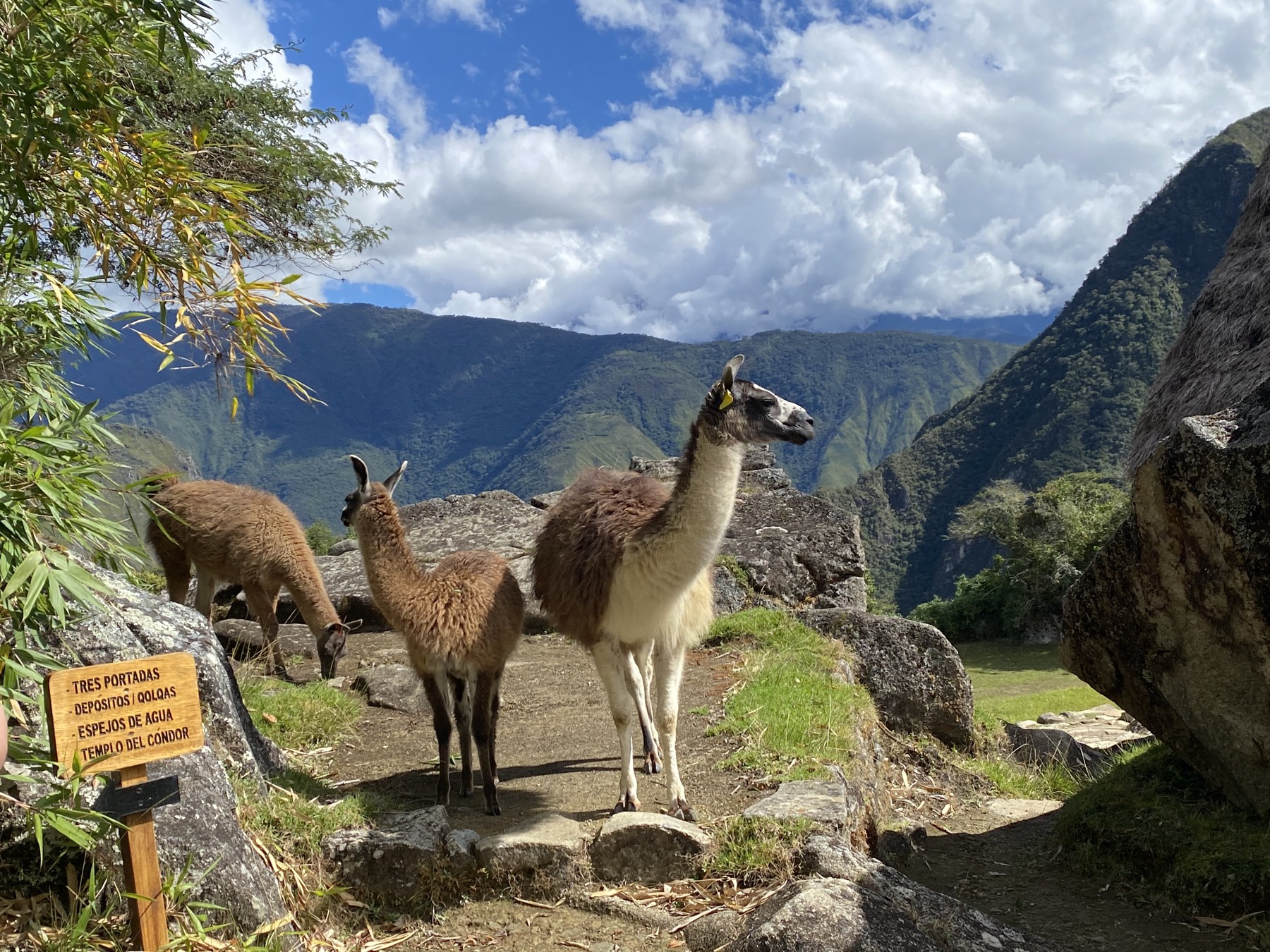
The llamas had a much more relaxed itinerary.
There was one decision from Bogotá that I did carry into Peru without changing my mind: I wanted another tattoo.
The idea of keeping pieces of the journey on my back had started in Colombia. In Cusco, I found a Peruvian tattoo artist and continued it. Peru became another part of that growing collection, something I could take with me without finding more room in my luggage.
By then, the trip contained two different kinds of memories. There were the obvious ones, like Machu Picchu and Maras, and there were the ordinary ones: my place, the gym, the food, and sitting down to work in another country. I enjoyed both. I just had not found the balance yet.
I also did not get to know everyday Cusco as well as I might have under different circumstances. COVID restrictions were still affecting the city. Places were closed, things were quieter, and the normal life of the city did not feel fully available. At the same time, I was spending so many weekends going somewhere else that I was seeing more of the region's attractions than the daily life around my home.
That did not make the stay a failure. I had a good time. I saw remarkable places and came away with pictures I still love. But I could also feel the difference between this schedule and the slower life I was trying to build.
I did not want the rest of my travels to become an endless series of appointments with beautiful places. I wanted enough room to live in them too.
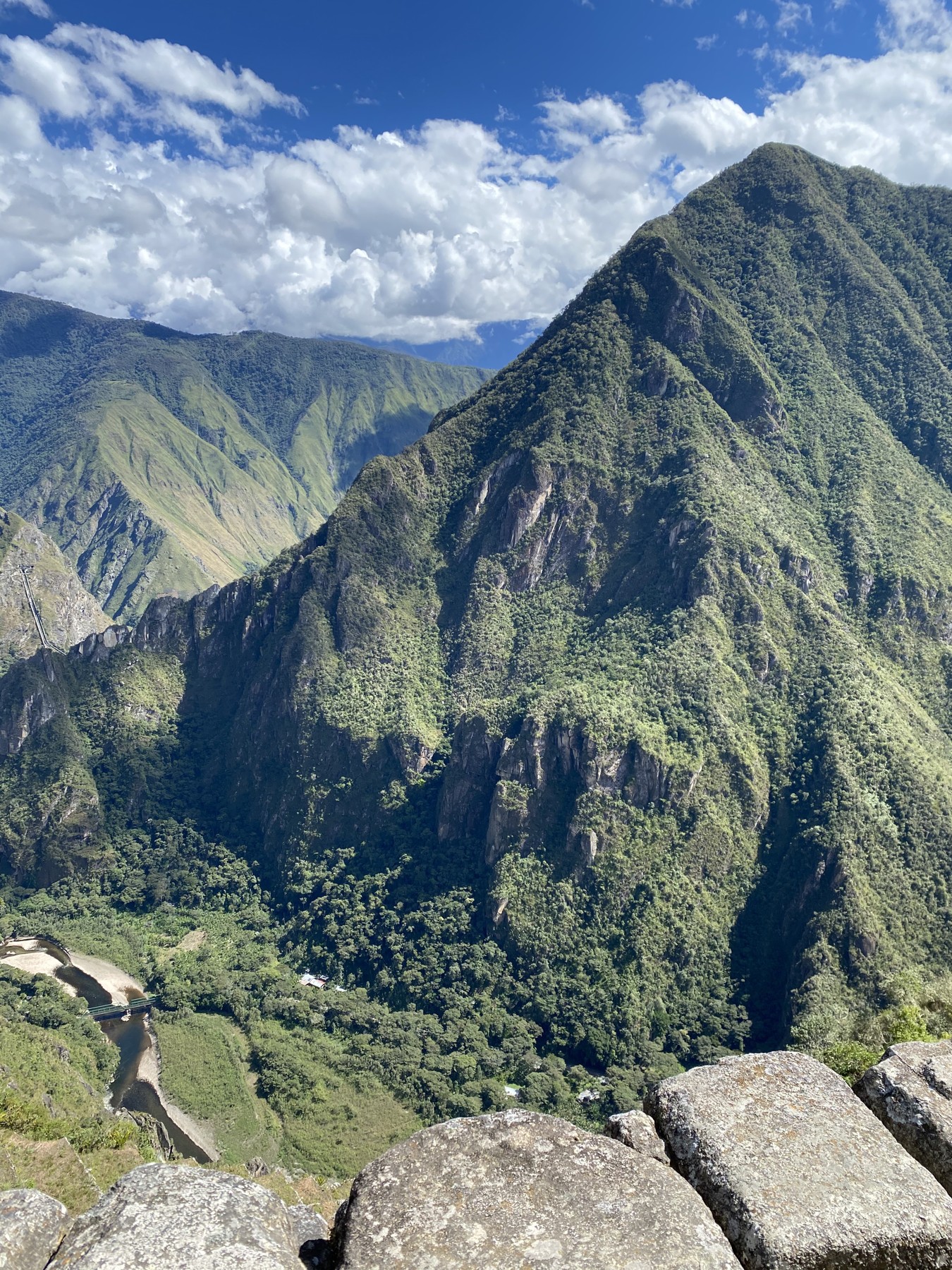
The mountains surrounding Machu Picchu.
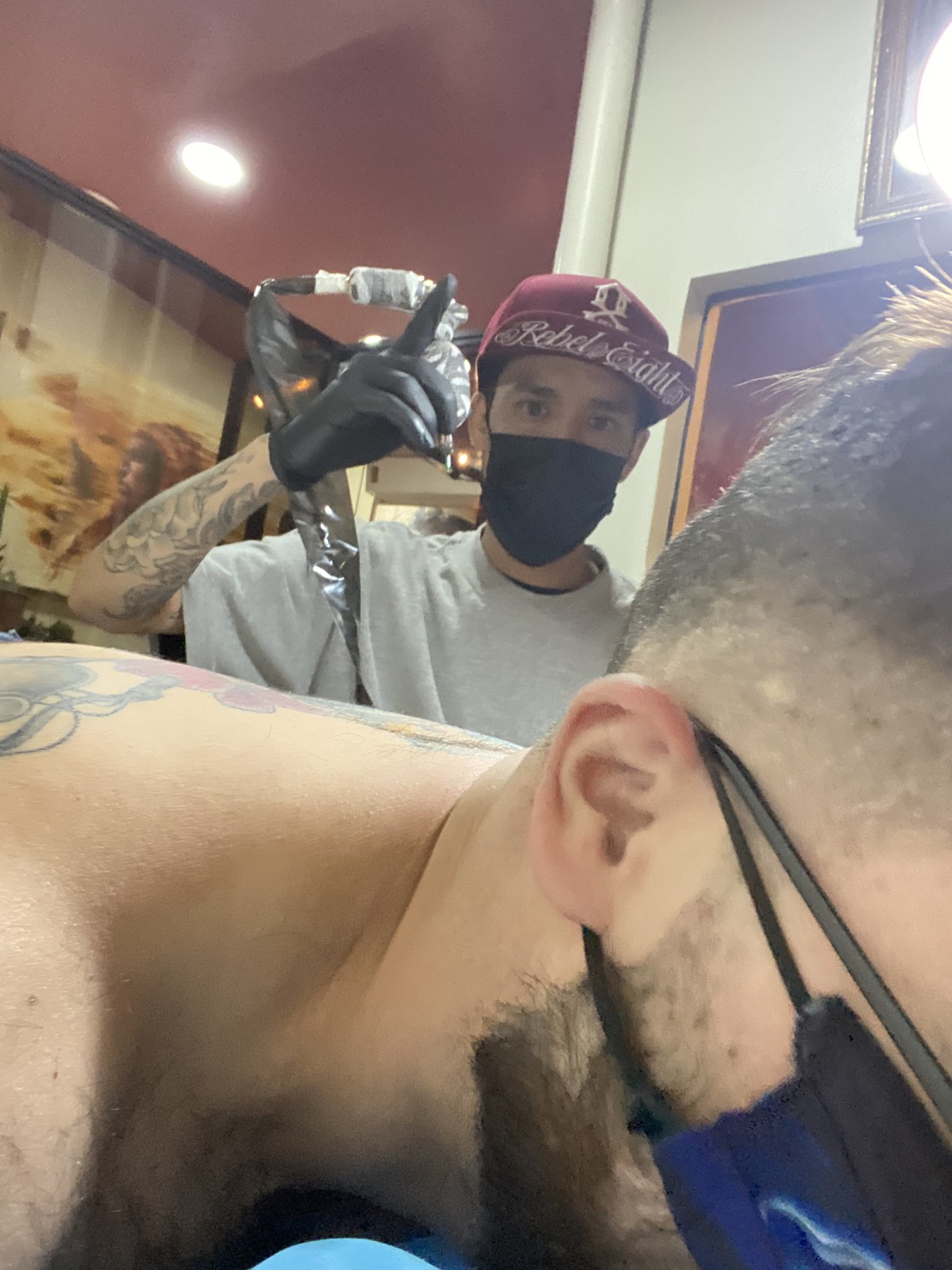
Adding Peru to the memories on my back.
“I wanted enough room to live in these places too.”
By July 3, I was ready to leave Cusco, and I was glad I had gone. Both of those things could be true. I did not regret seeing Machu Picchu, taking the tours, or spending so many weekends exploring. I was grateful that I had learned this particular lesson somewhere with so much worth seeing.
What I would change was the expectation that I needed to keep doing that everywhere. This was not a short vacation before returning to a separate life. This was my life. I still needed time to work, rest, eat, and have days that did not require a plan. A pace that made sense for a holiday did not automatically make sense for years of living abroad.
Over time, I would settle into stays of roughly three months, often around eighty-four days. For me, that length of time gives a place room to become familiar. The feeling I once expected to get only from seeing a famous wonder can also come from living somewhere different long enough for it to become part of my routine. That does not make the wonder less impressive. It means I do not need one on every itinerary.
I was also learning that leaving without seeing everything was not a problem. It was a reason to return. As I write this, I am planning to go back to Peru, but this time to Pisac, a village in the Sacred Valley. I want to experience more of the everyday life I missed on that first visit, without trying to fit a tour into every available weekend.
In 2021, though, that return was still years away. The immediate plan was a brief stop in New York City, followed by Mexico. My next home would be San Miguel de Allende, in Guanajuato, where I would get another chance to find the balance between seeing a place and living in it.
Cusco had given me the tourist trip. I was thankful for it. Now I wanted to see what happened when I left a little more space between the plans.
C H A P T E R 9
────────
The Best Part Was Next Door
San Miguel de Allende, Mexico, July 11 to September 25, 2021
After Cusco, I was still learning the difference between visiting somewhere and making a life there. San Miguel de Allende gave me plenty of room to think about it. Literally.
Around this stretch of traveling, I got a first-class upgrade with one of those seats that properly reclines. That was when I understood the appeal. It was not just a nicer seat on a plane. Being comfortable while getting somewhere made the whole experience feel different.
Then came the house. It had looked big on Airbnb, but the pictures had not prepared me for how big. There were three stories, a basement garage for a car I did not have, and an upstairs space I described as an indoor balcony. At times, it felt more like a little watchtower. There was even a chess set.
I had not suddenly decided I needed to live in a mansion. The price had made it possible. We were still traveling through COVID, and with fewer tourists around, I had found something far larger than I would normally have considered. Mexico also felt less restricted than the places I had just come from. It was not that COVID had disappeared, but daily life felt easier to get on with.
So there I was, alone in this enormous house, putting my Puerto Rican flag in the living area. The same flag had followed me through all those different homes. Apparently it now needed three floors.
I loved how comfortable it was. I also began to realize that having more house did not automatically give me more life.
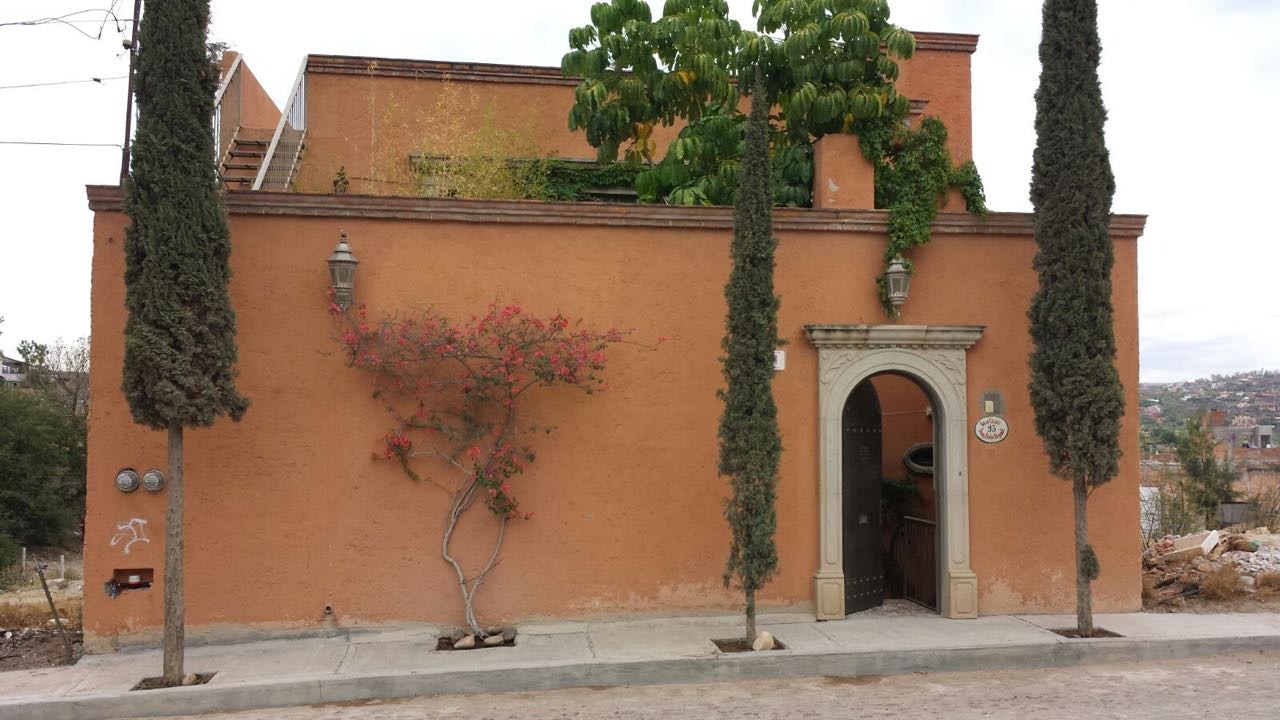
My temporary home. The photos barely explain how big it felt.
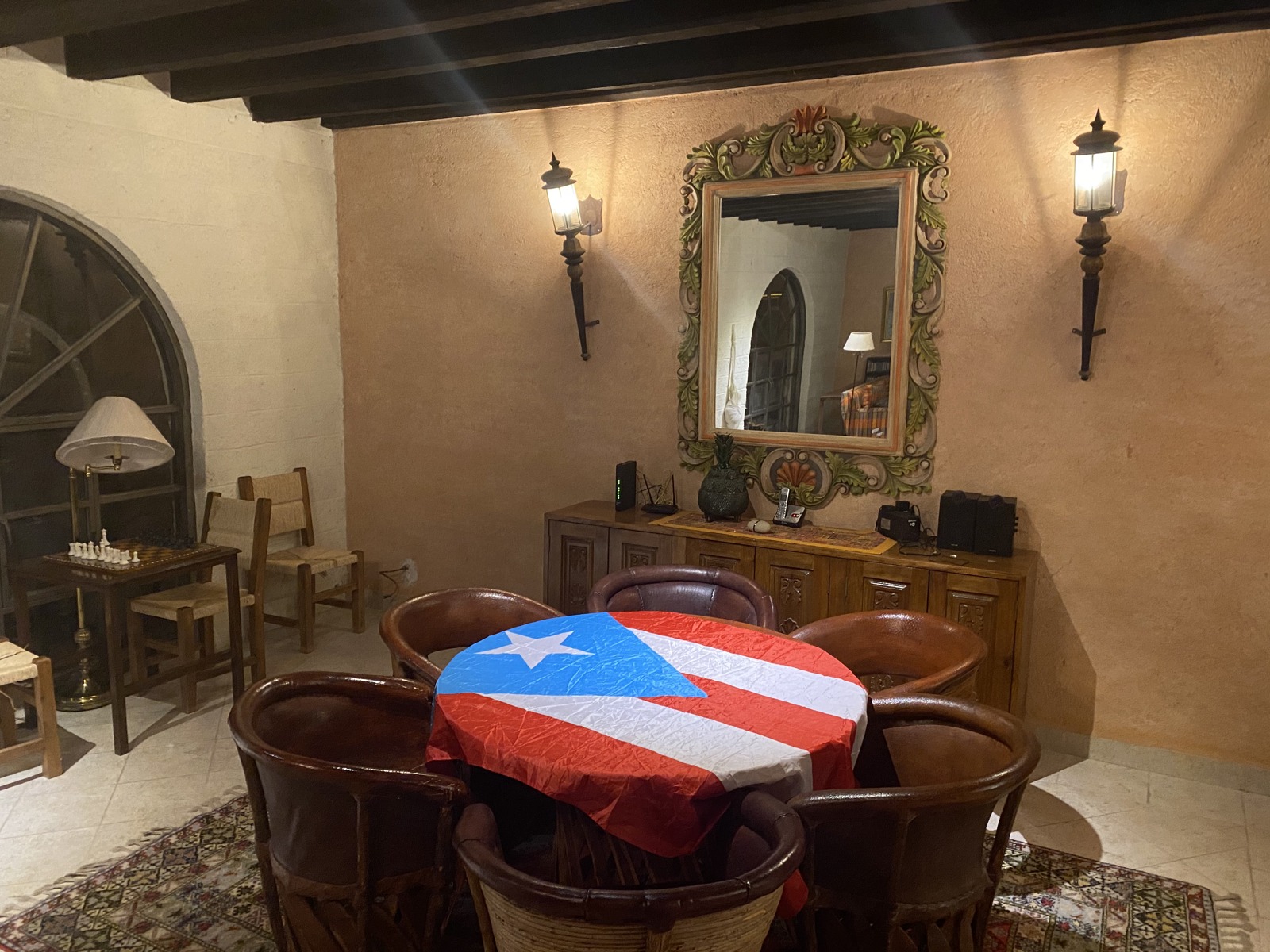
The Puerto Rican flag, making another house feel familiar.
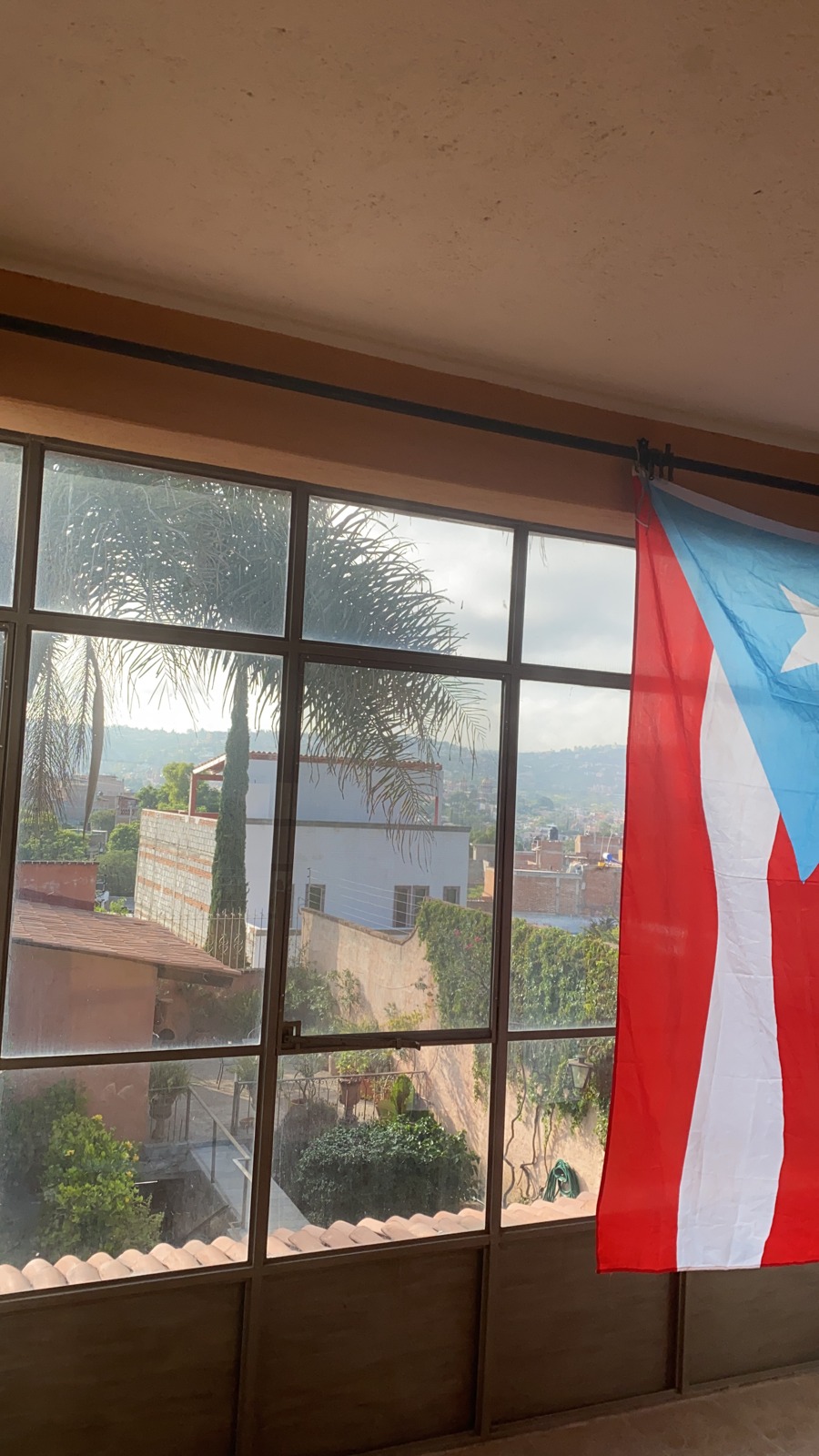
The upstairs space I called my indoor balcony.
There was nothing wrong with enjoying the space. The view from the third floor was lovely, and before I left I made sure to take a picture from up there. I liked being in the house. What I did not need was to turn its size into a requirement for every place that came afterward.
My work still lived on the same computer. A larger home did not change what I needed to do each day. Later, I would learn how little space I actually required, and how easily I could settle into somewhere smaller. At this point, I was learning it the other way around: get the giant house first, then discover that I did not need the giant house.
Outside, the neighborhood was much more ordinary than the house. I was about a thirty-minute walk from the tourist center of San Miguel de Allende, in Guanajuato. The streets around me felt residential. This was where people were going about their days, not where every corner seemed arranged for a visitor's photograph.
I loved that part. People sold fruit and other things from the fronts of their homes. A house could also be the place where I stopped to buy something. I started finding little shops I liked, walking the same routes, and getting used to the area. There was a local gym, too. My life was becoming familiar without becoming the same life I had left behind.
On those walks, I felt comfortable. I remember people seeming happy, children out in the neighborhood, and the pleasure of not feeling on edge. That is how I experienced my little part of the city. The center was beautiful, but the residential streets were what surprised me.
Then something very small gave me a very good reason to remember them.
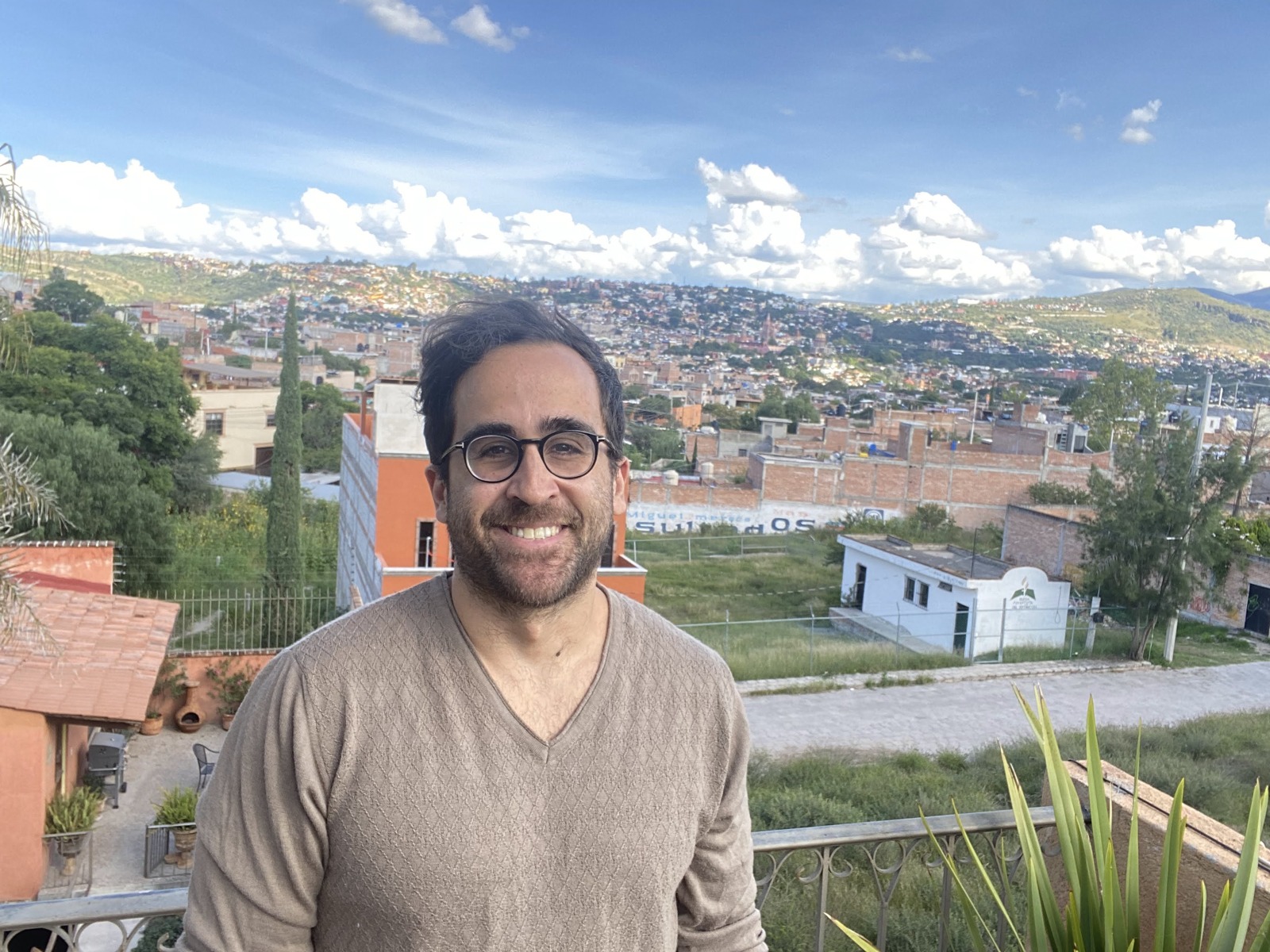
A last selfie from the third floor, with the view behind me.
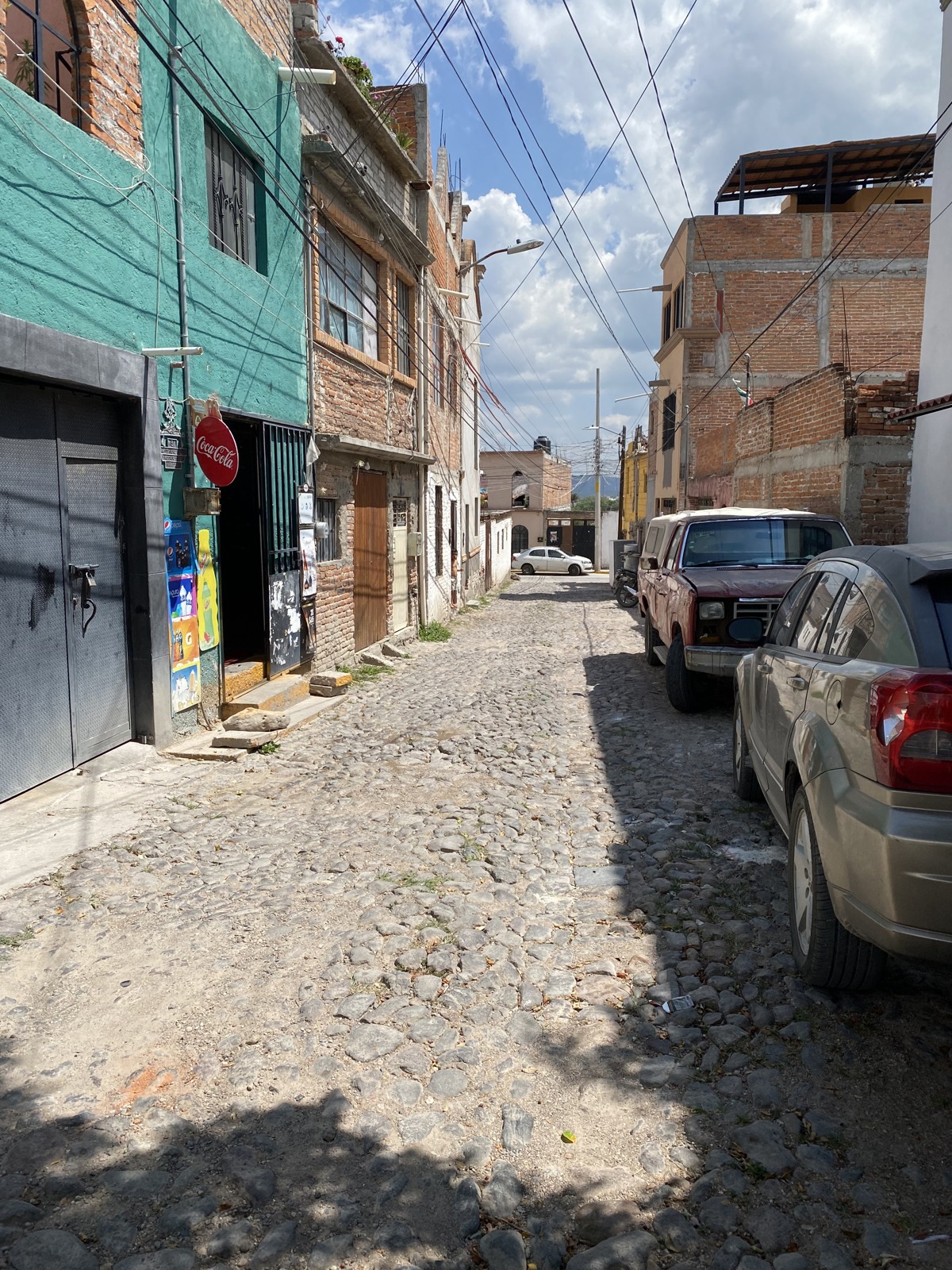
The residential streets around my home.
“The center was beautiful, but the residential streets were what surprised me.”
I lost my headphones. They were a good pair, worth about three hundred dollars, and I was going crazy trying to find them. I looked through the house, which was not exactly a small search area. With that many rooms and floors, it seemed perfectly possible that I had put them down somewhere and would never see them again.
The next day, I went to one of my favorite neighborhood shops. Near the cashier, hanging up where people could see them, were my headphones.
I told the woman they were mine. She explained that somebody had left them there, so they had hung them up in case the owner came back and recognized them. That was it. Nobody had taken them. They had not disappeared. They had been sitting there waiting for me to find them.
I knew what those headphones had cost, so the whole thing stayed with me. I had spent all that time looking through my enormous house, and the answer was a short walk away, in a shop where somebody had simply done a decent thing.
They had not kept my headphones. They had kept them for me.
That mattered more to me than another impressive building. After Tbilisi, I knew how much the feeling of everyday interactions could change a stay. Here, I enjoyed the people around me. I could go out, buy what I needed, and feel glad that this was where I was living.
There was a local market as well. After seeing markets in other places, I was beginning to recognize that something which had once felt new could become part of a normal routine. I still took pictures, but I was not always looking for a major event. Sometimes I was just out in the neighborhood, doing ordinary things, and enjoying them.
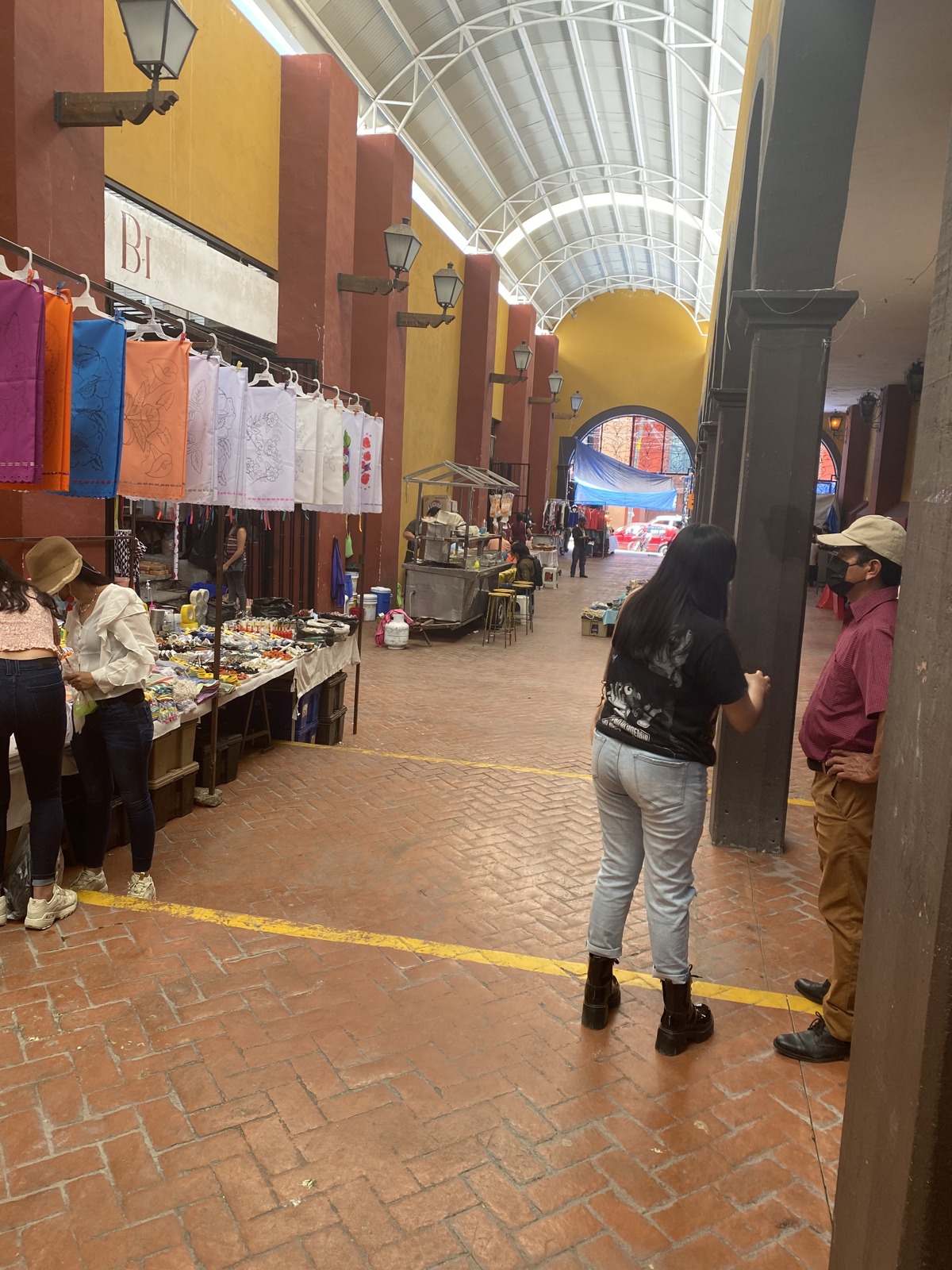
A visit to the local market.
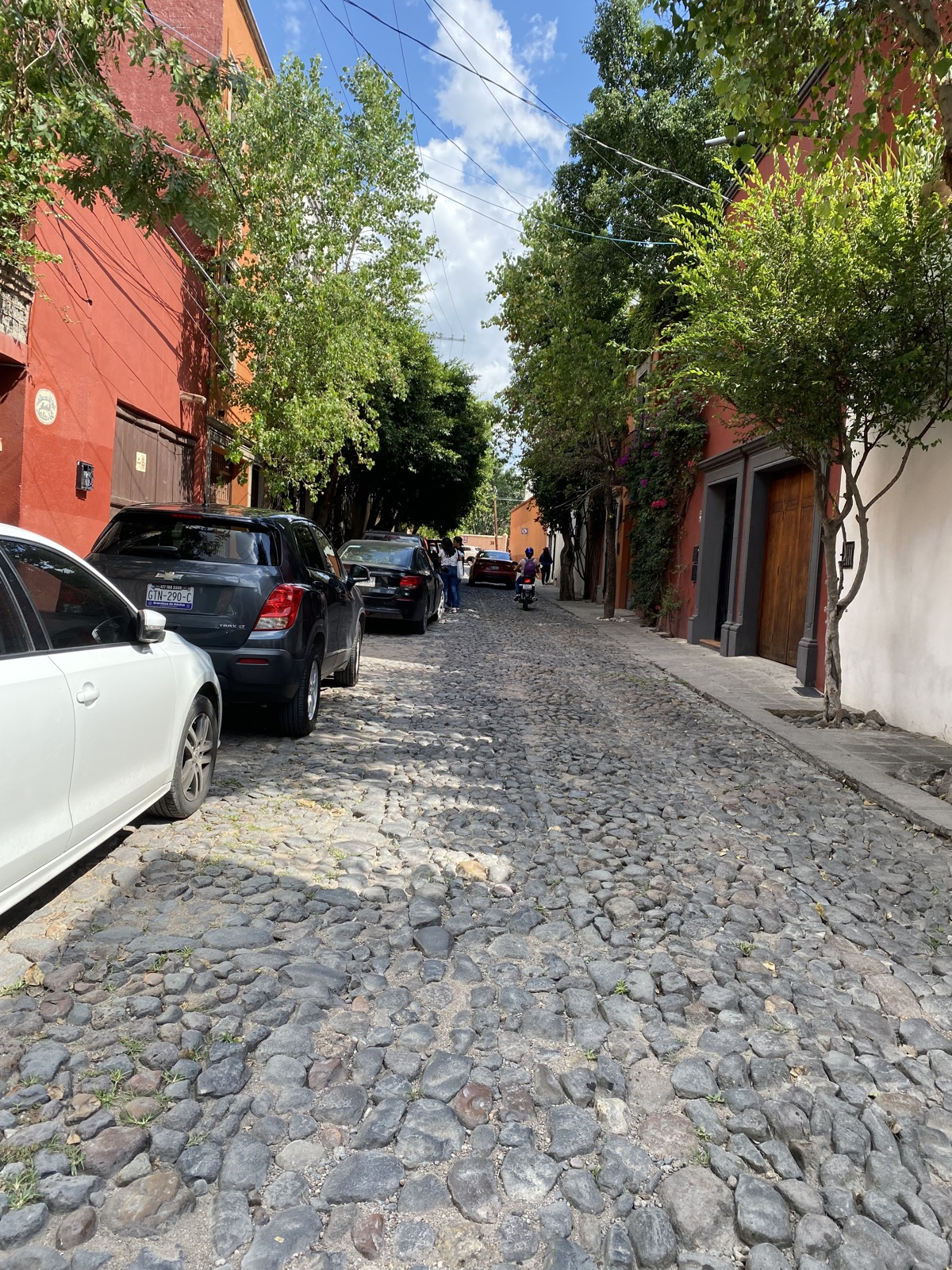
Another view from my walks around the area.
“They had not kept my headphones. They had kept them for me.”
Of course, I did spend some time enjoying the San Miguel that visitors come to see. I walked toward the center many times, but I remember setting aside a day to properly play tourist. After Peru, I still had some of that energy left.
The center looked almost unreal to me. There were colorful buildings, shops, restaurants, and streets where I kept noticing another detail worth photographing. Then there was the huge church with the pointed towers. My description of it was not particularly educated, but it was accurate to how I felt: the Disney castle for adults.
I understood why people wanted to see it. The place had that concentrated beauty I had loved in Florence. I did not have to leave the area and spend the whole day traveling somewhere else to find something interesting. It was right there, around the next corner.
And since I was already doing the tourist thing, I decided to eat like I was making a day of it. I had chips and guacamole, little sliders, drinks, and a dessert with ice cream. I have forgotten some of the names, but I remember enjoying the food and the feeling of sitting somewhere nice with no particular reason to hurry.
There was also a drink I remember as a carajillo, coffee mixed with liquor. I had a burger and an appetizer on another restaurant stop. These were not meals I needed to turn into some profound lesson. They were good. I was happy. That was enough.
On quieter days, I could order tacos through Rappi and eat at home. I had liked using it in Colombia, and it worked well for my life here too. A nice restaurant in the center and tacos delivered to my house were both part of the same stay. I did not have to choose only one version of it.
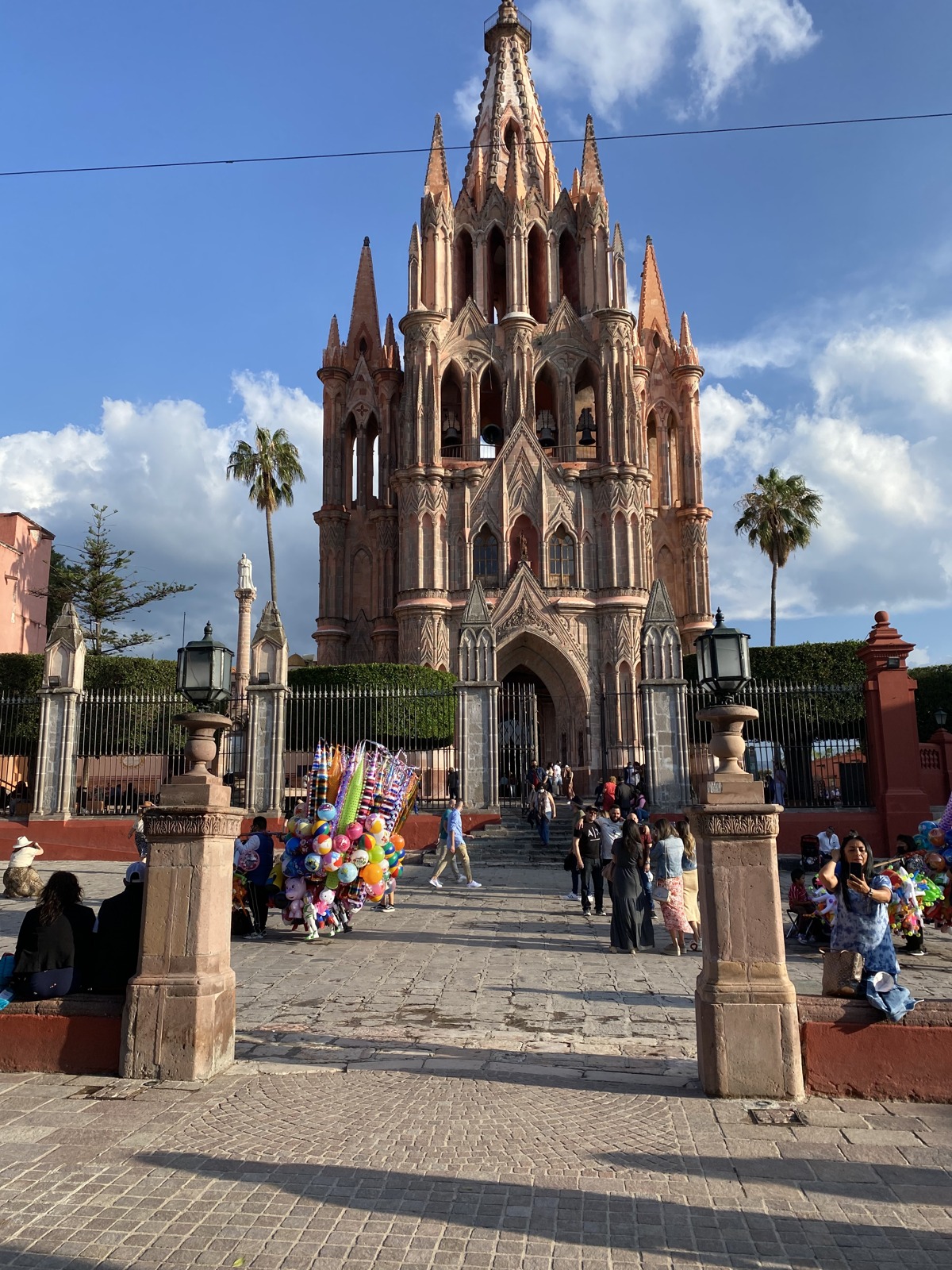
My idea of the Disney castle for adults.
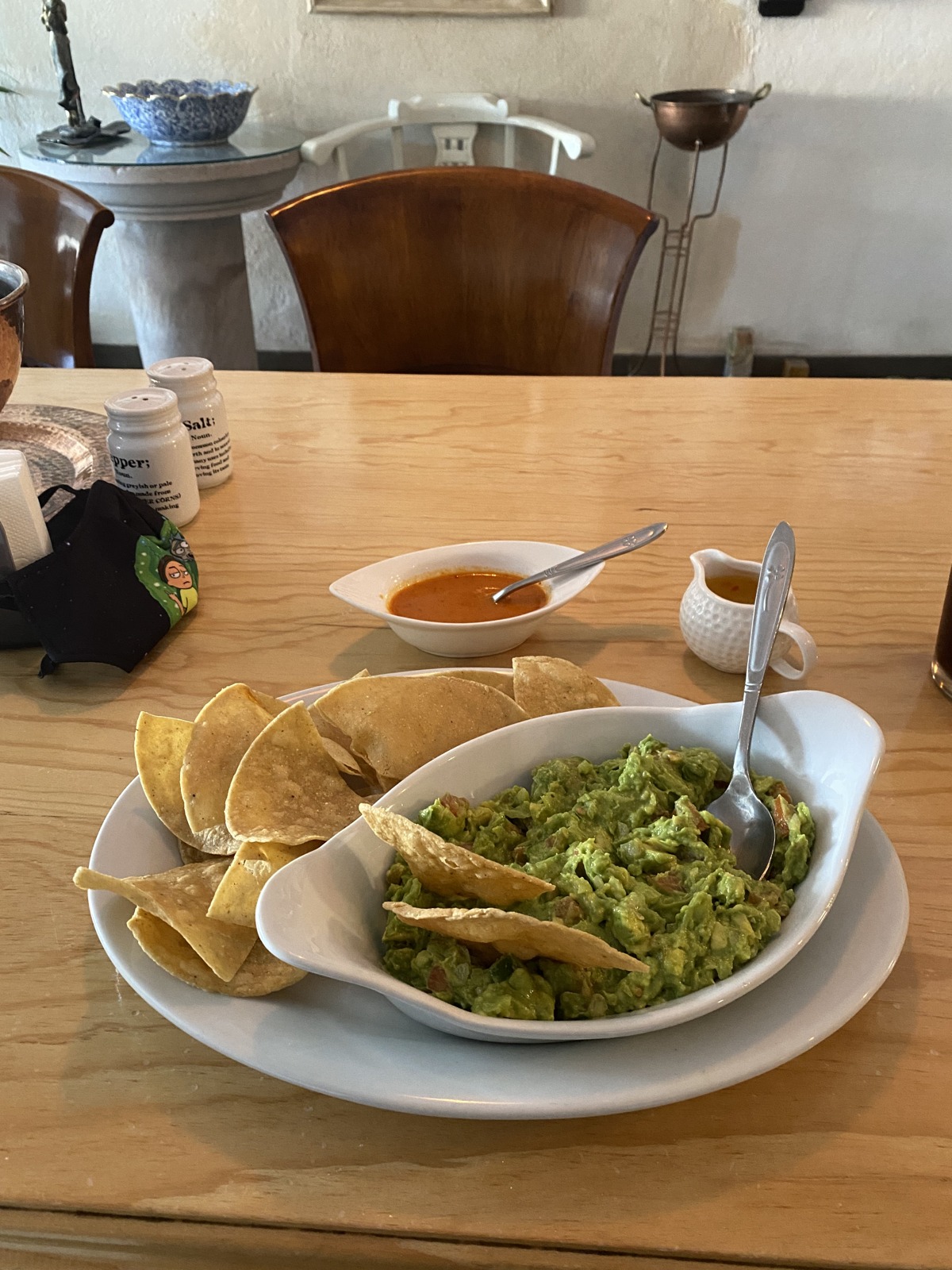
Chips and guacamole on a restaurant stop.
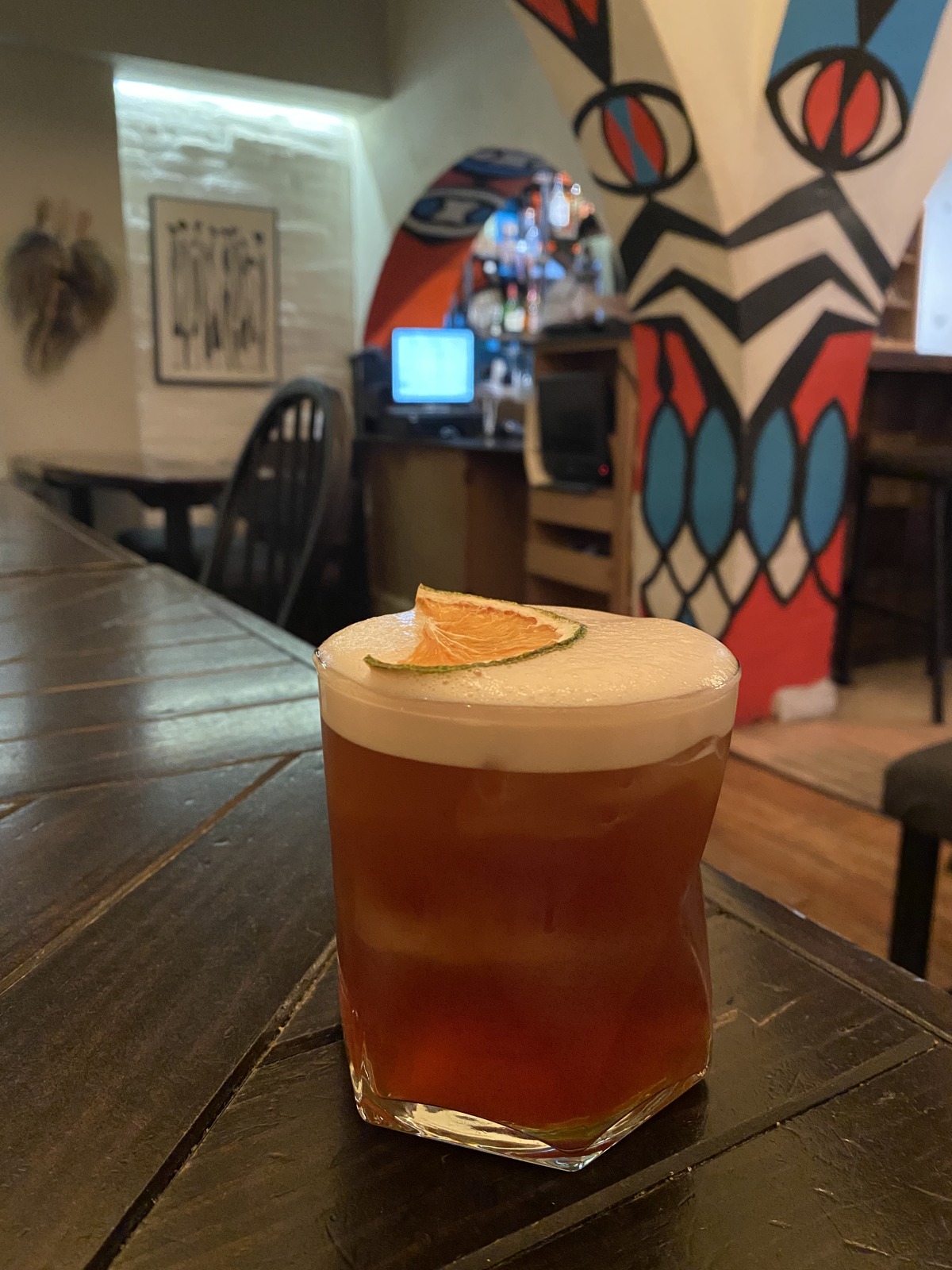
A drink I remember as a carajillo.
Some of my favorite things were not behind a restaurant door or inside a famous building. They were painted on walls. I kept seeing murals on my walks, and a few of them were worth stopping for even when I was not trying to do anything touristy.
One had a chessboard in it. I already loved chess, and I liked the idea of having something that connected that part of me with the place I was living. By now, I had also started turning my travels into tattoos. Colombia had been the beginning, and Peru had added a coca leaf. Mexico was going to get its own space.
So I took the photograph of that mural to a tattoo artist and asked for a version of it on my back.
The picture of the finished tattoo still makes me smile because the connection is so direct. There is the thing I saw on the street, and there is the memory I decided to keep. Above it, you can glimpse parts of the earlier tattoos. My back was slowly becoming a record of where I had been, with each place adding something different.
I did not need to choose a famous landmark just because it was the obvious symbol of a destination. This image meant something to me because I liked it, because I played chess, and because I had come across it here. That was enough reason to carry it with me.
Looking through the photographs now, that is what I like about this stay. There is the impressive house, the restaurant food, and the big church. But there are also streets, a market, and art I noticed while walking. The neighborhood gave me things to remember that I could not have chosen from a list before arriving.
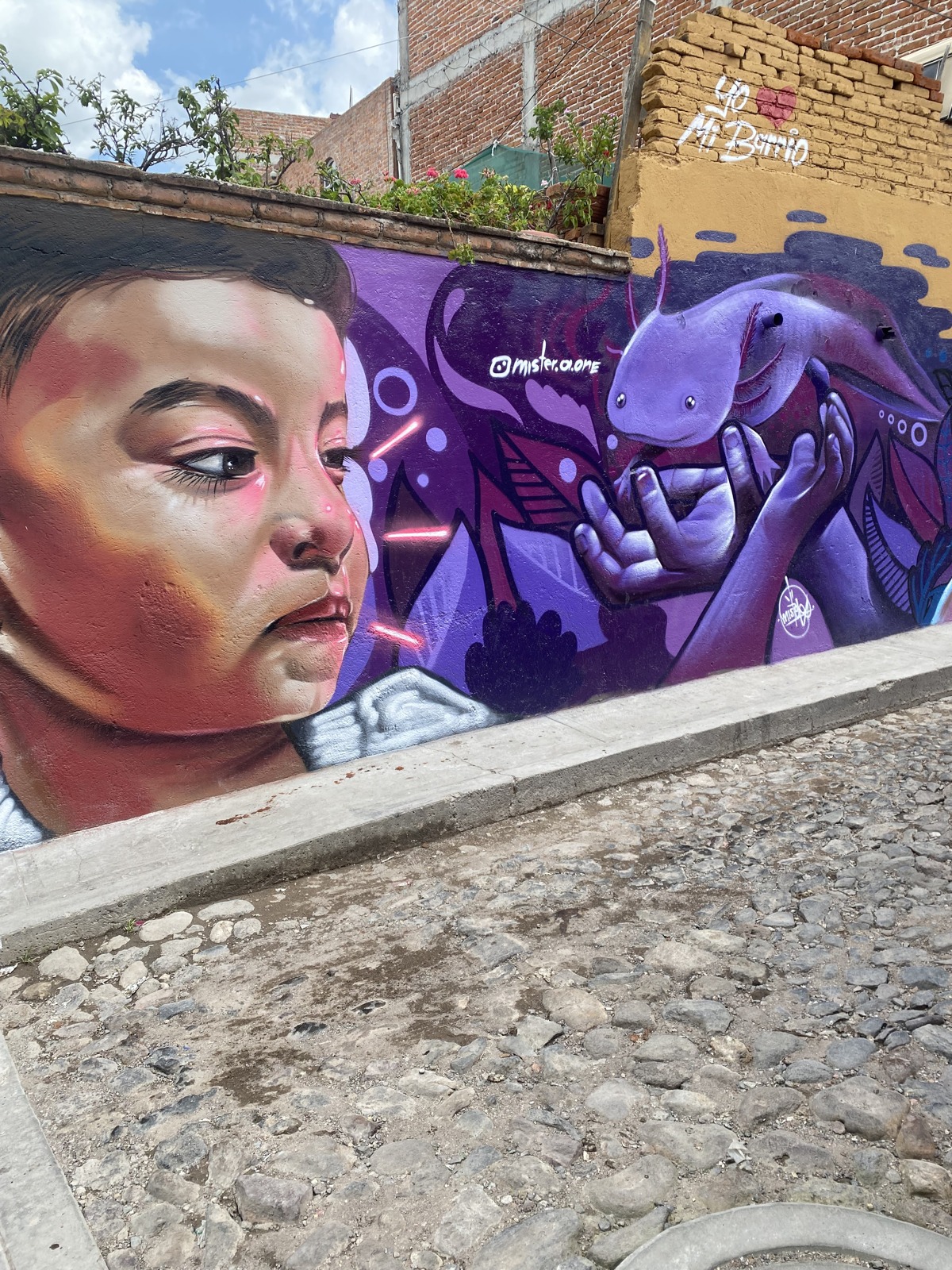
One of my favorite murals from my walks.
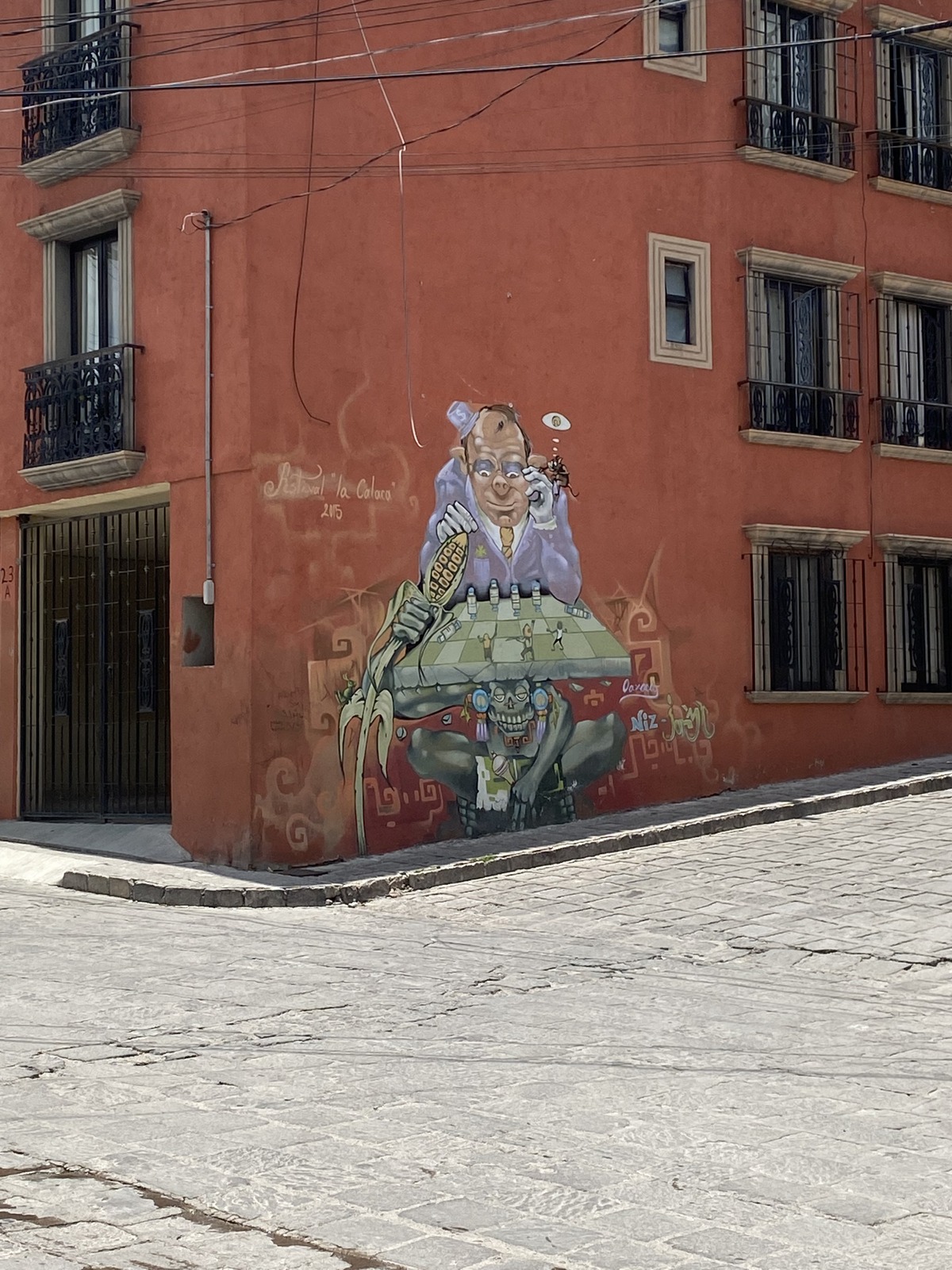
The chess-themed mural that inspired my next tattoo.
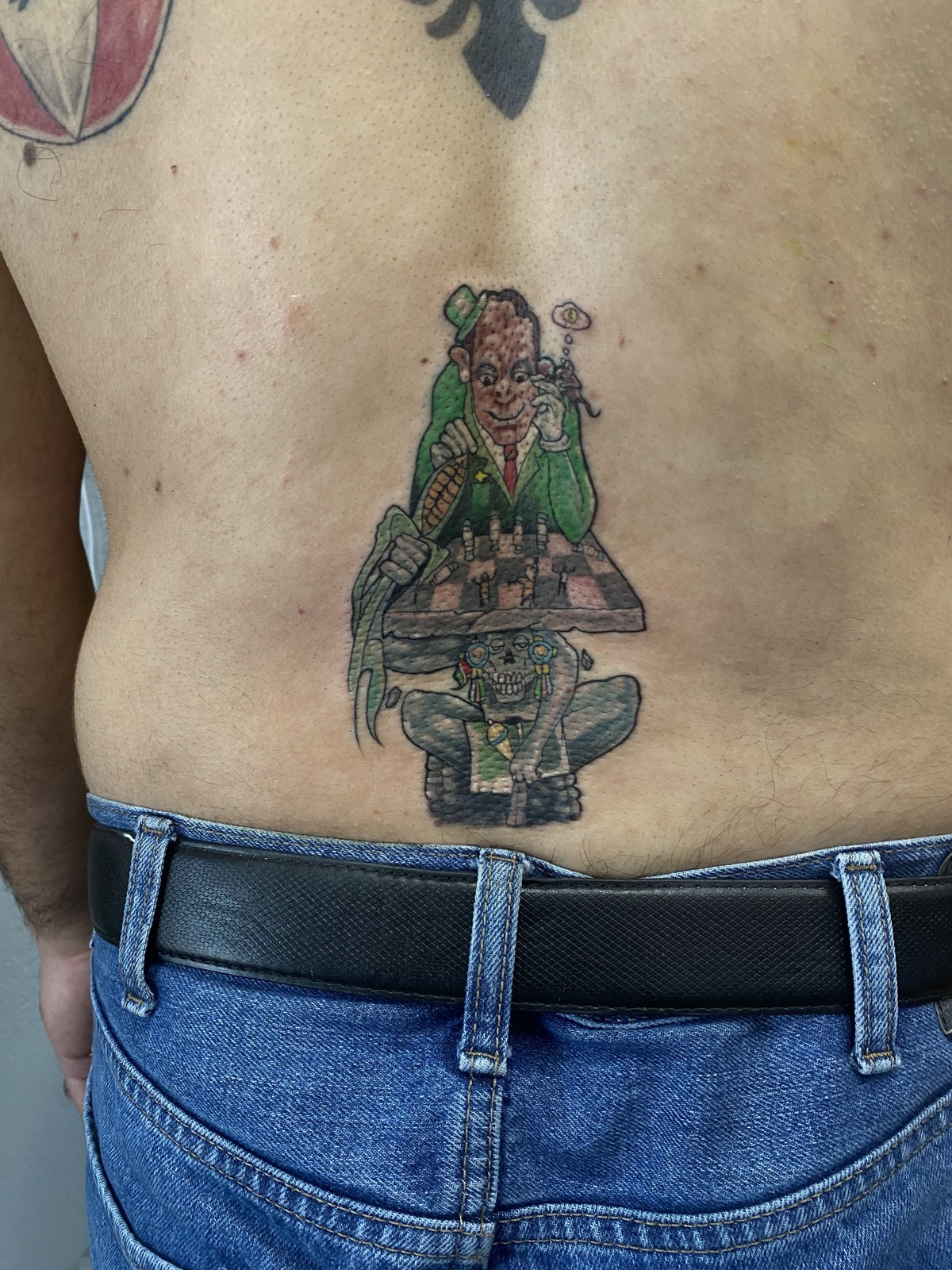
The memory on my back, beneath pieces of earlier chapters.
By late September, I had spent a little over two months in San Miguel de Allende. I was happy there. Not just impressed by it, and not just grateful for the photographs. I liked being in that neighborhood, living in that house, and knowing that the beautiful center was close enough to enjoy when I felt like it.
Looking back, I would make some different choices. I would probably rent somewhere smaller. I would also protect my work routine more carefully instead of feeling that every interesting place around me needed my attention. My profession was what made this possible. The point was not to turn every stop into a holiday and then wonder how I was going to keep doing it.
That does not mean I regret the big house or the restaurant visits. I enjoyed them. I might enjoy a house like that even more now, knowing that I do not need it. There is a difference between appreciating something for a while and deciding I cannot live without it. I was still learning that difference.
The more important discovery was outside. The house had impressed me immediately, but the neighborhood had won me over through ordinary days. I could work, go to the gym, get food, and walk toward somewhere beautiful. I could lose something expensive and find that somebody had saved it for me. Those were the details that made the place feel good to live in.
I would happily go back. But leaving did not feel like giving up the only place in the world where I could be happy. I was beginning to trust that there were other places with their own streets, people, meals, and small surprises. I did not have to see everything here before allowing myself to move on.
That was what drew me toward Antigua, Guatemala. I liked the idea of another compact place, with much of what I wanted close together and volcanoes around it. I was not looking for another enormous house. I was looking for another place where an ordinary day might feel this good.
San Miguel had given me a beautiful place to stay. The people nearby had made it feel like home. Now I wanted to find out what Antigua would give me.
C H A P T E R 10
────────
A Life I Wanted to Remember
Antigua, Guatemala, September 28 to November 27, 2021
Before I even reached my hotel in Antigua, I had already mistaken a mountain for a volcano.
I had left San Miguel de Allende and chosen Guatemala as the next stop. At the time, I thought two months in each place was the right amount. I could have spent longer in Mexico, but I liked changing countries. Antigua sounded perfect: a small place with beautiful streets and three enormous volcanoes around it. I had never seen a volcano in my life.
Getting there was easy. I ordered an Uber at the airport, and the driver took me toward Antigua. Somewhere along the way, I pointed out the window and asked him in Spanish, “Is that a volcano?” He looked at what I was pointing at and started chuckling. Apparently, I was getting excited about an ordinary mountain.
Instead of taking me straight to my accommodation, he made a small detour down another road. Then he pointed. That was a volcano.
Holy shit.
I had seen skyscrapers. I had seen tall buildings. Nothing in my head had prepared me for something that massive sitting behind a city. The driver laughed at my reaction, and I could hardly blame him. He was showing me something familiar. I was trying to understand that it was real.
That was still one of the best parts of this whole experiment. Things I had never needed to think about were suddenly right in front of me. I was not watching somebody else discover them on television. I was in the car, looking out the window, completely amazed.
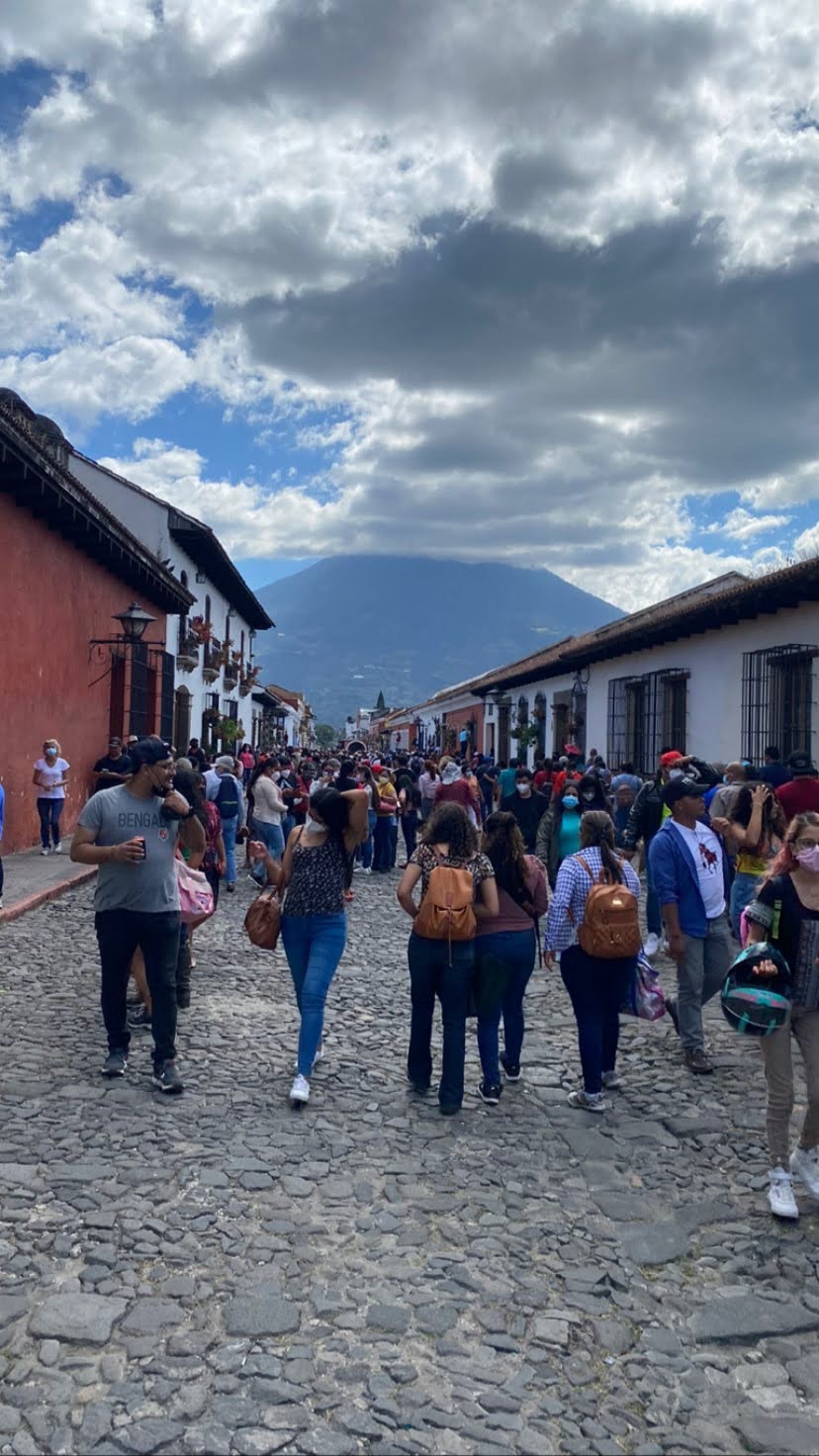
An ordinary street, with an extraordinary background.
The boutique hotel I made my home for two months.
“He was showing me something familiar. I was trying to understand that it was real.”
Once I settled in, the volcano became part of ordinary life. I could go out for groceries or walk down a cobbled street, look up, and there it was. The little buildings and narrow streets made its size feel even more ridiculous. Sometimes Antigua felt like a small community at the edge of the world, with these enormous shapes watching over it.
I also remember the deep thuds. I understood that they were coming from Fuego, and hearing them in the background was new to me. The volcanoes could look intimidating, but their presence also felt strangely comforting. Almost like a giant watching over the place. Not because a volcano was actually protecting me. That was simply the feeling I had.
My home this time was a boutique hotel that offered a monthly stay. After the enormous house in Mexico, this was a different experiment. I had always wondered what it would be like to live in a hotel for a while. Now I was doing it, without quite having worked out the practical side.
I was less prepared for food and laundry than I would be today, but I made it work. The internet was good, and I kept doing my work from the hotel. Then I could walk outside and find shops, restaurants, bars, and beautiful streets almost immediately. Florence had shown me how good that could feel. Antigua was reminding me.
One of my selfies has a caption that says, “Where am I? This isn’t Mexico.” That was exactly how it felt. My head was still used to one place, but everything around me had changed. The work and the person doing it were the same. The whole world outside was new.
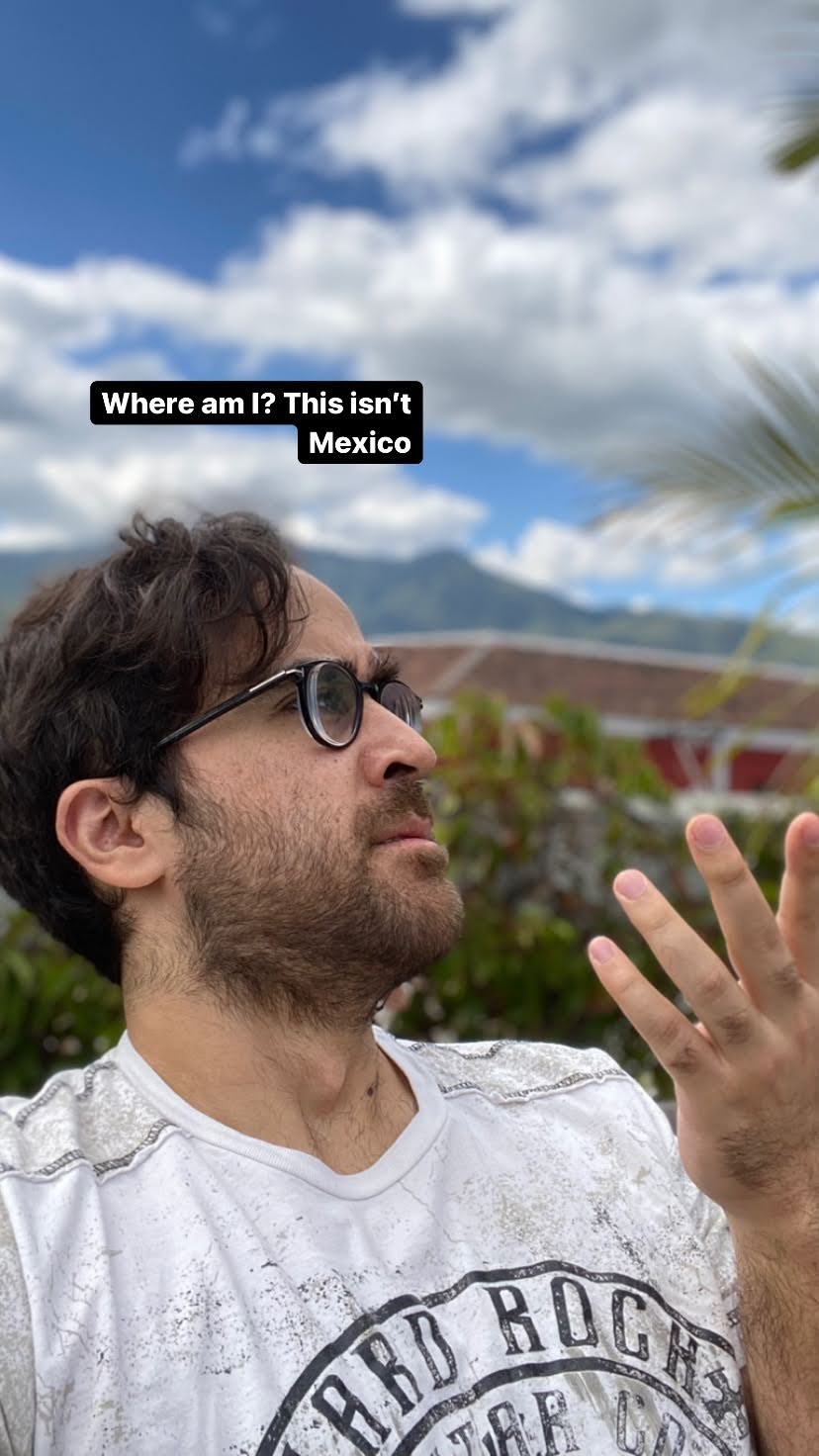
“Where am I? This isn’t Mexico.” My own caption said it best.
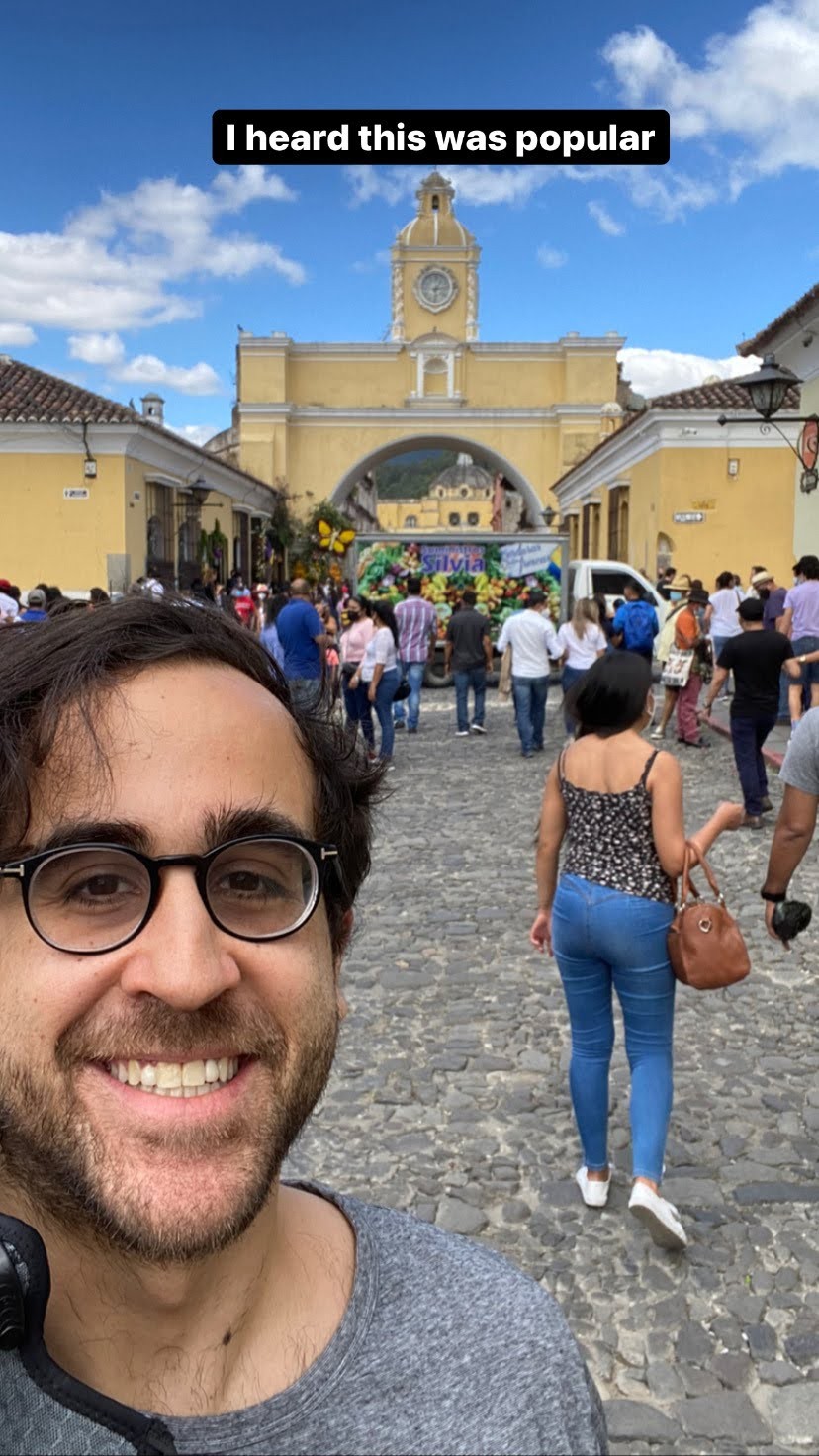
A selfie at the arch I had heard so much about.
And then there was Pollo Campero.
I know. I had come to a city surrounded by volcanoes, and now I am talking about fried chicken. But I need to be very clear about this: Pollo Campero in Guatemala is still one of my favorite things I have ever eaten. Not one of my favorite fast foods. One of my favorite foods.
To somebody else, it might just be the local chicken chain. To me, it was a tourist destination. I became so attached to it that I still think about going back for that reason alone. I have had Pollo Campero in Mexico too, but it did not feel the same to me. Something about the version I ate in Guatemala was absurdly good.
Even familiar fast food surprised me there. I remember thinking the KFC was better than I expected. I could not explain what was different. I just kept having meals that made me extremely happy, and Pollo Campero was at the top of that list.
It was not all chicken boxes, either. Antigua had restaurants, coffee drinks, and little places I could wander into without turning the day into an expedition. I tried different things because they were nearby and I felt like it. That was the kind of access I loved: finish some work, step outside, and find something good.
Not every stop won me over. I visited an open-air market, and the bugs and general conditions put me off. I had enjoyed the markets in Peru and Mexico more. I did not have to pretend this one was my favorite just because it belonged to the trip.
But the food overall? I would return for the food. Give me a reason involving Pollo Campero and, as far as I am concerned, the planning is finished.
Pollo Campero, saved from my video. Reason enough to return.
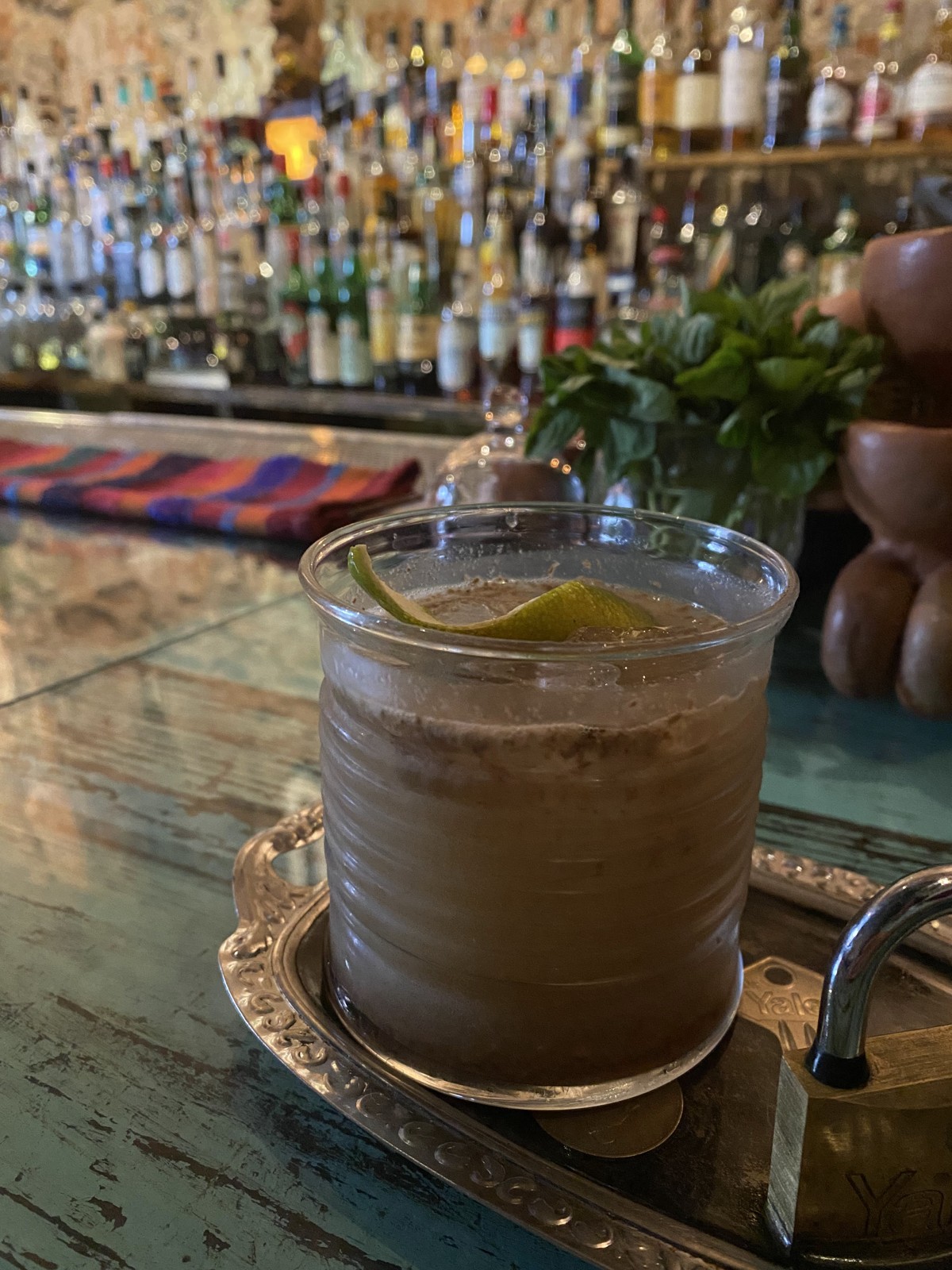
One of my coffee-drink stops in Antigua.
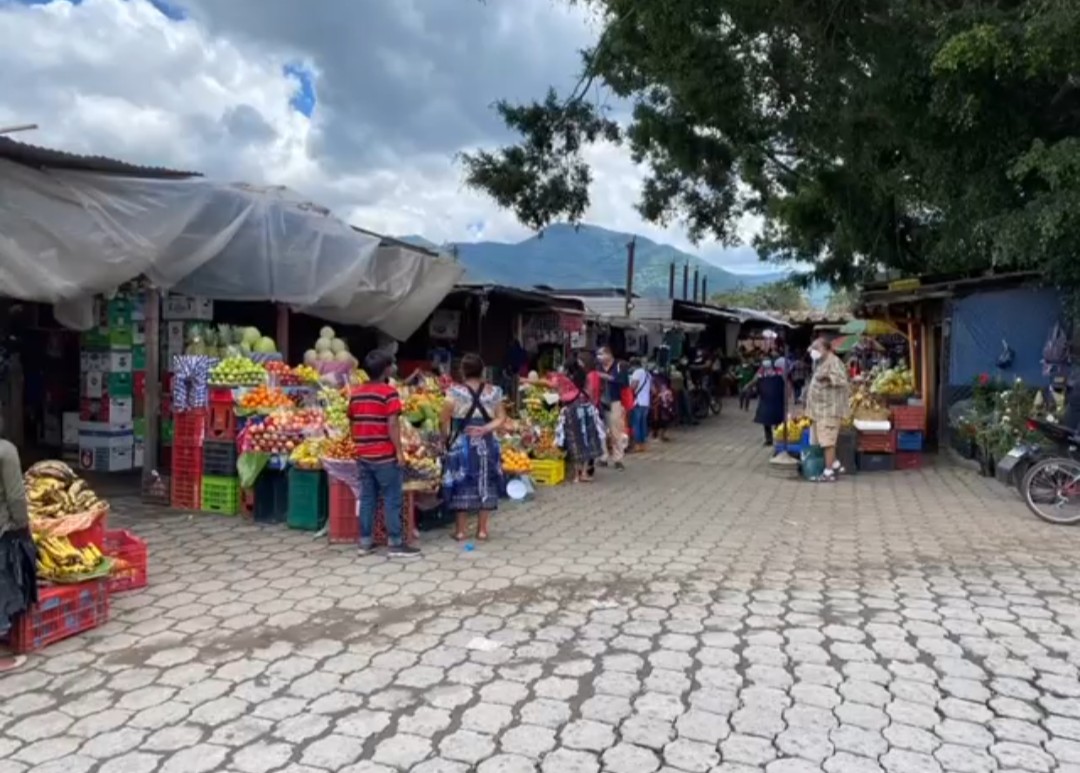
The market entrance, captured in another screenshot.
For my birthday, I took the idea of a good view a little further. I booked a treehouse above Antigua.
I believe I turned thirty-one that year. I was still trying different things, still learning what I wanted from traveling, and a birthday alone in a treehouse sounded like something worth trying. Getting there meant following a path along the side of a mountain. It was a long way from casually crossing the living room in my enormous Mexican house.
Once I was there, I could look out into greenery, clouds, and the landscape below. The city had already made the volcanoes part of my day. Up here, the whole view felt bigger. The photograph of my breakfast is still one of my favorites: food on the table, a cup beside it, and that enormous view doing something no restaurant decoration could compete with.
I do not think the picture completely explains what it felt like. There are views you photograph because they are nice, and then there are views you keep returning to in your head years later. This was the second kind. I still think of it as one of the most beautiful views I have ever had in front of me.
I got myself a bottle of champagne and a pizza. I watched movies. I spent the time on my own, and I loved it. There was no big party and no need to organize a perfect birthday for anybody else. I was in a treehouse in Guatemala, enjoying exactly what I had chosen.
Being alone had once been something I needed to learn. Now it could look like this. I was not waiting for someone to arrive so the experience could begin. I was already having it.
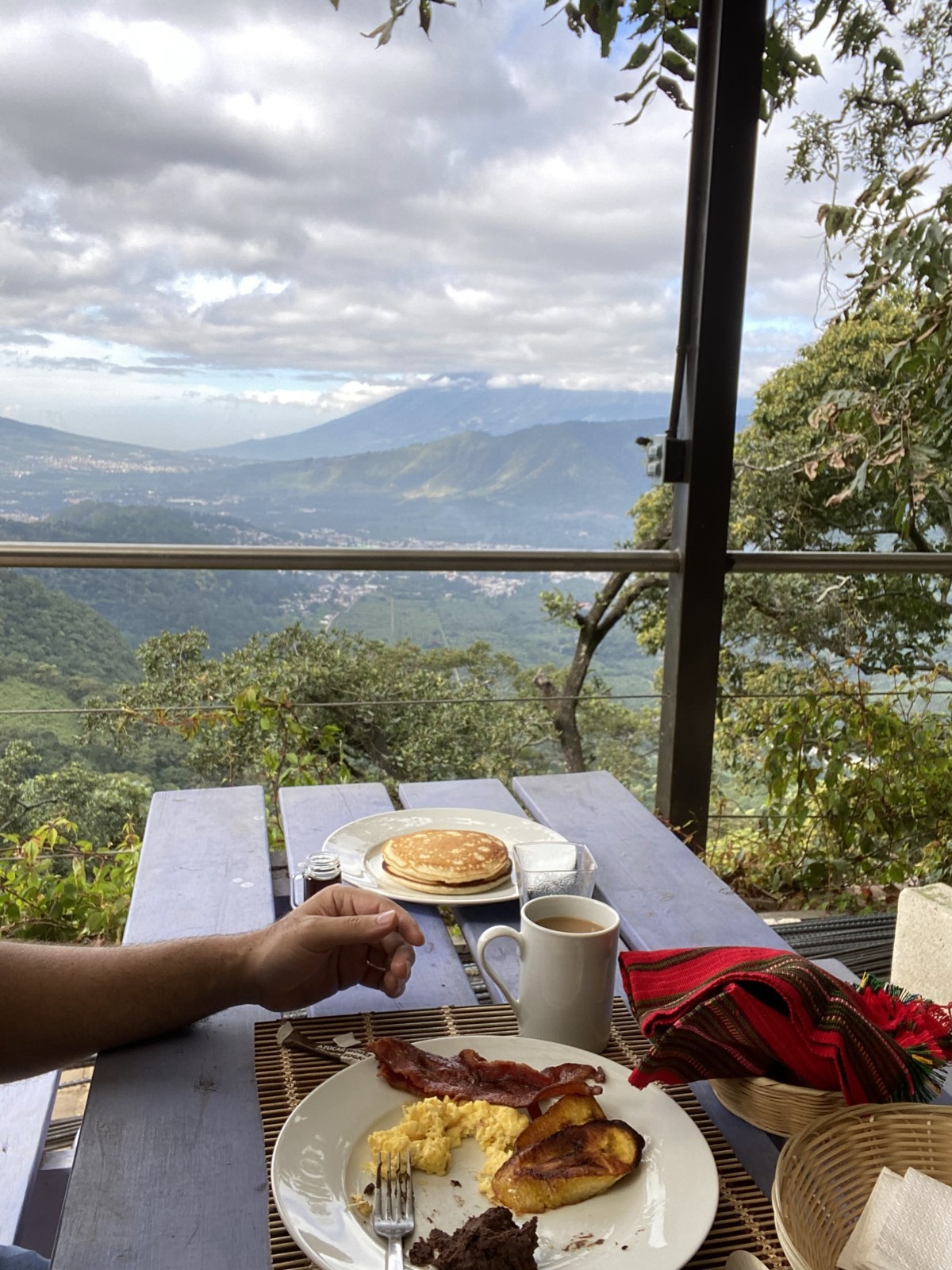
Birthday breakfast with a view I still think about.
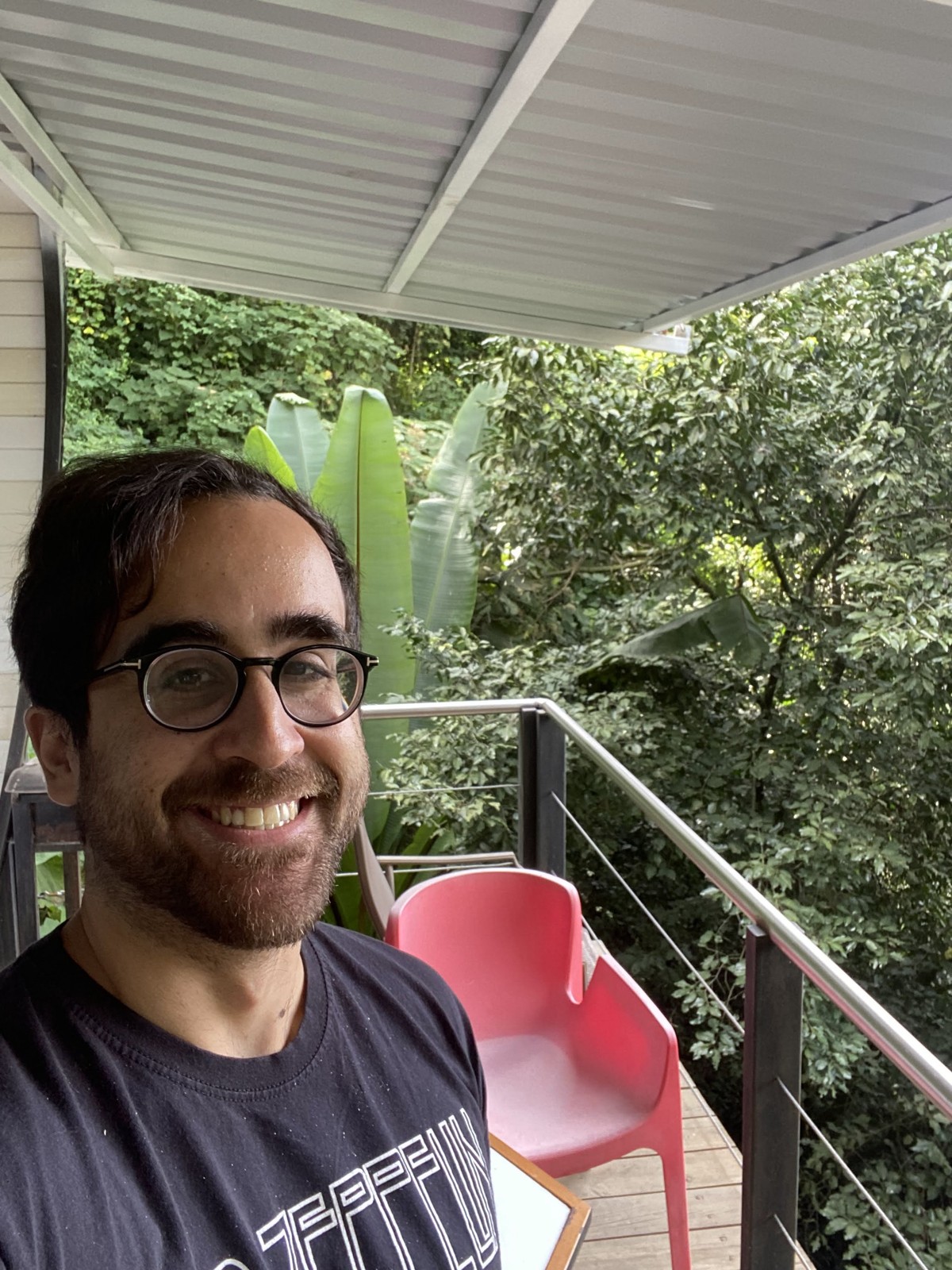
Alone at the treehouse, and very happy about it.
The mountainside path to my birthday stay.
Another night during that stay taught me something very different about enjoying myself.
I used to like trying a local beer wherever I went. In Antigua, there were plenty of places to do that. Gallo, Moza, different drinks in different bars: it felt like another small part of getting to know somewhere. The problem was how easily an evening could get away from me.
I went to a bar, ordered good food, and watched a baseball game. I was comfortable. One beer became two, then three, and before I really paid attention, I had drunk about six. I paid my bill and went back to the hotel. I do not properly remember the walk home.
I do remember falling in my room. At the time, it barely registered. I thought I had been clumsy, and whatever happened next seemed to take only a couple of seconds. Looking back, I think I lost consciousness. I had struck the area beside my eye, and blood was running down my face.
Somewhere in all of this, I had ordered Wendy’s. An employee knocked to let me know my delivery was there. I opened the door, and he immediately looked worried. From his side of that doorway, I was a guest with blood on his face. From mine, I was still too drunk to take it seriously. I thanked him, took the food, closed the door, and started eating. I think I fell asleep afterward.
The next day, I was ashamed. Why was I doing this? I was on my own in another country, enjoying a life I had worked hard to build, and I had let a normal evening reach a point where I could hurt myself and barely register it.
I kept the photo of the cut as a reminder. I cannot remember whether I took it that night or the following day. I remember why I wanted it: I did not want to do that again.
Trying local beer was part of my travels back then.
The photo I kept to remind myself not to drink like that again.
“I did not want to do that again.”
That was when I stopped making drinking a part of the plan. It was not a promise that I would never touch another drink. I have had the occasional beer or glass of champagne since then. But drinking heavily, letting one turn into another without thinking, was no longer something I wanted in my life. One could be more than enough.
Antigua had not become a bad memory because of that night. I still loved being there. I just had a reason to change something about the way I was enjoying it. The city had plenty to offer without me needing to lose track of an evening.
Sometimes I did not even need to leave the hotel. During my stay, a wedding took place outside my balcony. There were guests gathered below, the bride and groom, and everybody clapping. I took a picture from where I was standing. I had not gone looking for an event. One had appeared outside my room.
It reminded me of something I kept learning: staying somewhere long enough gives ordinary life a chance to surprise you. Not every memory needs a ticket or a tour guide. Sometimes it is somebody else’s celebration happening within view of your balcony.
I also continued the tattoos. After Colombia, Peru, and Mexico, Guatemala was getting its place on my back too. I wore a mask inside the shop, another reminder that this was still the COVID period. The record I had started in Bogotá was growing, one place at a time.
I was still experimenting. A hotel as a home, a treehouse for my birthday, meals I could not stop talking about, a night I did not want to repeat. Some experiments worked better than others. Together, they were helping me work out how to make this more than a string of enjoyable trips.
A wedding happening just outside my balcony.
Another everyday view of Antigua.
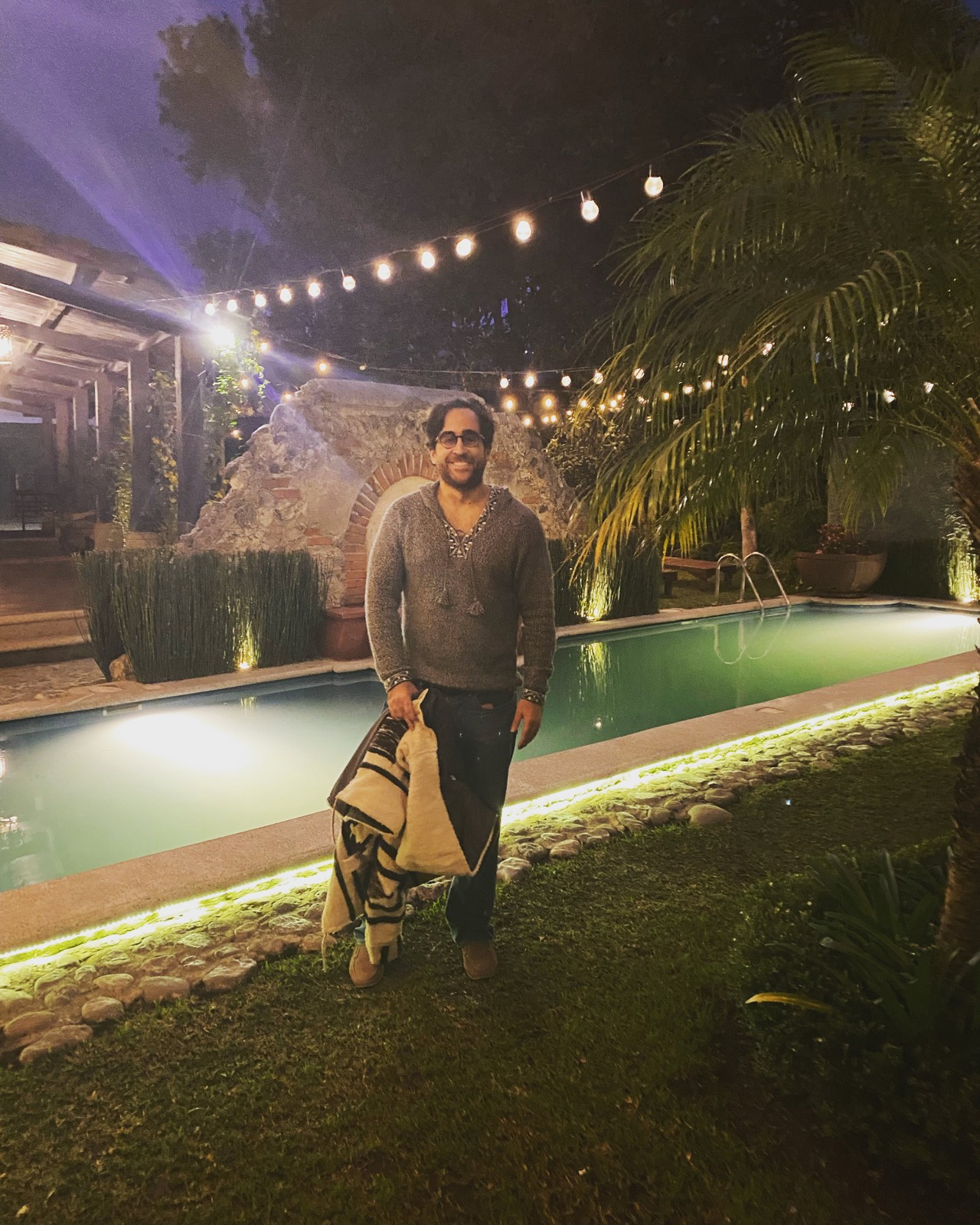
A selfie on the day I left.
By the time I left Antigua in late November, I had spent about two months there. At the time, that seemed like the sweet spot. It was long enough to settle in, do my work, and build a routine, but there was still plenty of excitement left when I packed my bags. I thought that was exactly what I wanted.
Later, I would realize I liked something slightly different. I wanted to stay long enough for a place to become almost too familiar. I wanted the extra month, when the streets no longer surprised me and a little boredom started creeping in. That might sound like a reason to leave sooner. For me, it eventually became a reason to stay.
When a place feels that familiar, changing countries does something strange. The old routine stays in your head for a while, but the streets, food, buildings, and view have all been replaced. That feeling in my “This isn’t Mexico” photo became something I wanted to experience again. Around three months began to suit me better than two, when the stay was possible. It was my own rhythm, not a rule I expected everybody else to follow.
Antigua also strengthened the idea I had been carrying since Florence. I liked places where I could finish work and step straight into somewhere worth being. I did not need to organize an adventure every weekend. There could be a volcano behind the grocery trip, a wedding outside the balcony, or a meal good enough to become a reason to return.
But enjoying the place was only part of it. I also had to take care of the person living there. The birthday photos and the photograph of my cut belonged to the same stay. One showed me how good my life could feel. The other reminded me that I could make choices that got in the way of it. I wanted more of the first kind of memory.
I left with another tattoo, an unreasonable attachment to Pollo Campero, and a clearer sense of what I wanted to keep doing. I was not finished learning how to live this way. I was getting closer.
Next came Canada. I had seen snow for the first time in Italy and thought that was an experience. A Canadian winter was about to make that little introduction seem very small.
C H A P T E R 11
────────
A Little Too Much Winter
Quebec, Canada, November 27, 2021 to January 29, 2022
I reached Quebec while COVID was still shaping travel. Canada had opened its doors to travelers who could show a negative COVID test and complete the airport process. I was willing to do that. I had never had COVID, and once I finished what they asked of me, I was allowed in.
I had to travel through Vancouver and then take another plane to Quebec. That second flight was almost surreal: the cabin was empty, and I was the only passenger. It felt strange to cross a country that way, moving through an airport and then sitting on a whole plane without another traveler nearby.
From my seat, I took a picture of the propeller. I had been told it had something to do with the cold, but I did not really know. The plane itself became one more reminder that this was a trip I had not quite prepared for.
Before I left, someone online had joked that it had not snowed in Quebec yet. I believed them. Then, while we were flying, I asked a flight attendant whether it really got that cold. She said it was far colder than the places I had been. I thought, okay, this is going to be interesting. I did not understand what she meant.
When we landed, the track for the planes had been cleared, but snow was still everywhere beyond it. I was looking at the scene through the window, thinking it seemed insanely cold. I had no idea how much more intense it would feel once I got out.
The nearly empty plane that took me to Quebec.
The propeller on the aircraft headed north.
The real introduction came when I stepped outside. The cold hit my skin so sharply it felt like it was burning. I had grown up in Puerto Rico, and I had never experienced anything like it. In my head, a sweater meant I was dressed for cold.
The sweater I brought was one I had bought in Guatemala specifically for this trip. I had pants, but my only shoes were the tennis shoes I traveled in. As a perpetual traveler, I usually kept it simple: one pair of shoes, no extra winter gear, no bulky luggage. Quebec exposed the weak spot in that plan immediately.
I ordered boots, a beanie, and another pair of pants from Amazon Canada. Until they arrived, I tried not to go out. I did not want to find out how long sneakers and enthusiasm could hold up on frozen sidewalks. Once the gear arrived, the cold became manageable.
Even dressed for it, I could not pretend to like the weather. One picture on the balcony says everything: a beautiful view, and a face that seems to be asking why I came here.
The sweater I brought from Guatemala for Canada.
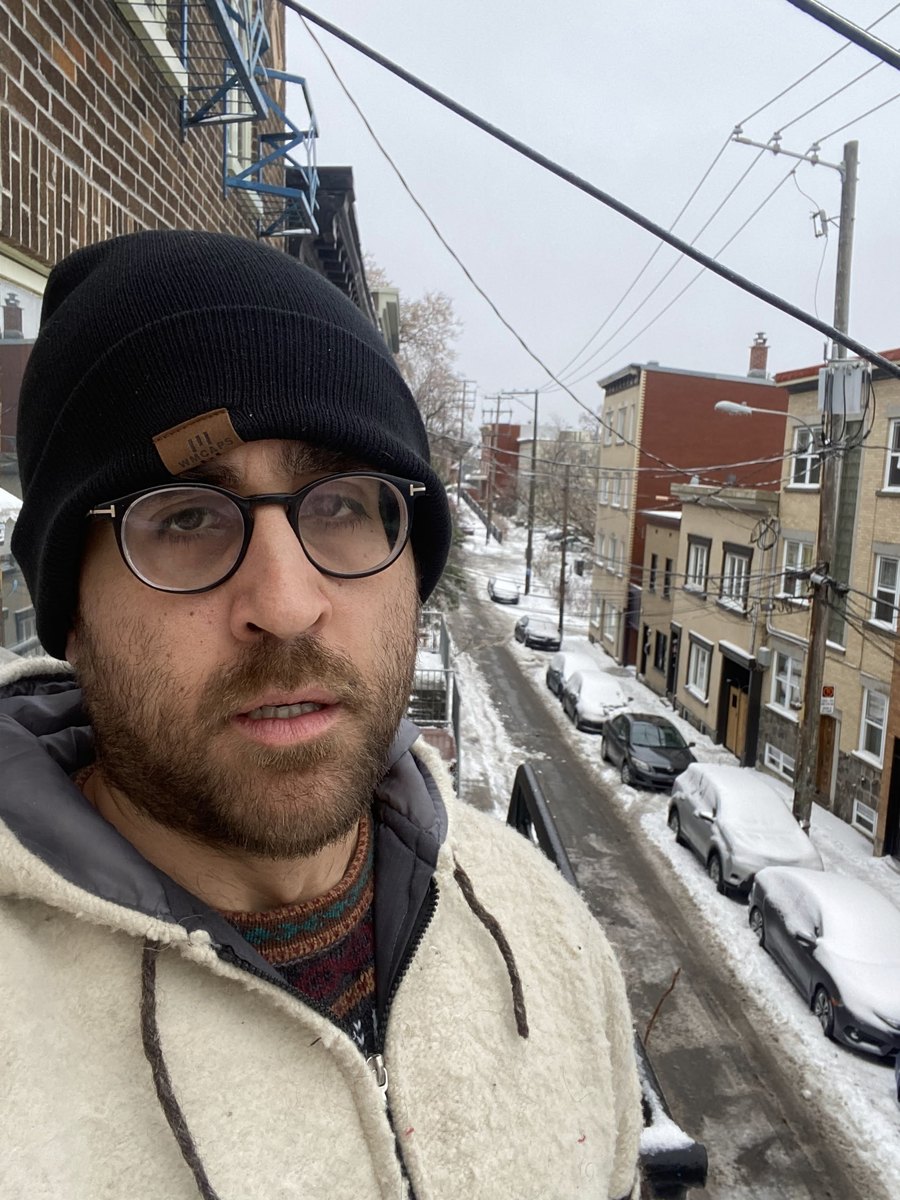
My face on the balcony says how quickly the cold won me over.
“I wasn’t ready for this.”
I stayed in Old Quebec. It was a beautiful part of the city, with European-looking buildings and narrow streets that made me stop and look around. Sometimes it reminded me of Boston, too. I liked the atmosphere the moment I saw it.
From my first-floor apartment, I could look out at steps climbing toward another place above me. They were covered in snow, along with almost everything beyond them. The streets themselves were mostly clear because snowplows kept going through, but the rest of the landscape still looked frozen.
My phone started sending cold-weather warnings. I was used to alerts from Puerto Rico about hurricanes and tropical storms. In Quebec, the warning was about the cold. At night, the temperature could reach minus 39. I did not even know it was possible to get that cold where people were living normal lives.
People in Quebec knew how to handle it. They wore proper boots and layers, and they did not spend extra time outside for no reason. I was still learning. A court or playground could sit empty under snow, and daily life looked like it had paused. Even if I wanted to explore, I had to decide whether it was worth fighting the cold and trying not to slip.
At night, I could still appreciate the view from my balcony. It was quiet and beautiful, but it was easier to admire from inside.
The view from my apartment, where the steps were buried in snow.
A snowy court and nobody in sight.
I did not stay inside every minute. On the rare times I went out, I got a taste of the tourist side: downtown streets, historic buildings, and decorations for the holidays. The city felt very European, and it was clear why people were drawn to it.
There was even a selfie where I looked like I was handling the whole thing better than I was. Another photo has a sign above my head that says pain. If you ask me how Quebec in winter felt, pain is a pretty good answer. Then I remembered that pain means bread in French. It was a bakery. Even the sign had a warmer explanation than I did.
The cathedral was beautiful, and the architecture made Old Quebec feel even more European. I liked seeing the city whenever the weather gave me a chance to enjoy it. I just did not need to pretend I wanted to spend all day outside.
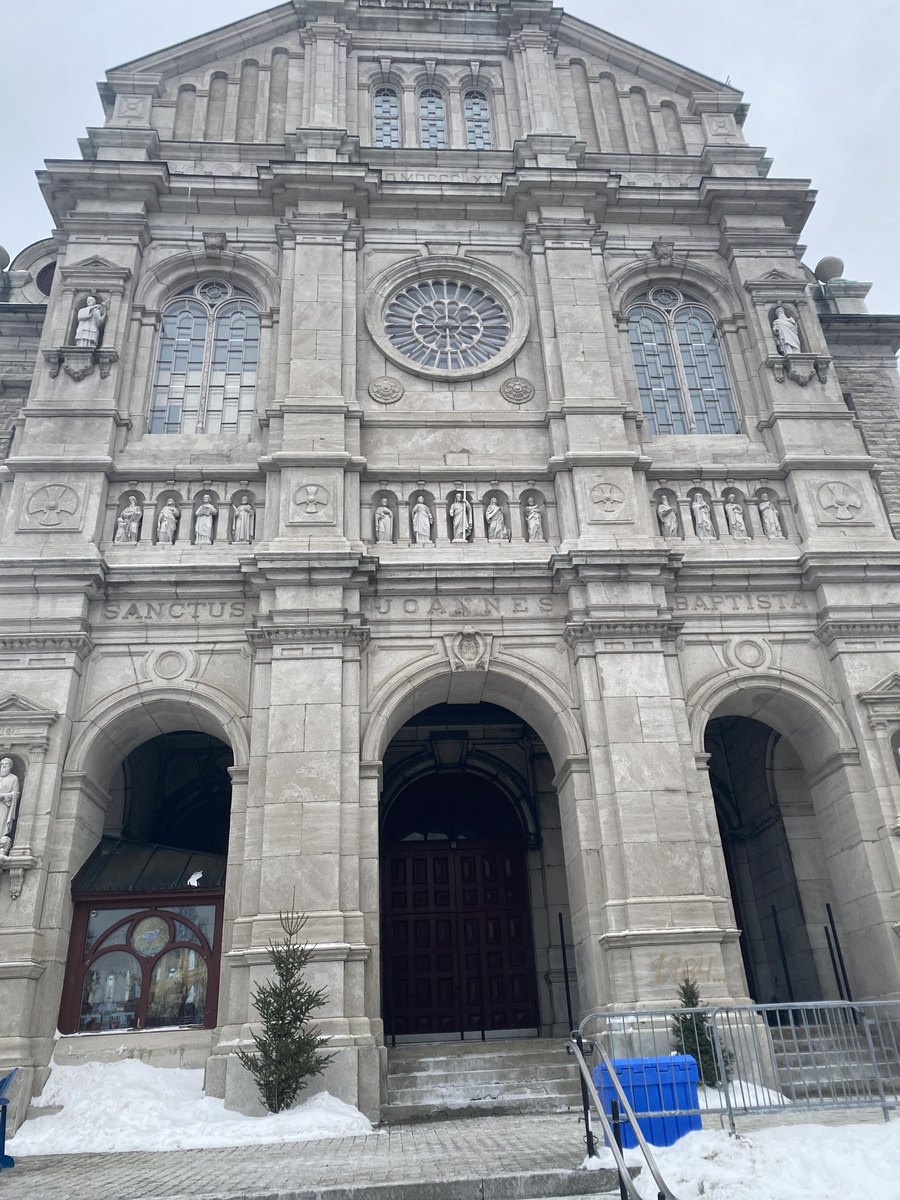
A cathedral in a city that felt very European.
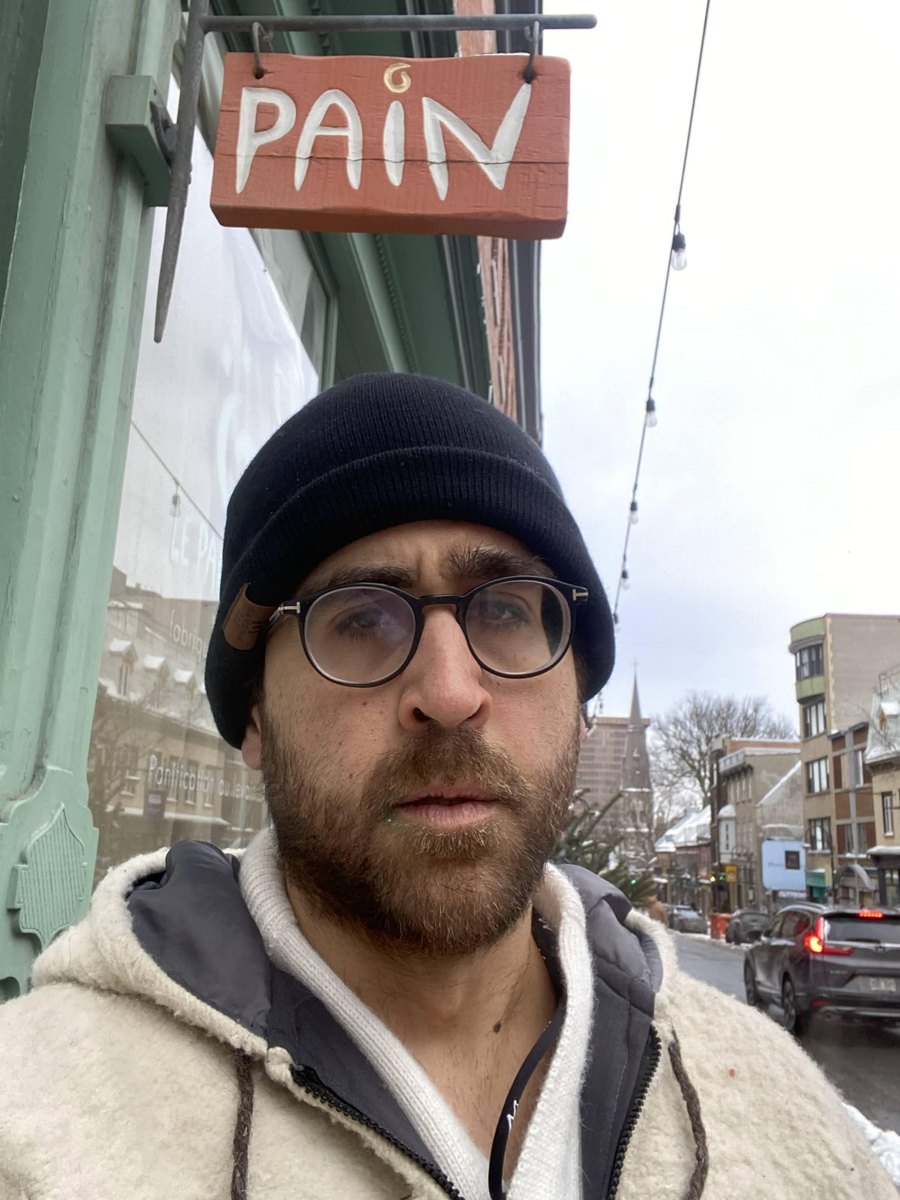
Pain on a sign. In French, it means bread.
I still wanted to try the local food. I knew poutine was what people talked about, so I bundled up and went out for some. They served it with a local beer. Antigua had already taught me I did not need to turn one beer into a whole evening. One was enough. I ate, had the beer, and enjoyed doing something local without overdoing it.
That was about as much nightlife as I wanted. Most days, I worked from the apartment and stayed in. I ordered food through delivery apps; sometimes it arrived nearly frozen. The people bringing it were in boots and heavy layers, completely prepared. I was the one who had needed to order proper boots online.
When I left, I forgot my COVID mask at the airport. I covered my face with my scarf—the first souvenir I ever bought, in Tirana, Albania. I still have it. Apparently, that was enough for the airport, and I was happy to be leaving for somewhere warm.
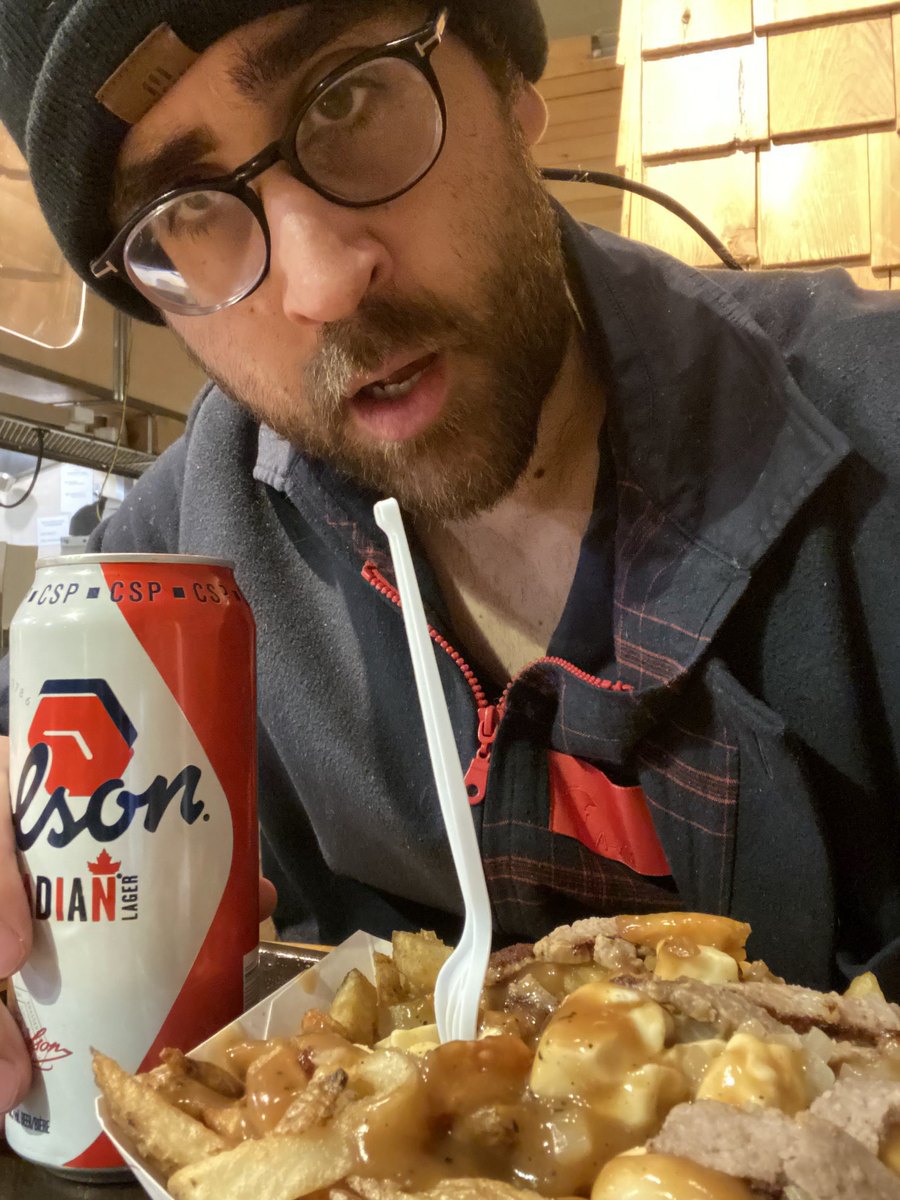
Poutine and one local beer: the right amount.
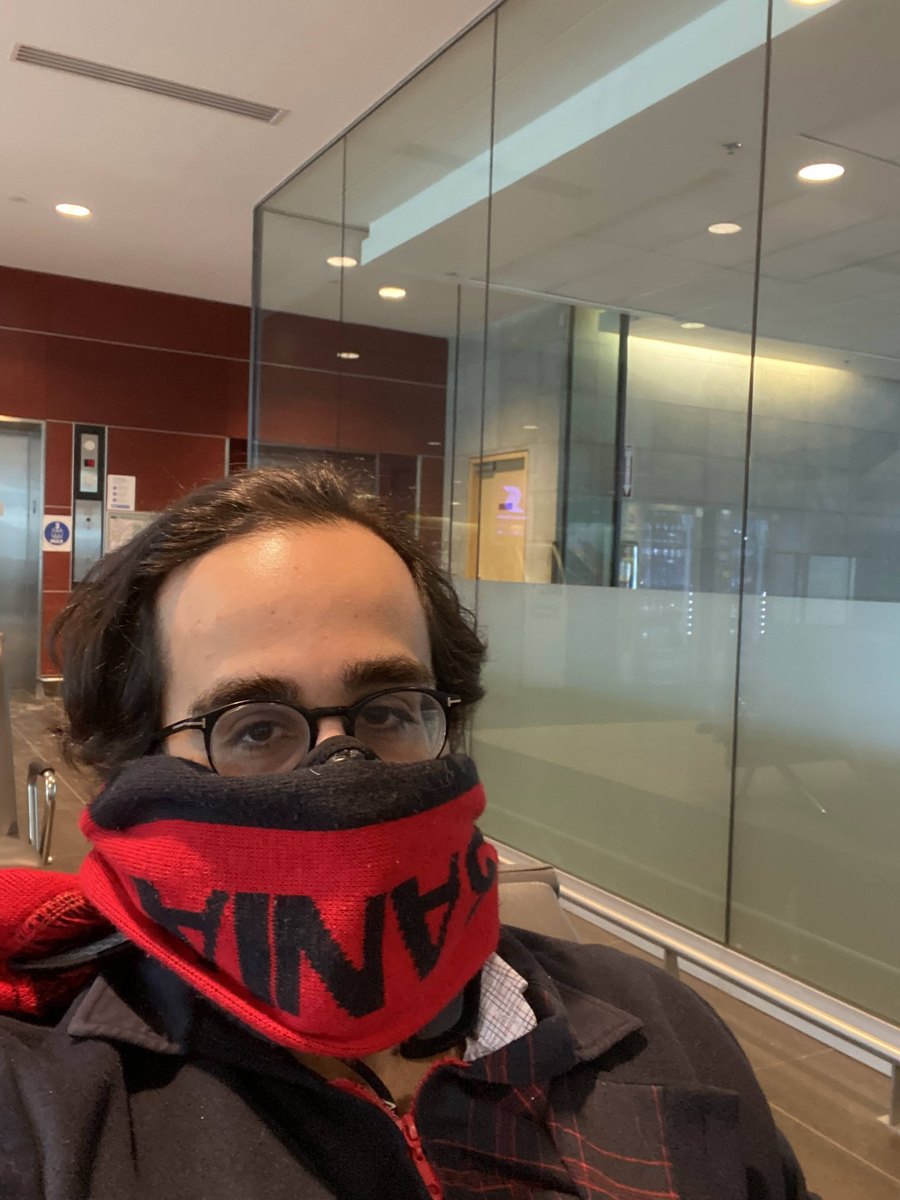
Leaving Quebec with the scarf I bought in Tirana.
The bigger lesson was simple: I could live somewhere even when the weather made life smaller. I could stay in, work, and adjust. But if I wanted to explore after work, I needed a place where stepping outside did not feel like a test of endurance. Quebec helped me understand that what works for living and what works for exploring are not always the same.
I had loved seeing snow for the first time in Italy. It felt magical. Quebec did not take that away; it taught me there can be too much of a good thing. I was glad I went. I do not regret the trip, even though I would not choose to return to Quebec in that kind of winter. I might go back to Canada and see Vancouver, which people told me was very different.
By the time I left, I was ready for sun. Flying to Spain from Miami made more sense than leaving from Canada, so I went to Miami first and spent a week with my dad. It gave me warmth and time with family before I crossed back to Europe.
After that, I headed to Spain. It was my first time there, and I had always wanted to go. I could have chosen any place that was remotely warm, but I did not want my first visit to be Barcelona or Madrid just because everyone else went there. I found Alicante in the south and thought it looked like an interesting place to start. Honestly, there was not a grander reason.
It turned out to be much more than a convenient next stop. I loved Alicante. Quebec had shown me how far the cold could go. Alicante would show me what it felt like to reach a place that made me want to go outside again.
That story comes next.
C H A P T E R 12
────────
The Life I Thought I Had to Leave
Alicante, Spain, February 6 to April 3, 2022
After Quebec, I did not need Spain to perform a miracle. I mostly needed to be able to go outside.
I had wanted Spain to be one of my first stops in Europe. But Italy had been a lifelong dream, and on that first European stretch, I used the time I had there. By the time I left, Spain still had to wait. Now, after Canada and a week with my dad in Miami, I was finally going. From the fares I found, traveling through Miami made the most sense.
Alicante caught my attention when I looked it up. There was a historic center with the kind of buildings that had made me fall in love with Italy. There were also beaches. Old streets, beautiful architecture, and the sea, all in the same place. After two months of Canadian winter, that was a very convincing combination.
The journey felt more normal, too. COVID was still part of travel, but this time the plane was full of people. I took a picture of the busy cabin. After the almost empty flight to Quebec, seeing so many other travelers felt like a change in the right direction.
I remember the drive from the airport taking about forty-five minutes. My Airbnb was in a pedestrian-only part of the historic center, on the top floor of a building. I could call it a penthouse, but that would make it sound grander than it was. It was a top-floor apartment with a balcony, which was exactly the part I liked.
From up there, I could look across at the neighboring buildings and down into the street. I put out the Puerto Rican flag I had been carrying with me. A little piece of home had arrived in Spain.
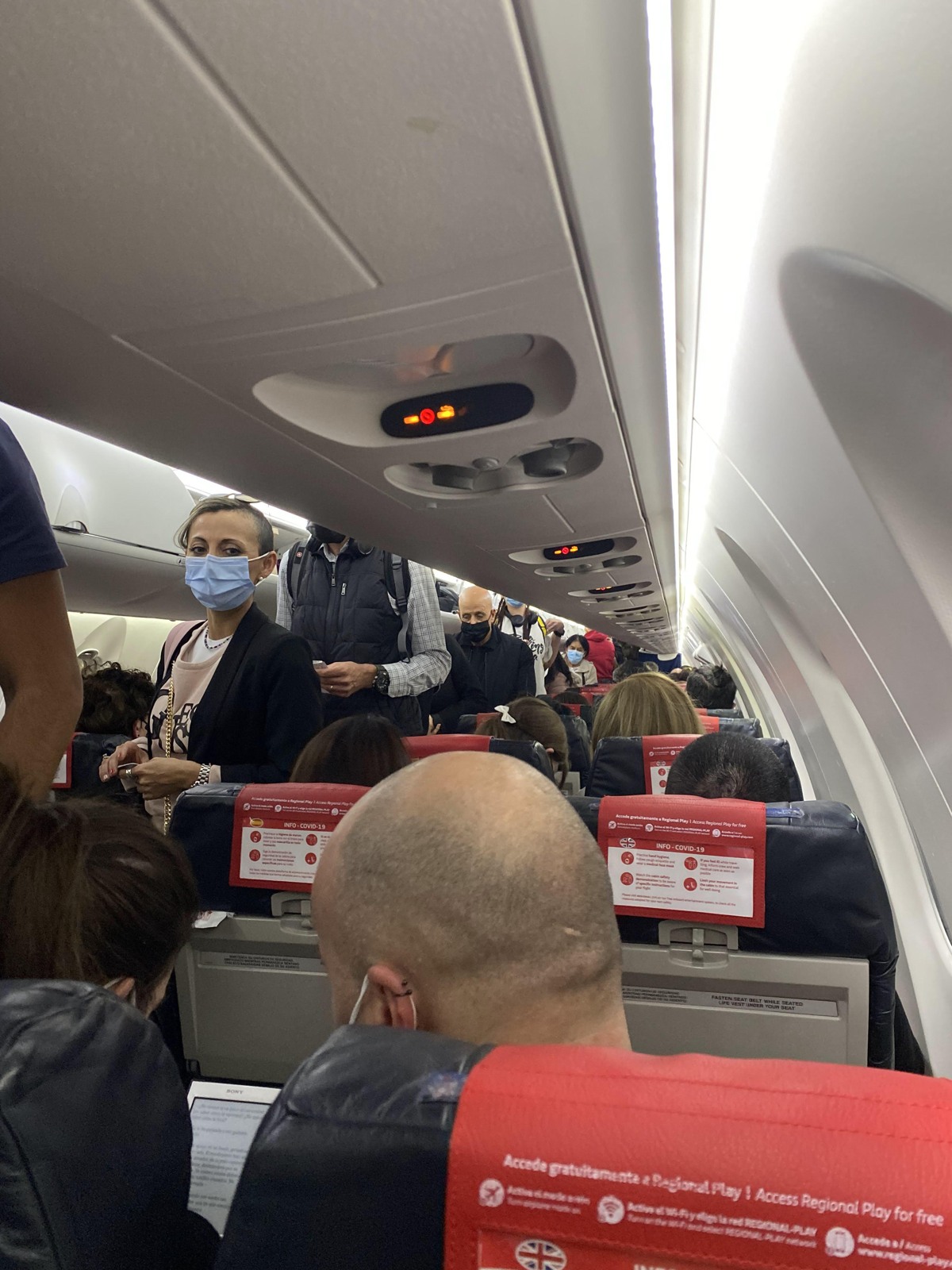
A much busier cabin on the way to Spain.
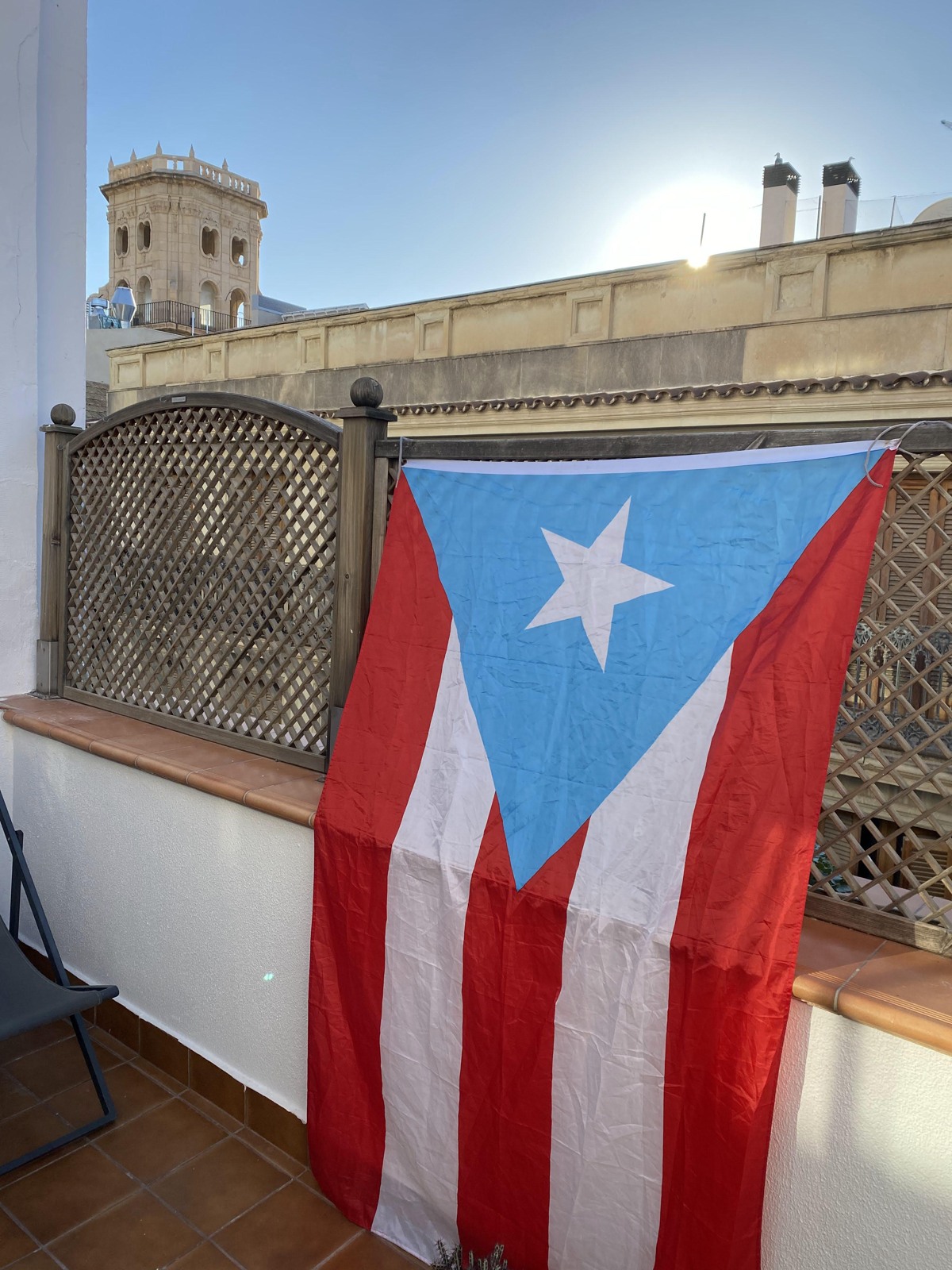
The Puerto Rican flag, at home on another balcony.
Alicante had a combination I had not quite experienced before. Part of it reminded me of Miami Beach: palm trees, shops, places to eat, and that feeling of a whole city stretched out beside the water. But mixed into it were the older Spanish buildings I had come to see. It felt tropical and historic at the same time.
I thought of the waterfront as my Miami Beach strip. In one photo, the paving curls into long, wavy lines beneath the palm trees. In another, a wall separates the walking area from the sea. There was a clear edge between the city and the water, but they still felt connected. I could enjoy being near the beach without making a beach day out of it.
The beaches looked nice. I am from Puerto Rico, though, so the comparison was not entirely fair. I was not looking at Alicante and thinking I had finally discovered what a beautiful beach was. What impressed me was having the sea beside all the other things I liked. I could walk, look at the buildings, stop at a shop, and still have that coastal feeling around me.
I was also noticing a pattern in the European places I visited. There was the historic center, then the more everyday residential city around it. Arriving at an airport did not mean stepping straight into the beautiful streets from the pictures. Choosing the right part of a city mattered. In Alicante, I had put myself in the part I wanted to live in.
Away from the waterfront, I found narrow streets, balconies, and buildings that made me stop for photographs. Then the palm trees would appear again, and the mood would change. I did not have to choose between an old European city and somewhere that felt relaxed by the sea. Here, I could have a little of both.
Palm trees and old buildings: the Alicante combination.
The wavy paving along my “Miami Beach strip.”
Beside the sea, without needing a beach day.
Day-to-day life was easy. I was still working, still buying food, and still figuring out how much of my routine actually needed to change when I moved to another country. Alicante gave me plenty of good options. I had not yet learned that I did not need to use all of them.
I still thought working remotely meant going to a coworking space. Not that it might be useful, or that I might enjoy one. In my head, that was simply what you did. So I looked for coworking spaces and went there to work. In London, I had rented myself a conference room. In Spain, I was still giving my laptop a more official place to sit.
I would eventually learn that I could build a workday around what suited me, rather than what I thought this life was supposed to look like. At the time, I was getting my work done and enjoying where I lived. There were things I would do differently now, but that did not make those days bad.
Some evenings were as simple as a movie or a television show and something good to eat. The bocadillos were fantastic. Spanish ham, good cheese, and delicious bread, in a sandwich that was just the right size. It was enough to make me happy without leaving me feeling as though I had eaten an entire loaf.
I took a picture of one beside the chessboard I had bought in Florence. That board had already appeared in my home in Bogotá. Now it was sitting next to my food in Spain. I do not have it anymore, but for a while it traveled through a surprising amount of the world with me.
Other nights, I had something sweet. I photographed a dessert with a golden-brown top, although its name has escaped me. The evening has not. Work was done, there was something to watch, and I was quite happy staying in.
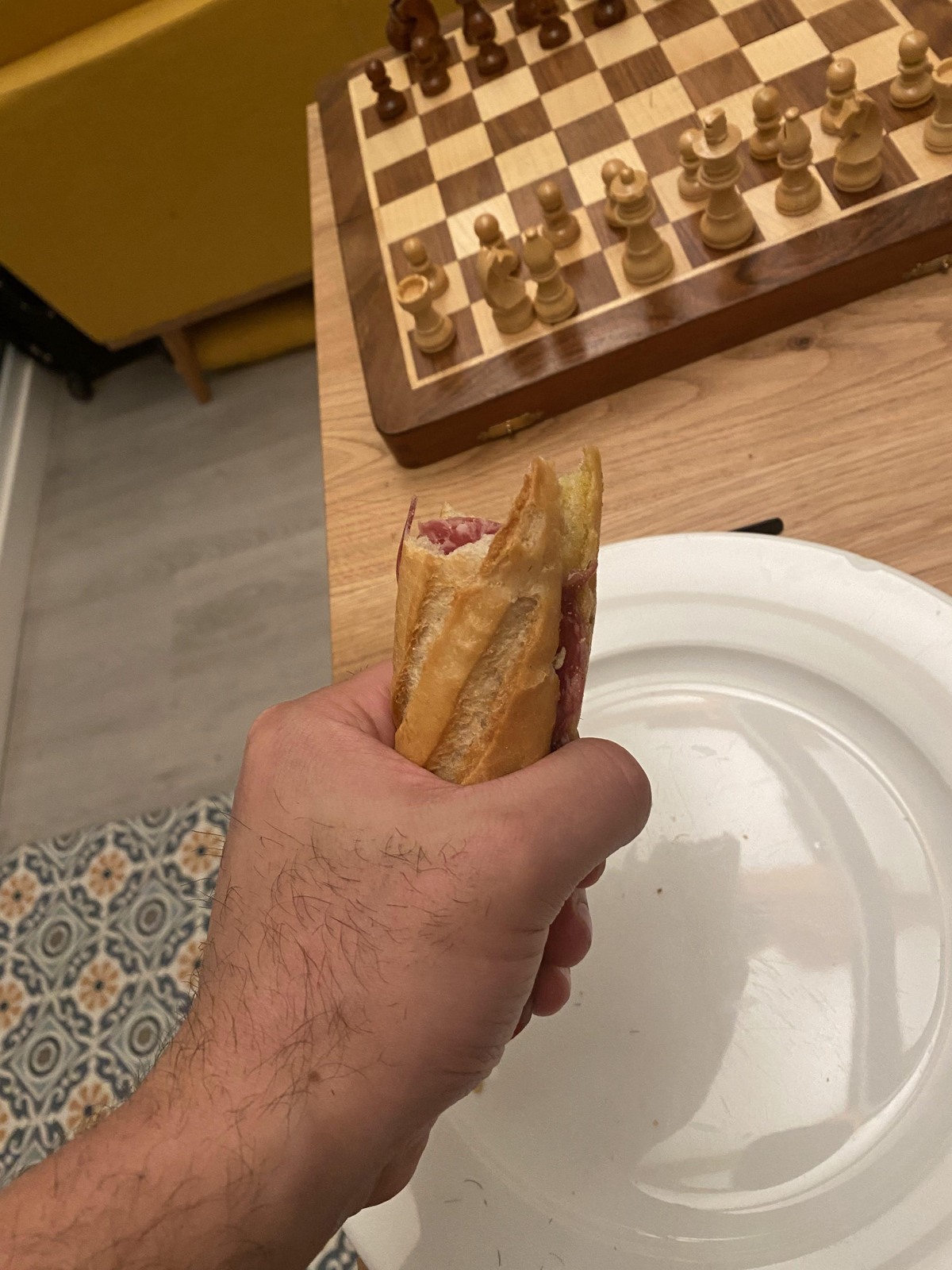
A bocadillo beside the chessboard from Florence.
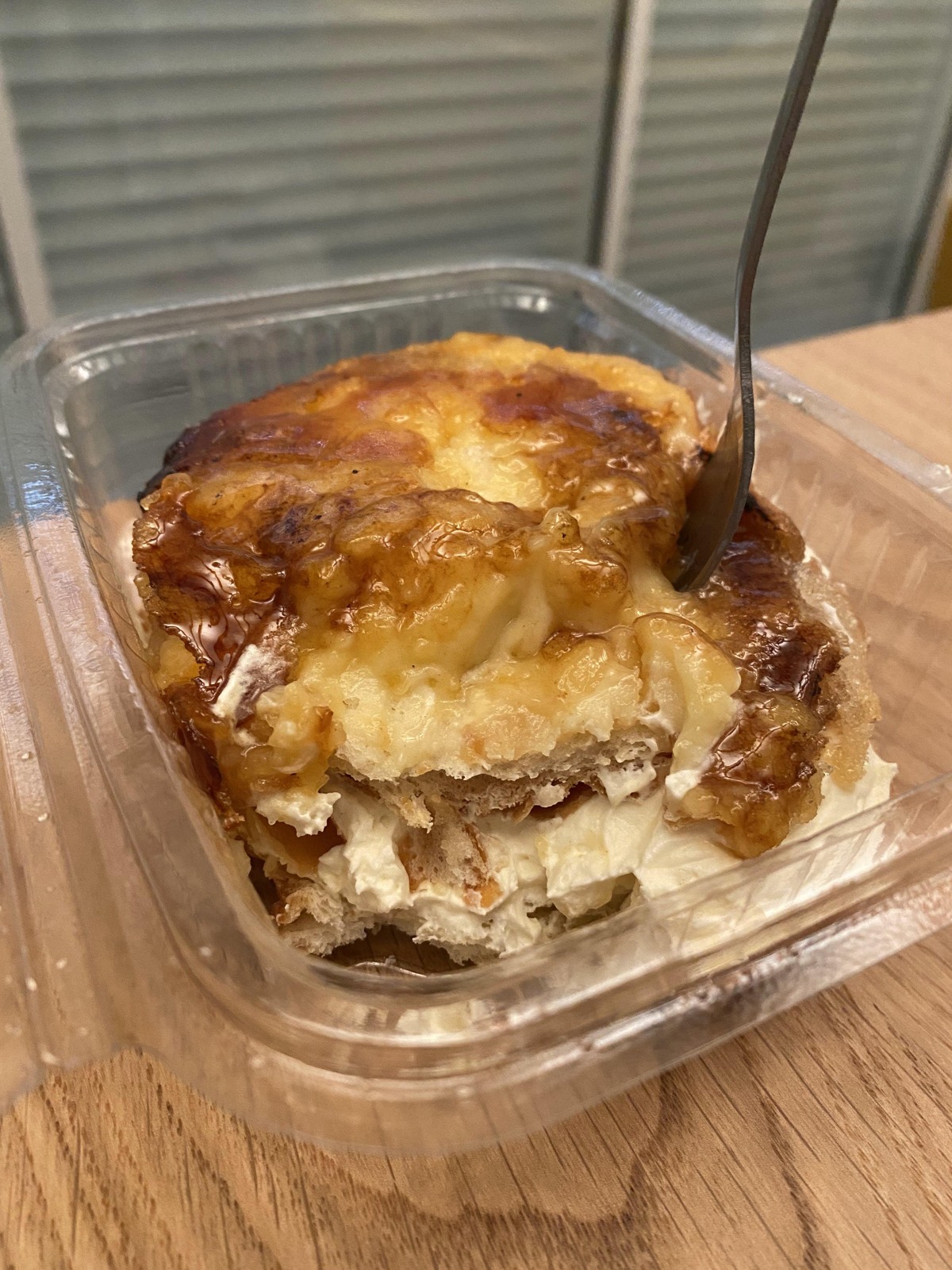
Something sweet for a quiet evening at home.
“There were things I would do differently now, but that did not make those days bad.”
Going out could be just as easy. I found a modern burger place in the historic center and had a very good burger. Not the greatest burger in the history of my life. Just a delicious burger in a place I was glad I had stopped.
One day, while I was sitting inside waiting for my food, I took a picture through the glass. There were tables by the window, people walking outside, and a narrow street lined with old buildings. That particular view looked so Italian to me. I could almost imagine I was back in Florence.
By then, I knew Florence had been special. It was no longer just another place I had enjoyed. It was the place I kept remembering when I thought about how good an ordinary day could feel. Part of the attraction of Alicante had been the hope of finding something like that again.
The burger place gave me a small reminder. I was sitting in a modern restaurant, waiting for a completely ordinary meal, and the view outside was enough to make me reach for my phone. That was the feeling I had wanted back. Not an exact copy of Italy. Just another place where I liked what was around me.
I also went into the market. I remember being struck by how clean and comfortable it felt. It was air-conditioned, with neat aisles and bright counters. There were meat stalls, hanging hams, and plenty to look at. I had been to markets before, but this one felt more polished than what I was used to.
It also seemed a little pricier, which was the less exciting part of the discovery. Still, I enjoyed the quality and the way everything was presented. Even buying food could be something I wanted to photograph. Between the market, the sandwiches, and a good burger, Alicante was doing a very good job of feeding me.
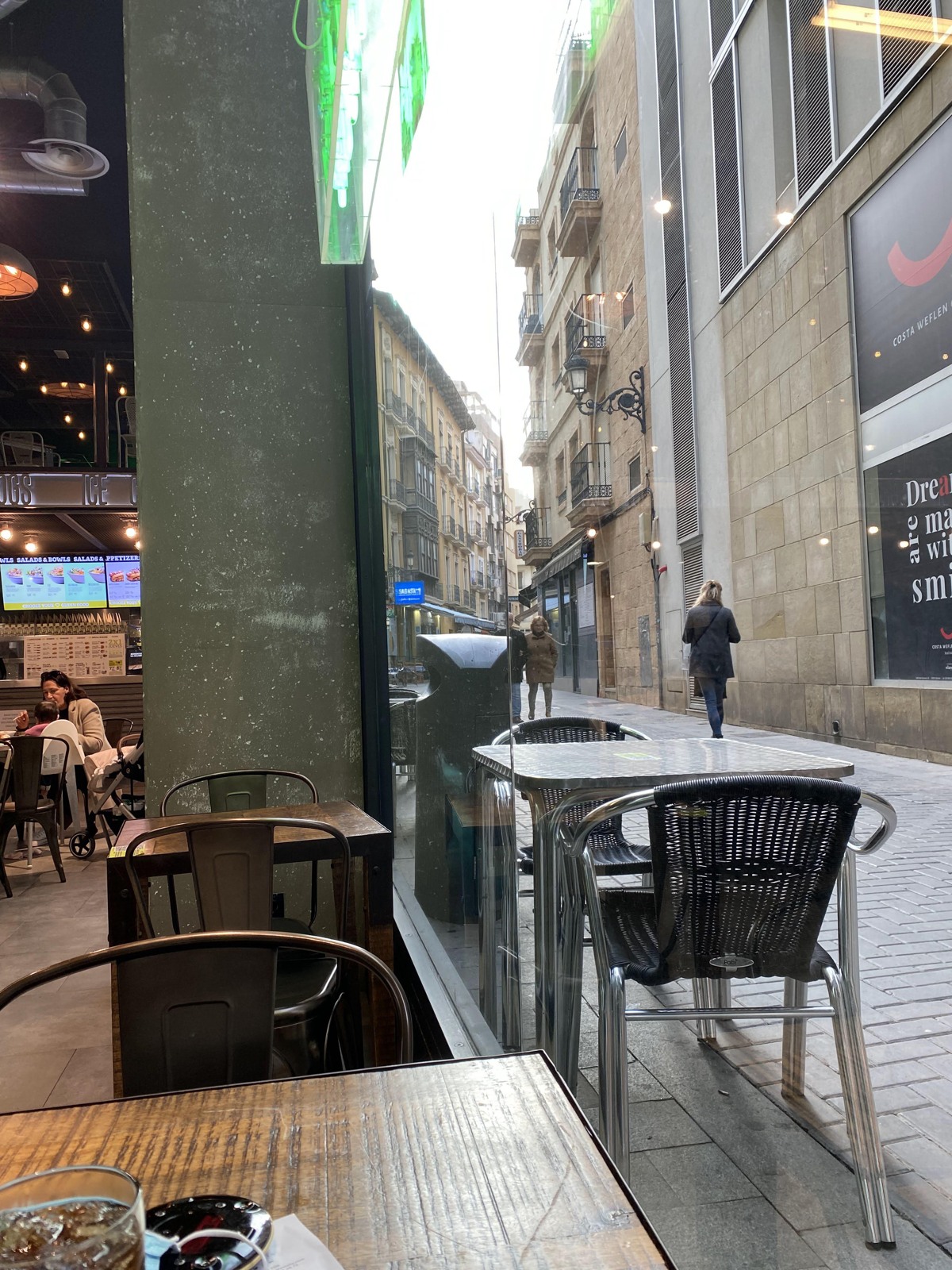
Waiting for a burger, with a view that took me back to Florence.
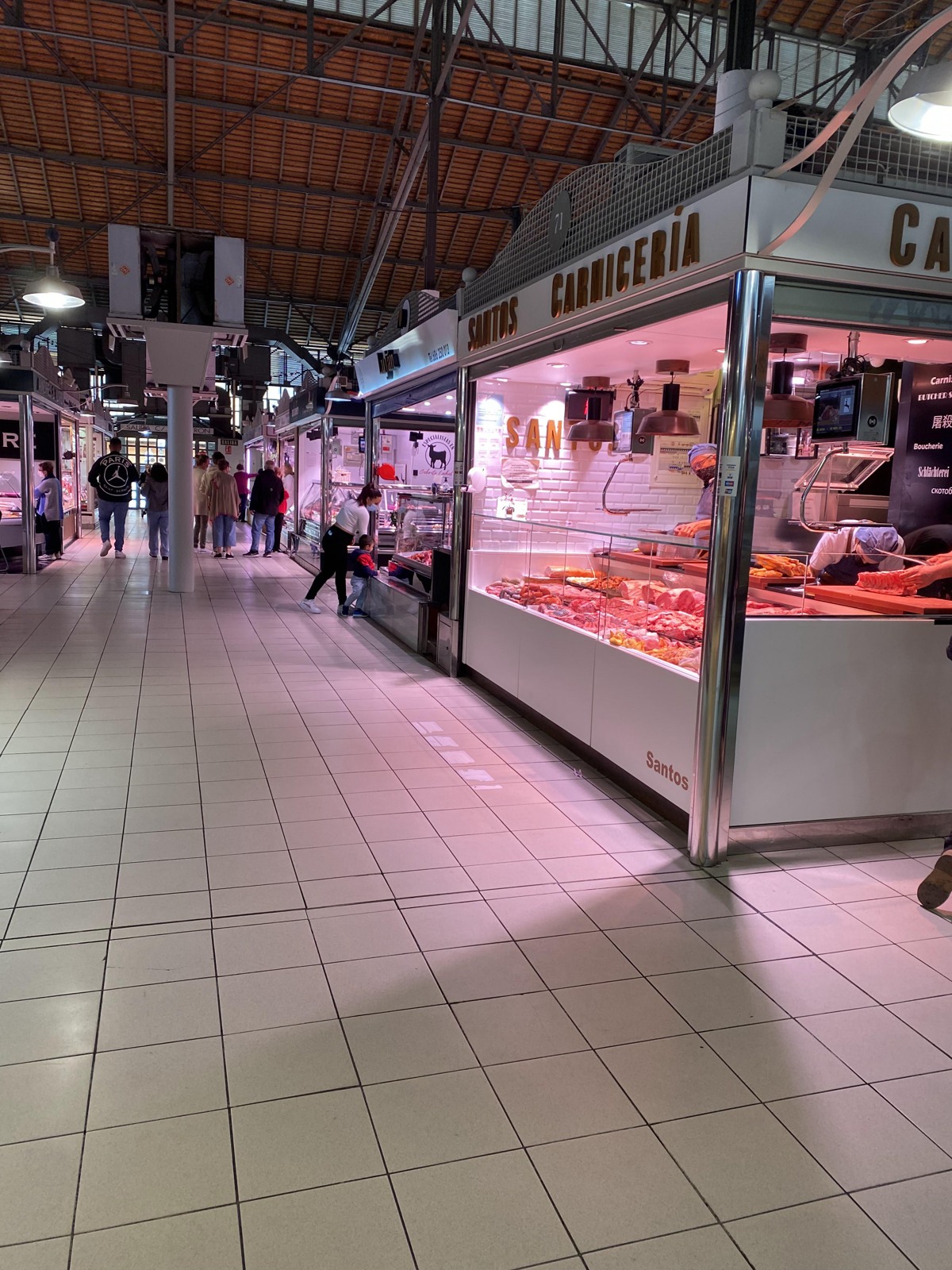
Inside the market. Even the grocery trip was worth a picture.
“Not an exact copy of Italy. Just another place where I liked what was around me.”
At night, Alicante had another side. There was house music, DJs, and lively bars, but the places I enjoyed did not have that frantic Miami Beach club feeling. It was a cooler, more relaxed kind of energy. I could go out and enjoy it without feeling that the entire city was demanding a wild night from me.
The timing was what really surprised me. Because I worked United States hours, I was often awake late. From my high balcony, I could look down at the street. During the week, it could be completely empty. Sometimes I went out for a midnight snack and barely saw anybody.
Then Friday would come. At ten at night, the street still looked quiet. At eleven, still not much. Around midnight, everything changed. People seemed to arrive all at once, until the streets below were packed. The same place that had looked deserted was suddenly full of life.
And they kept going. I remember people being out until seven in the morning. It was not just that the bars opened late. It was the transformation from almost nobody to more people than I could believe were fitting into those streets. From that balcony, I had a very clear view of the difference.
I have returned to Spain since then, but that particular weekend rhythm in Alicante still stands out. Later, when I visited Ibiza, I recognized a little of the same spark. I had not been there yet during this stay, so at the time I had nothing to compare it with. I just thought Alicante was one of the coolest places I had ever been.
Looking back, Alicante felt like somewhere I could live more easily than somewhere built around a constant party. There was music and nightlife, but there were also residential streets, shops, and the ordinary life I needed. I could enjoy the spark without making it my whole day.
I was comfortable. I ate well. I had no trouble with anyone. Nothing about the place was pushing me away. Which made the thought that started bothering me in March much harder to explain.
Looking down from my balcony on a quiet night.
Old buildings and city lights around my apartment.
“Nothing about the place was pushing me away.”
About a month into my stay, I started feeling as though I had been doing this for long enough. Not because I was tired of Alicante. Not because I had stopped enjoying travel. I had this horrible feeling that I was supposed to be somewhere else, doing something more real with my life.
Everybody else seemed to be getting a head start. That was how it felt in my mind. They were moving forward, and I was just traveling around the world. I started asking myself what I was doing. Had I taken a good thing too far? Was I avoiding the life I was supposed to return to?
I was being much harsher with myself than the facts deserved. I was still working. I was supporting myself. I had a place to live and a routine. None of that had disappeared because the street outside was in Spain. But I could look at all of it and still tell myself that I was being irresponsible, almost a degenerate, because I was enjoying a life that did not look like the one I thought I should have.
That was the contradiction. I had spent all that time discovering places where normal life felt good. Now I was living in one, and I was starting to believe that feeling good was evidence that I was escaping something. The work counted when I did it at home. Somehow, in my head, the same work counted for less with Alicante outside.
I know now that I was wrong. I am writing this while I am still traveling. But that is the person looking back, not the person sitting in Spain in March 2022. At the time, the guilt felt serious. I could not dismiss it just because I had a nice view and a good sandwich.
So I began looking at going home. Being in Spain seemed like a good opportunity to do it. The flights to Puerto Rico looked reasonable to me, and I started treating that as the sensible next step. I had traveled, I had enjoyed it, and perhaps that was enough. Maybe it was time to move back and get on with real life.
I bought the ticket. This was not the same as stopping in Miami for a wedding or spending a week with my dad between countries. I meant to try living in Puerto Rico again. I thought I might be bringing the whole traveling experiment to an end.
Alicante had not failed me. I was leaving a place I loved because I thought leaving was the responsible thing to do. The months that followed would be my attempt to move back home.
I thought I was going back to real life. I had not yet understood how much real life I was taking with me.
C H A P T E R 13
────────
The End?
Puerto Rico, April 3 to October 15, 2022
There are no pictures in this chapter. Not because I lost them. I did not take any.
I returned to Puerto Rico intending to stay. In Alicante, I had decided that traveling was something I ought to finish. I had enjoyed myself long enough. Now I was supposed to go home and catch up with everyone else. I had mistaken being happy for not being serious about my life.
I was glad to be home and saw friends every so often. I stayed in Santurce because I was trying to find some energy again. I went to a bomba event and enjoyed the music. But it was familiar. Nothing made me reach for my phone. I could appreciate what was in front of me without feeling the spark I had hoped to find.
The practical side did not help. The rents I found were astronomically high, and finding somewhere was difficult. I eventually rented a place, but the price felt unfair for what I got. Abroad, I had lived better for less than half as much. I was paying more to live a life I enjoyed less.
A storm left me without power for about a week. It had not seemed particularly severe where I was, but I spent days sweating in my apartment. The shower ran cold. For once, that was the good part: the water was a relief from the heat. This was the reality I had been so worried about missing.
But the problem was not simply the rent or the power. Puerto Rico was still home. I had been happy there before. This time, I dreaded staying. Abroad, even an ordinary workday had felt worth remembering. Here, the days passed, and I had nothing I wanted to show you.
Going home had been a mistake. Not because nobody could build a good life there, but because I had abandoned the one that worked for me. I had already found something that gave my days meaning. Why was I letting what I thought I should do matter more than how I actually felt?
I needed to make that life work, not put an end to it. I began thinking about three months instead of two. The first two could be bliss. I wanted the extra month, when the streets became familiar and even a little boring. That was the missing piece: staying long enough for a place to become everyday life, then discovering somewhere else.
While I was supposed to be settling down, I was planning to leave. By October 15, my attempt to move back was over. In Alicante, I had wondered whether I should keep traveling. In Puerto Rico, I knew.
I needed it again.
And I knew where to start. The same place as before.
────────
Looking Ahead
I eventually went back to being abroad.
My first stop was Tirana, Albania. I returned in October 2022 and stayed until January 13, 2023. This time, I chose three months instead of two. I went back to the place where this life had started, but I was no longer trying to decide whether I wanted it. Puerto Rico had answered that question.
The extra month made a difference. I stayed past the first excitement, until the place became familiar and even a little boring. That was not a reason to stop. It was the part that made being abroad feel like living somewhere, rather than moving from one short escape to the next.
After Tirana came Plovdiv, Bulgaria. Then there were more unfamiliar places, more temporary homes, and more ways to live that I had never considered. I began planning around three months. It gave me enough time to settle in without feeling that I had to stay forever.
There were still mistakes ahead. I would try four months and find that it was too much for me. I would cross between continents again, miss South America again, and return. Knowing that I wanted this life did not mean I had finished learning how to do it.
But the pictures started again. A path through the trees in Tirana. A balcony view in Plovdiv. Not a list of famous things I had to see. Just pieces of places that became part of my life.
I was no longer looking for a way to finish traveling. I was learning how to keep going.
Tirana, Albania. Back among the trees.
Plovdiv, Bulgaria. Another view, another home.
In the years that followed, I found places that made me realize Florence had not been a one-time miracle. Castellammare del Golfo, in Sicily, was one of them. I took that picture myself, on my phone. That was a real place I got to live in, not something I had found online and hoped I might see someday.
The feeling I had discovered in Florence could happen again. It did not need to look exactly like Florence, either. There was far more out there than I had understood when I first left home.
And then there were the places I would never choose again. I spent about three months in Phu Quoc, Vietnam, and I would not go back. It was one of the hardest stays of my travels. The picture shows a little of the place. It does not show what those months felt like.
Living somewhere for that long changes what you notice. The first impression wears off. You get a taste of everyday life, including the parts a short visit might never reveal. I learned some very blunt lessons that way. I am thankful for what I learned in Phu Quoc. That does not mean I would repeat it.
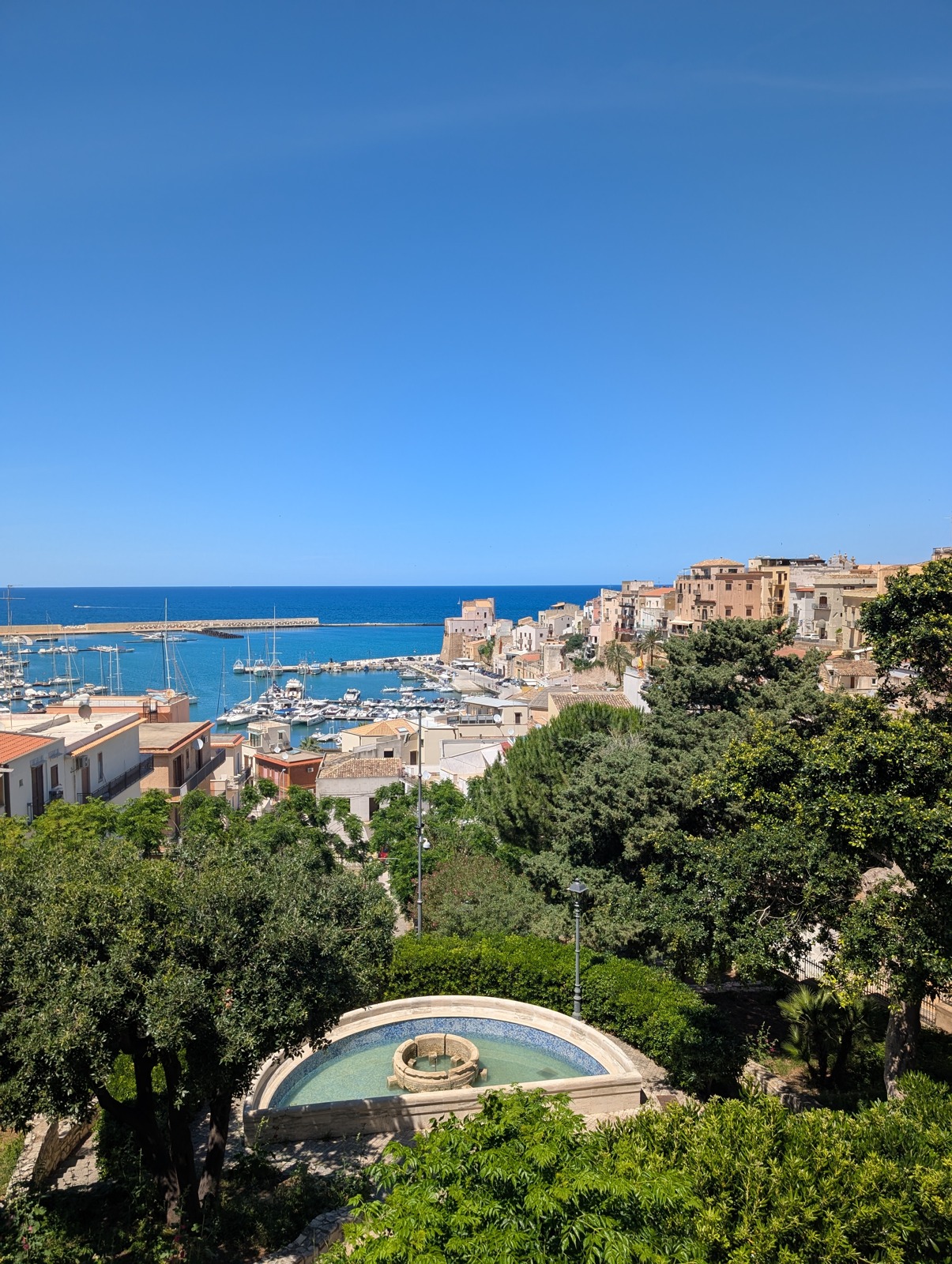
Castellammare del Golfo, Sicily.
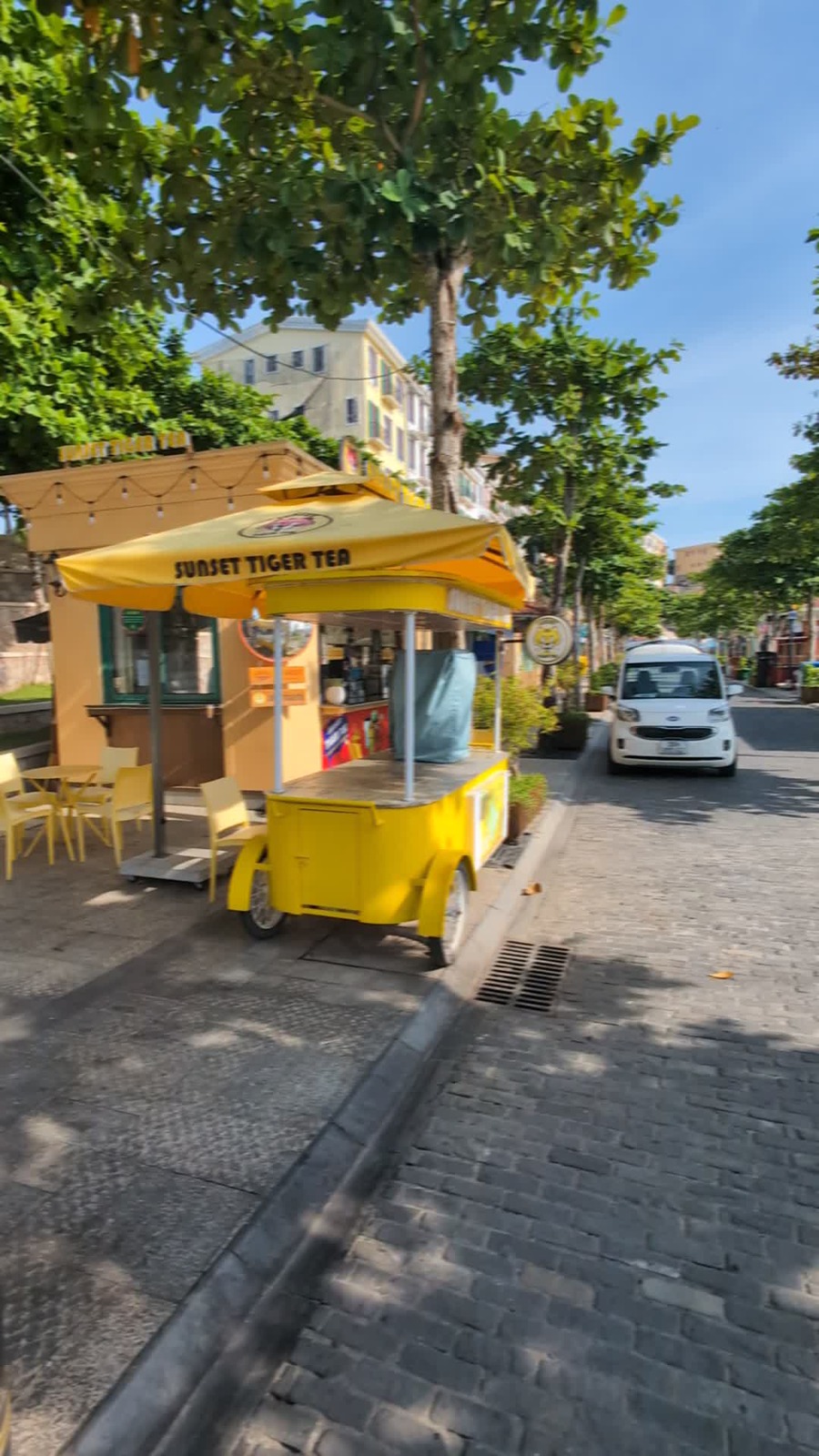
Phu Quoc, Vietnam. Not every stay felt like the picture.
I had thought the experiment would be over after a couple of years. As I write this from Ecuador, I am in my sixth year of living around the world. Every day still feels like the best day of my life. Not because every place has been good, but because this is the life I want, and I keep finding more to learn.
There are more countries, more mistakes, and more stories than I could fit here. Returning to Tirana was not the end of the journey. It was the start of the next part.
But that is a story for another book.